Wireless Probe Revolution: Enhancing Flexibility in Modern Machining!
In the fast-paced world of modern manufacturing, flexibility and efficiency are more than just buzzwords—they are essential for staying competitive. As production demands grow and part complexity increases, manufacturers are constantly seeking innovative solutions to streamline their processes and maintain the highest standards of quality. One of the most significant advancements in recent years is the wireless probe.
At SilverCNC, we recognize that the ability to adapt quickly to changing requirements is crucial for any machining operation. Traditional probing systems, while effective, often come with limitations such as cumbersome cables, restricted movement, and time-consuming setups. The advent of the wireless probe has revolutionized the way machinists approach measurement, setup, and quality control, offering unprecedented levels of flexibility and efficiency.

Wireless Probe Revolution: Enhancing Flexibility in Modern Machining
The Evolution of Probing Technology
Probing systems have long been a staple in CNC machining, enabling precise measurement and feedback directly on the machine. Traditionally, these systems relied on wired connections, which, while reliable, introduced several challenges:
- Cable Management: Wires can restrict movement, create clutter, and are prone to wear and damage.
- Limited Reach: Cables can limit the probe’s range of motion, especially on large machines.
- Setup Complexity: Connecting and routing cables adds time to the setup process and can complicate machine maintenance.
Recognizing these limitations, the industry has shifted towards wireless probe technology, which eliminates the need for physical connections and offers a host of new advantages.
What is a Wireless Probe?
A wireless probe is a precision measurement device used in CNC machining that communicates with the machine’s control system via radio frequency (RF) or infrared (IR) signals, rather than through physical cables. This wireless communication allows for greater freedom of movement, easier installation, and improved reliability.
Key Components of a Wireless Probe System
- Probe Body: Houses the stylus and internal electronics.
- Stylus: The contact point that touches the workpiece to take measurements.
- Wireless Transmitter: Sends measurement data to the machine controller.
- Receiver: Installed on the machine, it receives signals from the probe and relays them to the CNC control system.
- Battery: Powers the probe, typically rechargeable or replaceable.
How Does a Wireless Probe Work?
The operation of a wireless probe is similar to that of a traditional wired probe, with the key difference being the method of communication. Here’s how a typical wireless probe system functions:
- Installation: The probe is mounted in the machine spindle or turret, just like a cutting tool.
- Calibration: The probe is calibrated to ensure accurate measurements, often using a reference sphere or block.
- Measurement: The probe moves to specific locations on the workpiece, and the stylus touches the surface. Each contact sends a signal wirelessly to the receiver.
- Data Processing: The receiver transmits the data to the CNC controller, which interprets the signals and calculates the exact position and dimensions of the part.
- Feedback and Adjustment: Based on the probe data, the machine can automatically adjust tool paths, offsets, and other parameters to ensure optimal machining.
Advantages of Wireless Probe Technology
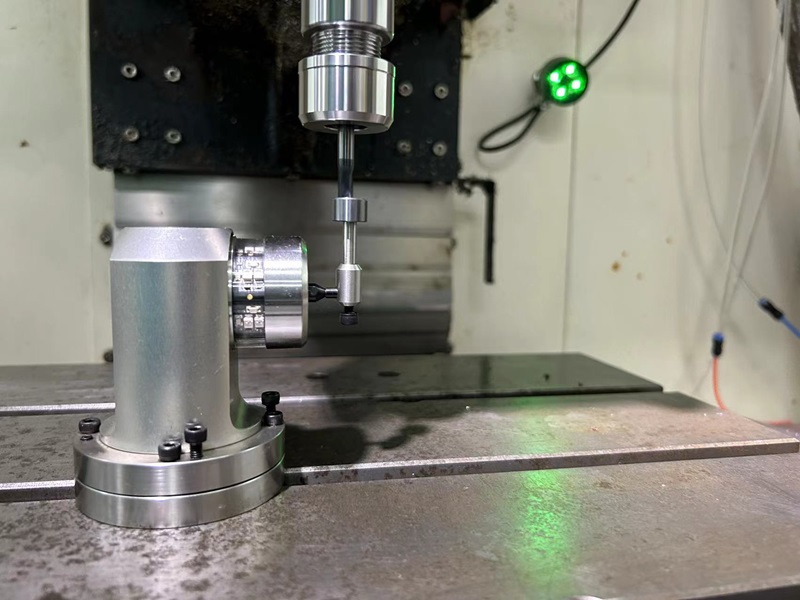
The shift to wireless probe systems has brought about a revolution in CNC machining, offering several key benefits:
1. Enhanced Flexibility
Without the constraints of cables, wireless probes can be used on a wider range of machines, including those with large work envelopes or complex geometries. This flexibility allows for more efficient probing in hard-to-reach areas and on multi-axis machines.
2. Simplified Setup and Maintenance
Wireless probes are easier to install and remove, reducing setup times and minimizing machine downtime. There are no cables to route, secure, or replace, which simplifies maintenance and reduces the risk of cable-related failures.
3. Improved Reliability
Cables are a common point of failure in traditional probing systems, often suffering from wear, breakage, or signal interference. Wireless probes eliminate these issues, resulting in more reliable operation and less unplanned downtime.
4. Increased Productivity
Faster setup, easier operation, and reduced maintenance all contribute to higher productivity. Operators can spend more time machining and less time dealing with probe-related issues.
5. Greater Safety
Eliminating cables reduces the risk of tripping hazards and accidental damage to the probe or machine, creating a safer work environment.
Practical Applications of Wireless Probes
Wireless probes are used in a variety of applications across different industries. Some common uses include:
1. Automated Workpiece Setup
Wireless probes can quickly and accurately locate the edges, centers, and reference points of a workpiece, automating the setup process and reducing the potential for human error.
2. In-Process Measurement
During machining, wireless probes can perform in-process measurements to verify critical dimensions, detect tool wear, and ensure part quality without removing the workpiece from the machine.
3. Tool Setting and Compensation
Wireless probes can measure tool length and diameter, automatically updating offsets to compensate for tool wear and maintain consistent part quality.
4. Final Inspection
After machining, wireless probes can perform final inspections to verify that all dimensions meet the required tolerances, reducing the need for manual inspection and ensuring only conforming parts move to the next stage.
5. Multi-Machine Flexibility
Because they are not tied down by cables, wireless probes can be easily moved between machines, making them ideal for workshops with multiple CNC machines or frequently changing setups.
Key Features to Consider When Choosing a Wireless Probe
Selecting the right wireless probe for your operation involves evaluating several important features:
1. Communication Range and Reliability
Ensure the probe’s wireless signal is strong and reliable enough to cover the entire work envelope of your machine, even in environments with potential sources of interference.
2. Battery Life
Long battery life is essential for minimizing downtime. Look for probes with efficient power management and easy battery replacement or recharging options.
3. Measurement Accuracy
High-precision machining requires a probe with excellent repeatability and accuracy. Check the probe’s specifications to ensure it meets your requirements.
4. Compatibility
Make sure the wireless probe is compatible with your CNC machine’s control system and software. SilverCNC offers a range of probes designed for seamless integration with various machine brands and models.
5. Durability
Choose a probe built to withstand the rigors of your machining environment, including exposure to coolant, chips, and vibration.
6. Ease of Use
User-friendly setup, calibration, and operation are important for maximizing the benefits of your wireless probe.
Implementing Wireless Probes in Your Workshop

Integrating a wireless probe into your machining process is a straightforward way to enhance flexibility and efficiency. Here’s how to get started:
1. Assess Your Needs
Consider the types of parts you produce, the size of your machines, and your production volume. Identify areas where a wireless probe could streamline operations or improve quality.
2. Choose the Right Probe
Work with a trusted supplier like SilverCNC to select a wireless probe that matches your requirements for range, accuracy, and compatibility.
3. Install and Calibrate
Follow the manufacturer’s instructions for installation and calibration. Proper setup is essential for accurate measurement and reliable operation.
4. Train Your Team
Ensure operators are trained on how to use the wireless probe, including setup, calibration, measurement procedures, and basic troubleshooting.
5. Monitor and Maintain
Regularly check the probe’s battery, clean the stylus, and perform routine maintenance to ensure long-term performance.
Real-World Example: Wireless Probe in Action
The Challenge
A precision engineering firm was experiencing frequent downtime due to cable failures in their traditional probing systems. The cables restricted movement on their large CNC machines, leading to inefficient setups and increased maintenance costs.
The Solution
After consulting with SilverCNC, the firm upgraded to a wireless probe system. The new probes offered greater range, eliminated cable-related issues, and were easily moved between machines as needed.
The Results
-Setup times reduced by 35%
-Maintenance costs decreased by 40%
-Machine uptime improved significantly
-Operators reported greater ease of use and flexibility
This case demonstrates how adopting wireless probe technology can deliver tangible benefits in productivity, reliability, and operational flexibility.
Overcoming Common Challenges with Wireless Probes
While wireless probes offer many advantages, successful implementation requires attention to a few key areas:
1. Signal Interference
Wireless signals can be affected by other electronic devices or physical barriers. Choose a probe with robust communication protocols and test signal strength in your environment.
2. Battery Management
Monitor battery levels and establish a routine for recharging or replacing batteries to avoid unexpected downtime.
3. Calibration
Regular calibration is essential for maintaining measurement accuracy. Follow the manufacturer’s guidelines and use high-quality calibration artifacts.
4. Operator Training
Provide comprehensive training to ensure operators understand how to use and maintain the wireless probe effectively.
The Future of Wireless Probe Technology

As manufacturing technology continues to advance, wireless probes are evolving to meet new challenges:
- Longer Battery Life: Advances in battery technology are extending probe operating times.
- Faster Communication: Improved wireless protocols are reducing latency and increasing data transfer speeds.
- Integration with Smart Factories: Wireless probes are being integrated into Industry 4.0 systems for real-time monitoring, data analysis, and predictive maintenance.
- Miniaturization: Smaller, lighter probes are being developed for use in micro-machining and compact machines.
- Enhanced Durability: New materials and designs are making probes more resistant to harsh machining environments.
At SilverCNC, we are committed to staying at the forefront of these innovations, ensuring our customers have access to the latest and most effective wireless probe solutions.
Embrace the Wireless Probe Revolution with SilverCNC
The wireless probe revolution is transforming modern machining, offering unmatched flexibility, efficiency, and reliability. By eliminating the limitations of traditional wired systems, wireless probes empower manufacturers to adapt quickly, improve quality, and boost productivity.
Frequently Asked Questions (FAQ) About Wireless Probes
1. What is a wireless probe and how does it work?
A wireless probe is a measurement device used in CNC machining that communicates with the machine’s control system via radio frequency or infrared signals, eliminating the need for physical cables.
2. What are the main benefits of using a wireless probe?
Wireless probes offer enhanced flexibility, simplified setup, improved reliability, increased productivity, and greater safety compared to traditional wired probes.
3. Can a wireless probe be used on any CNC machine?
Most modern CNC machines are compatible with wireless probes, but it’s important to check compatibility with your specific machine and control system. SilverCNC offers probes designed for a wide range of machines.
4. How long does the battery in a wireless probe last?
Battery life varies by model and usage, but most wireless probes are designed for extended operation and feature easy battery replacement or recharging.
5. How do I maintain a wireless probe?
Routine maintenance includes cleaning the stylus, checking battery levels, and performing regular calibration. Follow the manufacturer’s guidelines for best results.
6. Is operator training necessary for using a wireless probe?
Yes, proper training ensures correct operation, calibration, and troubleshooting. SilverCNC provides training and support to help operators get the most out of their wireless probes.
7. What industries benefit most from wireless probes?
Industries that require high flexibility and precision, such as aerospace, automotive, medical device manufacturing, and general engineering, benefit greatly from wireless probes.
8. Can wireless probes be used for tool setting?
Yes, wireless probes can measure tool length and diameter, enabling automatic tool compensation and improving machining accuracy.
9. What are the latest trends in wireless probe technology?
Recent trends include longer battery life, faster communication, integration with smart factory systems, miniaturization, and enhanced durability.
10. How can SilverCNC help me implement wireless probe technology?
SilverCNC offers expert consultation, a wide range of wireless probe options, and comprehensive support to help you select and implement the best solution for your manufacturing needs.

Public Last updated: 2026-02-16 10:49:55 AM