Essential Block Wall Maintenance Practices for Reliable Glendale and Surprise Property Protection
Block walls provide privacy, security, and a durable boundary for many residential and commercial properties. However, Arizona’s harsh climate makes regular care important. Block wall maintenance Glendale helps property owners identify cracks, damaged mortar, stains, drainage concerns, and other issues before they become more difficult or costly to address.
Routine inspections are one of the simplest ways to protect a masonry wall. Walk along both sides of the structure and look for changes in alignment, cracks, missing mortar, chipped blocks, or unusual discoloration. Paying attention to these details can reveal early signs of deterioration.
Arizona’s strong sunlight and frequent temperature fluctuations can affect exterior masonry over time. Blocks and mortar naturally respond to changing temperatures, and repeated expansion and contraction may contribute to surface cracking. Small cracks should be monitored, especially when they appear to increase in width or length.
Moisture can also create problems even in a dry climate. Heavy seasonal rainfall may expose weaknesses in drainage systems and allow water to collect near wall foundations. Keeping nearby drainage paths clear can reduce unnecessary moisture exposure and help protect masonry from long-term deterioration.
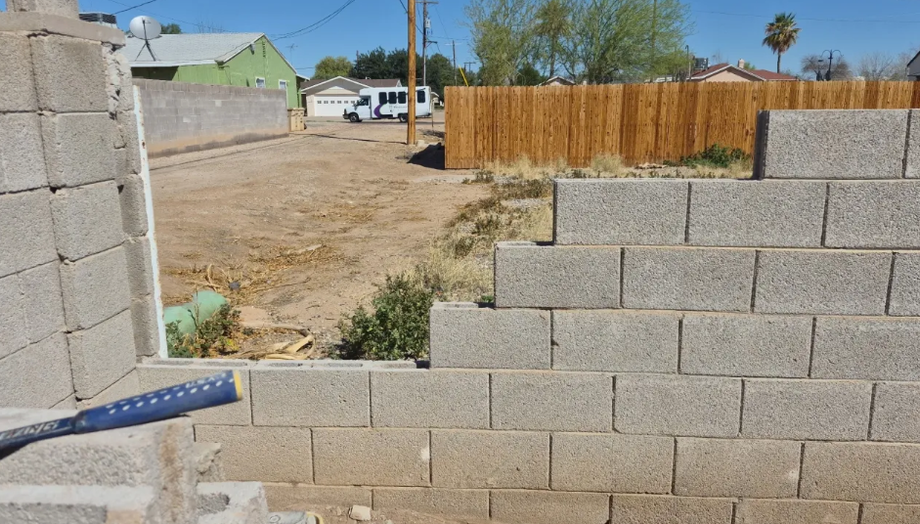
Mortar joints should remain a regular part of maintenance inspections. When mortar becomes cracked, loose, or heavily weathered, moisture may find easier pathways into the wall. Professional repointing can restore affected joints and help maintain the overall condition of the masonry structure.
Cleaning is another useful maintenance step. Dust, dirt, mineral deposits, and environmental buildup can make a wall look neglected. Gentle cleaning can refresh its appearance without unnecessarily stressing the blocks or mortar. Harsh cleaning methods should be avoided unless recommended for the specific masonry material.
Landscaping should also be managed carefully around block walls. Trees, shrubs, and vines can create physical pressure or make it difficult to inspect masonry surfaces. Keeping plants trimmed provides better visibility and reduces direct contact that could contribute to damage.
Some warning signs require professional attention rather than simple maintenance. A noticeably leaning wall, expanding cracks, severely damaged blocks, or extensive mortar deterioration may indicate an underlying issue. A qualified masonry professional can evaluate the wall and determine whether localized repairs or more extensive work is appropriate.
Consistent maintenance supports the appearance, strength, and longevity of masonry while helping property owners address problems at an earlier stage. For local properties, Block wall maintenance Surprise should focus on regular inspections, drainage management, careful cleaning, landscaping control, and timely repairs when visible damage develops.
Public Last updated: 2026-09-24 10:40:45 AM