What Is the AKI ICD 10 Code? Complete Billing and Coding Guide
Accurate diagnosis coding is one of the most important parts of medical billing and revenue cycle management. When providers document kidney-related conditions, coders must select the correct diagnosis code to ensure claims are processed correctly and reimbursements are not delayed. One commonly used diagnosis category in nephrology and hospital settings is the AKI ICD 10 code, which represents Acute Kidney Injury.
Acute Kidney Injury is a serious condition that requires precise clinical documentation and proper coding. In this guide, we will explain what the AKI ICD 10 code is, how it is used in medical billing, common coding variations, documentation requirements, and best practices to reduce claim denials.
Understanding Acute Kidney Injury (AKI)
Acute Kidney Injury, often abbreviated as AKI, refers to the sudden loss of kidney function that occurs within hours or days. The kidneys are responsible for filtering waste products from the blood, maintaining fluid balance, and regulating electrolytes. When the kidneys stop functioning properly, waste products accumulate in the body, which can lead to severe complications.
AKI can occur due to several causes, including dehydration, severe infection, medication toxicity, obstruction of the urinary tract, or reduced blood flow to the kidneys. Because the condition can progress quickly, early diagnosis and proper documentation are essential.
From a coding perspective, medical coders rely on the acute kidney injury ICD 10 classification to accurately report the condition in patient records and insurance claims.
What Is the AKI ICD 10 Code?
The primary ICD 10 code used for Acute Kidney Injury is N17.9.
This code represents:
N17.9 – Acute Kidney Failure, Unspecified
This is the most frequently used AKI ICD 10 code when the provider documents acute kidney injury but does not specify the exact type. It is commonly used in emergency departments, inpatient hospital stays, and critical care settings.
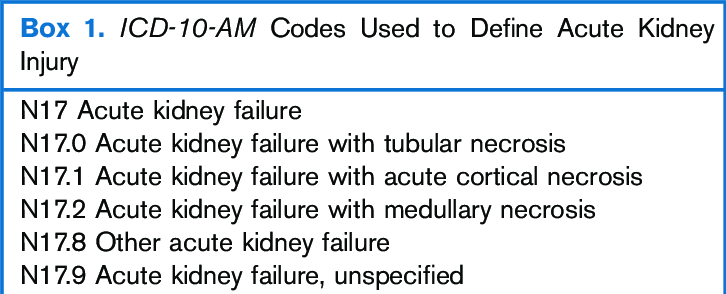
However, ICD 10 includes several more specific codes under the N17 category that may be used depending on the clinical documentation.
Some related codes include:
N17.0 – Acute Kidney Failure with Tubular Necrosis
This code is used when the provider documents acute tubular necrosis, which is one of the most common causes of AKI in hospitalized patients.
N17.1 – Acute Kidney Failure with Acute Cortical Necrosis
This is a rare but severe condition involving damage to the kidney cortex.
N17.2 – Acute Kidney Failure with Medullary Necrosis
This code represents damage to the kidney medulla.
N17.8 – Other Acute Kidney Failure
Used when the physician documents a specific form of AKI not classified elsewhere.
N17.9 – Acute Kidney Failure, Unspecified
Used when documentation does not specify the exact cause or type.
Selecting the correct AKI ICD 10 diagnosis code depends entirely on provider documentation.
When Is the AKI ICD 10 Code Used in Medical Billing?
The AKI diagnosis code is used whenever a healthcare provider diagnoses a patient with acute kidney injury. This condition may appear in many clinical settings, including:
Hospital inpatient admissions
Emergency room visits
Critical care units
Nephrology consultations
Post-surgical complications
Sepsis-related organ failure
Because AKI frequently occurs alongside other conditions such as dehydration, infections, or medication reactions, coders must carefully review documentation to determine the principal diagnosis and any secondary diagnoses.
For example, a patient admitted with severe sepsis may also develop AKI during hospitalization. In such cases, both the sepsis and the acute kidney injury ICD 10 code may need to be reported depending on the clinical scenario.
Documentation Requirements for AKI Coding
Proper documentation is critical when assigning the AKI ICD 10 code. Coders cannot assume the diagnosis without explicit physician documentation.
Healthcare providers should clearly document:
The diagnosis of acute kidney injury or acute kidney failure
The underlying cause if known
Severity or stage if applicable
Associated complications
Relevant lab findings such as creatinine levels and urine output
For example, a physician may document:
“Patient diagnosed with acute kidney injury secondary to dehydration.”
This documentation allows coders to assign the correct acute kidney injury ICD 10 code along with the underlying cause if necessary.
Incomplete documentation is one of the most common reasons for claim denials or coding queries.
Common Coding Challenges with AKI
Medical coders often encounter several challenges when coding acute kidney injury.
Lack of Specific Documentation
Providers sometimes document “renal insufficiency” instead of acute kidney injury. These terms are not always interchangeable in ICD 10 coding, so clarification may be required.
AKI vs Chronic Kidney Disease
Another common issue is differentiating between acute kidney injury and chronic kidney disease. Some patients may have both conditions simultaneously. In such cases, coders must report both diagnoses if documentation supports them.
AKI Due to Medications
Certain medications can cause kidney damage. When AKI occurs due to drug toxicity or adverse effects, additional codes may be required to identify the drug involved.
Postprocedural AKI
Acute kidney injury may also occur after surgery or contrast imaging procedures. Coders must determine whether the condition is a complication and whether additional complication codes are needed.
Best Practices to Avoid Claim Denials
Accurate coding of the AKI ICD 10 diagnosis plays an important role in preventing claim rejections and revenue loss. Healthcare organizations should follow several best practices.
Improve Clinical Documentation
Providers should clearly specify whether the patient has acute kidney injury, chronic kidney disease, or both. Detailed documentation allows coders to assign the correct diagnosis codes.
Use the Most Specific Code
Whenever possible, coders should use a more specific code such as N17.0 instead of the unspecified code N17.9 if documentation supports it.
Follow Official Coding Guidelines
Medical coders should always follow the official ICD 10 coding guidelines and payer-specific billing requirements.
Conduct Regular Coding Audits
Internal coding audits help identify documentation gaps, coding errors, and compliance risks.
Provide Ongoing Training
Healthcare organizations should ensure that coders and clinicians receive regular training on coding updates and documentation standards.
These steps can significantly reduce claim denials related to kidney injury diagnoses.
Importance of Accurate AKI Coding in Revenue Cycle Management
Accurate diagnosis coding does more than ensure proper reimbursement. It also impacts several aspects of healthcare operations.
Correct AKI coding helps with:
Clinical data accuracy
Quality reporting and hospital metrics
Risk adjustment and patient severity scoring
Population health analysis
Compliance with regulatory requirements
Because AKI is associated with higher patient risk and increased healthcare costs, accurate coding ensures healthcare organizations receive appropriate reimbursement and maintain reliable clinical records.
How Revantage Healthcare Business Solutions Supports Accurate Coding
Managing medical coding and billing processes can be challenging for healthcare providers, especially when dealing with complex diagnoses such as acute kidney injury.
Revantage Healthcare Business Solutions helps healthcare organizations improve revenue cycle performance through expert medical billing, coding, and compliance services. Their experienced coding professionals ensure accurate diagnosis reporting, including proper use of AKI ICD 10 codes, reducing the risk of claim denials and revenue loss.
By combining advanced technology, certified coders, and deep industry expertise, Revantage Healthcare Business Solutions supports providers in maintaining compliance, improving reimbursement accuracy, and optimizing their overall revenue cycle management.
Conclusion
Understanding the AKI ICD 10 code is essential for accurate medical billing and clinical documentation. Acute Kidney Injury is a serious medical condition that must be properly identified and coded to ensure correct reimbursement and patient record accuracy.
The most commonly used code is N17.9, which represents acute kidney failure unspecified. However, several more specific codes exist within the N17 category depending on the underlying cause and clinical documentation.
Healthcare providers, coders, and billing teams should work together to ensure detailed documentation, accurate coding, and compliance with ICD 10 guidelines. By doing so, healthcare organizations can minimize claim denials, improve coding accuracy, and maintain a more efficient revenue cycle.
Accurate AKI coding ultimately supports better patient care, improved financial performance, and stronger healthcare data reporting.

Public Last updated: 2026-03-06 01:55:28 PM