The Godfather of Sudoku has died. He did not invent the game, but made it popular all over the world
Japan's Maki Kaji, known as the "Godfather of Sudoku", has died at his home in Tokyo at the age of 69 from gallbladder cancer.
It happened on August 10, but only on Monday Nikoli magazine, which he published for more than 40 years, announced his death.
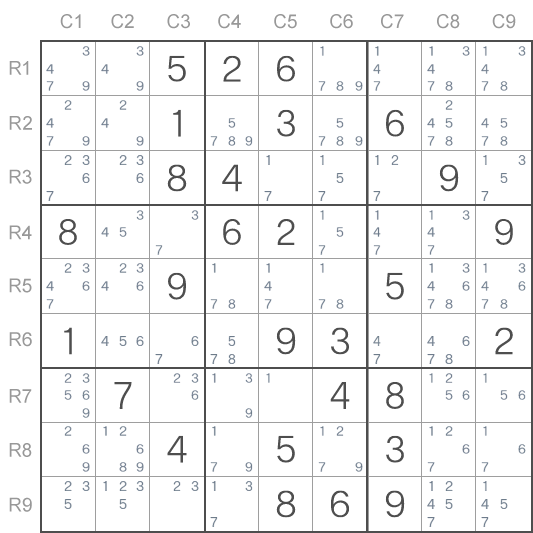
Maki Kaji didn't invent Sudoku (https://sudokuhit.com/ru/kak-igrat/kak-reshat-sudoku-s-pomoshchyu-karandashnykh-zametok/), but gave the game its current name and made it a mainstream craze. Every day, several million people solve the puzzle, and world championships are also held.
Sudoku requires a 9x9 square. The meaning of the game is to arrange the numbers from 1 to 9 in it so that they do not repeat in any horizontal row, vertical column and a small square of 3x3 cells.
Who and when invented Sudoku, just like chess and cards, is unknown. Some researchers claim that this happened in medieval China, and already in the VIII-IX centuries the game was known to the inhabitants of the Arab Caliphate, others call it the creator of the Swiss mathematician of the XVIII century Leonard Euler.
In July 1895, the Parisian newspaper La France placed Sudoku under the name "devil's magic squares" on its pages, but then the novelty did not arouse interest.
In 1979, American architect Howard Garnes introduced Sudoku to the readers of Dell Pencil Puzzles and Word Games magazine, calling it Number Place, which roughly translates to "a place for a number."
Five years later, Maki Kaji drew the attention of Garnes's publication.
“I immediately saw that this is a very interesting puzzle, it’s a pleasure to solve it,” he said in 2008. “But the name Number Place somehow didn’t hook me, and I composed the Japanese equivalent.”
Sudoku is an abbreviated phrase "Suji wa dokushin ni kagiru", which can be translated as "all the numbers in their places". The word sounds very Japanese, yet is easily pronounced by speakers of other languages.
According to Maki Kaji, he was in a hurry to the racetrack that day and came up with the name in about 25 seconds.
Sudoku first gained popularity in Japan, and its triumphant march around the world began in 2004 with the publication of the British newspaper Times of London. In part, the halo of oriental exoticism contributed to the success.
Maki Kaji was born in 1951 in the city of Sapporo on the northern Japanese island of Hokkaido. Before finishing his studies at the university, he became interested in mind games and in August 1980 founded the Nikoli magazine dedicated to them.
Maki Kaji did not copyright Sudoku puzzle, but said that the joy of the game and the pleasure that other people get was more important to him than money.
"The new idea immediately fascinated me, because I saw great potential in it," he told the BBC in 2007. "It was like finding a treasure."

Public Last updated: 2022-11-06 02:46:30 PM