Cost, Installation, and Durability: Everything About Large Retaining Blocks
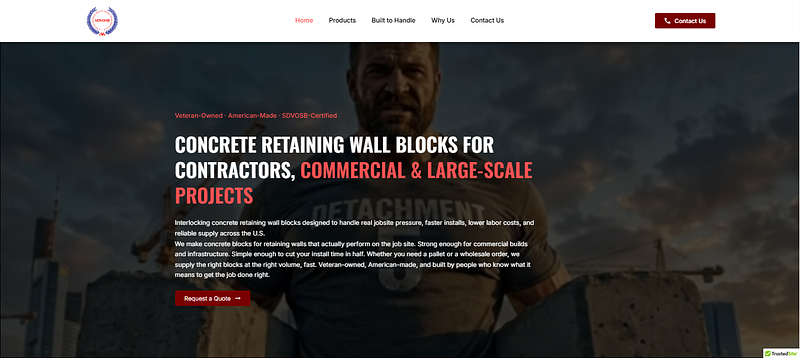
Large retaining blocks have revolutionized modern civil engineering, commercial site development, and residential landscaping by offering unmatched stability and structural integrity. When dealing with steep gradients, severe soil erosion, or high-load conditions, traditional small masonry units often fall short. Incorporating large retaining blocks provides a robust solution designed to hold back massive volumes of earth while streamlining the construction timeline. These heavy-duty modular components utilize gravity and precise interlocking mechanisms to create durable barriers that withstand intense hydrostatic pressure and environmental strain over decades.
Understanding the Structural Science of Mass and Stability
The primary mechanism behind these massive wall systems is gravity-based earth retention. Unlike lighter systems that rely heavily on complex tie-backs or internal reinforcing grids for modest heights, massive concrete units leverage their dead weight to counteract lateral earth pressure. The physical mass creates continuous resistance against soil sliding and overturning forces. Engineered concrete formulations ensure high compressive strength, rendering the units resistant to cracking, freeze-thaw cycles, and ground shifting. This innate structural bulk makes them the ideal choice for demanding applications where long-term performance is non-negotiable.
Key Advantages Over Standard Modular Block Systems
Choosing larger structural units over conventional small modular blocks yields significant operational and aesthetic benefits. Construction efficiency increases dramatically because each individual unit covers a significantly greater surface area, reducing the total count of blocks required to complete a wall face. Consequently, crew sizes and overall labor hours are minimized. Furthermore, larger systems possess superior structural integrity, allowing engineers to design taller gravity walls without mandatory geogrid reinforcement. Beyond performance, the expansive face dimensions create a bold, modern visual scale that blends seamlessly into both natural and urban environments.
Primary Applications in Commercial and Residential Infrastructure
These heavy-duty concrete components serve vital roles across various construction sectors. In civil infrastructure, they line highway embankments, support bridge abutments, and stabilize roadways against landslides. Commercial developers utilize them to maximize usable flat acreage on sloped building sites, creating terraced parking lots and secure building pads. In high-end residential landscaping, these blocks transform steep, unmanageable yards into functional outdoor living areas, terraced gardens, and elevated patios while effectively mitigating stormwater runoff issues across the entire property landscape.
Site Preparation and Foundation Requirements
A successful installation relies heavily on thorough site preparation and rigorous foundation engineering. Construction begins with excavating a trench that extends well below the frost line and deep into undisturbed native soil. The foundation base must consist of high-density crushed aggregate, meticulously compacted in layers to form a level, unyielding footing. Any irregularities in the base layer will compound exponentially as successive courses are placed, compromising the vertical alignment and overall stability of the entire system. Proper compaction eliminates future settling and ensures the wall maintains its structural poise under maximum earth loads.
Installation Dynamics and Heavy Equipment Utilization
Because an individual block can weigh anywhere from several hundred to thousands of pounds, placement demands specialized mechanical equipment. Excavators, skid steers, and cranes equipped with heavy-duty lifting clamps or rigging straps are essential tools on site. Trained equipment operators work alongside ground crews to lower each unit into position, making micro-adjustments with precision levels and rubber mallets. Interlocking shear keys, tongue-and-groove joints, or alignment pins built directly into the concrete blocks ensure precise registration between courses, establishing an interconnected matrix that resists shear forces.
Soil Mechanics and Backfill Management
The longevity of a gravity barrier depends as much on the backfill material as it does on the concrete units themselves. Native soils with high clay content retain water and expand, exerting unpredictable lateral pressure against the structure. To prevent failure, contractors fill the space immediately behind the wall face with free-draining granular material, such as clean angular stone. This aggregate backfill is applied in shallow lifts and compacted systematically. Proper backfilling ensures efficient load distribution while preventing internal hydrostatic buildup, which remains the leading cause of structural wall degradation worldwide.
Managing Hydrostatic Pressure with Integrated Drainage Systems
Water management is the single most critical factor in wall design. Accumulating ground water creates immense hydrostatic pressure that can push even the heaviest concrete barriers out of alignment over time. Comprehensive drainage design involves placing perforated drainage pipes surrounded by filter fabric along the base of the backfill zone. Weepholes or open joints built into the wall face allow trapped water to discharge freely. By routing groundwater safely away from the backfilled zone, engineers preserve the structural equilibrium of the soil mass and protect the structural installation from hydrological erosion.
Sustainability and Long-Term Maintenance Considerations
Precast concrete products offer an exceptionally long service life, drastically reducing the lifetime environmental impact of site development projects. Many manufacturing processes now incorporate recycled industrial aggregates and supplementary cementitious materials, enhancing sustainability without sacrificing strength. Maintenance requirements over the lifespan of these walls are remarkably minimal compared to timber or poured-in-place concrete alternatives. Occasional visual inspections, clearing debris from drainage outlets, and monitoring surrounding surface runoff are typically all that is required to maintain peak structural performance for decades.
Choosing the Right System for Your Engineering Project
Selecting the proper retaining system involves analyzing specific site parameters, soil conditions, load requirements, and aesthetic goals. Partnering with experienced structural engineers and reputable manufacturers ensures that the wall design accounts for unique surcharge loads, seismic considerations, and local building codes. Investing in high-grade engineered large retaining blocks ultimately guarantees long-term peace of mind, protecting valuable property investments with an unbeatable combination of brute strength, structural elegance, and enduring reliability.

Public Last updated: 2026-09-22 07:21:19 AM