Commercial Property Assessment in Guelph Ontario: A Complete Guide
Commercial property in Guelph sits at the crossroads of a university city, a manufacturing hub, and a regional logistics node with quick access to Highway 401 and the Hanlon Expressway. That mix creates a market with distinct sub‑currents. An owner of a small-bay industrial condo on Regal Road thinks about value differently than a landlord on Wyndham Street with a heritage mixed‑use building, and differently again than a developer assembling acreage near the future Clair-Maltby community. A good appraisal meets these realities head on, translating local market nuance into defensible numbers that lenders, partners, and courts can trust.
This guide pulls from day-to-day experience working with commercial building appraisers in Guelph, Ontario. It covers how valuation actually happens, what drives the numbers in this city, and how to work with the right professionals so you get a report that serves its purpose.
Assessment versus Appraisal in Ontario
A quick distinction clears up a lot of confusion. In Ontario, the Municipal Property Assessment Corporation, or MPAC, sets assessed values that municipalities use to calculate property taxes. MPAC’s process looks at mass appraisal by property class and periodically resets a base year. It is not a site-specific opinion for lending, purchase, litigation, or financial reporting. You can request MPAC reconsideration and, if needed, appeal to the Assessment Review Board, but that is a tax matter, not a market value opinion for a transaction.
A commercial property appraisal in Guelph Ontario, on the other hand, is a property-specific analysis prepared by a fee appraiser, typically designated AACI by the Appraisal Institute of Canada. Lenders, courts, and auditors rely on AACI appraisals for serious decisions. When people talk about commercial property assessment in Guelph Ontario in a business context, they usually mean a formal appraisal, not the MPAC tax assessment.
The Appraisal Toolkit: Three Approaches, One Conclusion
Every credible commercial building appraisal in Guelph Ontario aligns around three approaches to value. Not every approach suits every property, but your appraiser should explain why they chose what they chose.
Income approach. For leased or leasable assets, this is the workhorse. The appraiser stabilizes market rent, vacancy, and expenses, then applies a capitalization rate to the net operating income. In practice, Guelph caps often trade close to, but not identical to, Kitchener-Waterloo or Cambridge, and can diverge sharply from Toronto. Small-bay industrial might support caps in the mid 6s to mid 7s when interest rates push up borrowing costs, while grocery-anchored retail with strong covenants may command a tighter rate. If a building is owner-occupied, the appraiser can still apply the income approach by imputing market rent based on comparable leases.
Direct comparison approach. Land, small industrial condos, and owner-user buildings often lean on this approach. The appraiser analyzes recent local sales, then makes adjustments for factors like size, ceiling height, functional layout, age, quality of finishes, environmental stigma, and location nuances such as proximity to the Hanlon or exposure on arterial roads. In a thin market, you might see a broader geographic search that includes Cambridge or Fergus, with thoughtful adjustments back to Guelph dynamics.
Cost approach. Useful for special-purpose buildings or when improvements are new, this approach estimates replacement cost new, deducts physical, functional, and external obsolescence, then adds land value. It is common in appraisals for institutional uses, purpose-built labs, or facilities like cold storage where market comparables are scarce. In Guelph, a lab or food processing plant near the Ontario Agri-Food Innovation Alliance may warrant cost analysis cross-checked with a residual land value test.
A well-reasoned report reconciles these approaches. The weight given to each depends on data quality and the property’s type. For a leased strip plaza on Stone Road, the income approach likely carries the most weight with the direct comparison providing a sanity check. For a vacant industrial parcel, land comparables dominate.
How Guelph’s Market Shapes Value
Local context matters more than formulas. The factors below commonly move the needle when valuing commercial assets in the city.
Industrial strength around the Hanlon. Guelph’s industrial market is anchored by strong highway access and a deep bench of advanced manufacturing, agri‑food, and logistics employers. Clear heights above 22 feet, dock access, and efficient loading drive premiums. Small-bay units under 5,000 square feet often attract a different buyer pool than 50,000‑square‑foot distribution buildings, with pricing per square foot for small units sometimes appearing high relative to income metrics because of owner-user demand.
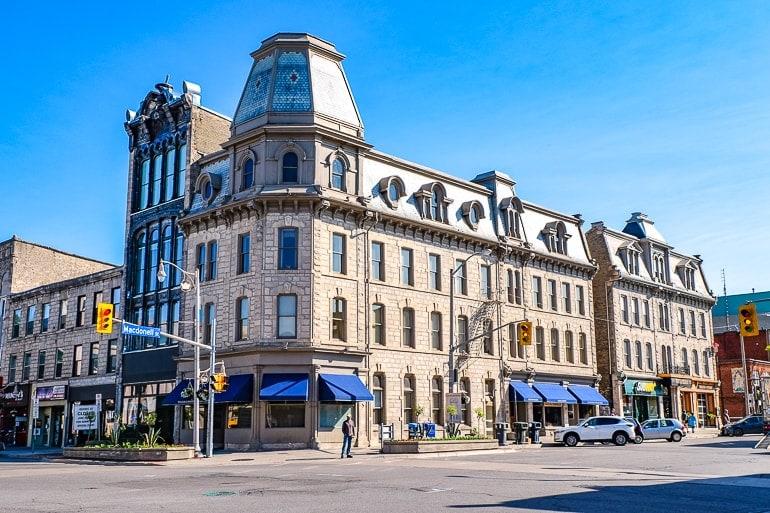
Downtown heritage and mixed use. Buildings along Wyndham, Macdonell, and Quebec Streets can be deceptively complex to value. Heritage elements, limited on-site parking, upper-floor residential conversions, and facade grant history all interact. Street-level retail rents hinge on foot traffic and tenant mix. Offices on upper floors can carry lingering vacancy after a downturn, yet boutique creative offices with brick-and-beam finishes still trade if the suite sizes and operating costs line up with small professional users.
Retail corridors and grocery anchors. Stone Road near the mall and Gordon Street south of the university carry distinct rent and cap profiles compared to neighbourhood plazas in the city’s north end. A shadow anchor like a high-traffic grocery boosts co‑tenancy health and reduces perceived risk, which translates into tighter caps and stronger tenant covenants. Conversely, exposure to short-term pop-ups, high tenant churn, or specialty uses with limited backfill potential increases risk premiums.
University proximity. The University of Guelph stabilizes daytime population and supports food, service, and lab-adjacent demand. Properties within a short walk of campus can command premium retail rents, though turnover spikes during academic calendar transitions. For office and lab, university partnerships and grants can improve tenant credit quality which, in turn, adjusts cap rates a notch.
Environmental context. Floodplains along the Speed and Eramosa Rivers create constraints for certain parcels. Former industrial uses may trigger a Phase I Environmental Site Assessment during due diligence, with a Phase II if red flags emerge. Even a clean outcome can slow a transaction timeline, and stigma can weigh on value if the site history is complicated. An appraiser should address known or suspected contamination in the scope and assumptions, often through extraordinary assumptions that condition the value on eventual remediation outcomes.
Land is a Different Animal
Engaging commercial land appraisers in Guelph Ontario requires a slightly different lens. With development land, value becomes a function of what you can build, how long it takes, and what it costs to get there. Zoning, servicing, topography, and policy overlays such as the city’s Official Plan all matter.
Highest and best use sits at the centre. A parcel zoned for employment uses near the Hanlon with services at the lot line will appraise differently than a rural property outside the urban boundary that requires an Official Plan Amendment and secondary plan process. Development charges, community benefits charges, and parkland dedications feed into pro formas. Where the end product is income-producing, a residual land value approach often makes sense, back-solving from projected stabilized net operating income and going-in cap rates. For condo townhouse land, the appraiser may use a developer’s pro forma with independent checks on achievable sales price per unit and hard and soft cost benchmarks.
Assemblies complicate matters. A single parcel with odd dimensions might have lower per-acre value than the same land once assembled with frontage and depth that work for industrial loading or retail parking ratios. Time and risk discounting applies to long approvals, and a credible report will articulate those risks rather than hide them in a single number.
Zoning, Permits, and the Planning Backdrop
City of Guelph zoning and site plan control shape buildable potential and, in turn, value. Even minor differences in zoning can change parking ratios, loading requirements, or permission for certain commercial uses. The city has been modernizing bylaws and approvals, with gradual moves to streamline infill and intensification in priority corridors. An appraisal should comment on the current zoning, any minor variances, and whether legal non‑conforming status exists. If a property’s use does not match current zoning, the appraiser must assess the risk that a lender or buyer will discount for compliance uncertainty.
For existing buildings, building permits and occupancy records matter. If a mezzanine was added without a permit or a change of use occurred informally, that can affect insurability and valuation. I have seen transactions stumble because a seemingly simple office conversion reduced required parking below code, something an appraiser flagged in the risk section, saving the lender and borrower from a post‑closing headache.
The Income Engine: Rents, Expenses, and Caps
Numbers only tell the truth if they are properly standardized. In Guelph, small-bay industrial net rents often sit in the low to mid teens per square foot when markets tighten, with tenant-paid TMI layered on top. Well-located inline retail can span the high teens to low twenties net depending on size, visibility, and co‑tenancy. Office is the wild card. Class B suburban office may need significant free rent or tenant improvement allowances to stabilize, which raises effective vacancy and reduces net effective rent.
Cap rates move with risk-free rates and local demand. When the Bank of Canada lifts policy rates, cap rates tend to expand, but not uniformly. A single-tenant building with a short lease term, modest covenant, and limited backfill potential may expand by 150 basis points, while a multi-tenant grocery-anchored plaza might widen by only 50 to 75 basis points. In tight markets, lenders’ debt service coverage requirements can be the ultimate value governor. If the debt service coverage ratio at typical rates fails to clear underwriting hurdles, buyers either push price down or add equity to bridge the gap.
Avoid magic numbers. Good commercial appraisal companies in Guelph Ontario do not paste in a citywide cap rate. They triangulate by looking at recent trades, lender feedback, and how a subject property’s risk profile compares to those benchmarks. A cap rate paired with a fantasy rent tells you nothing. The pairing matters.
What a Strong Appraisal Looks Like
Clarity, context, and support define quality. The best reports tell a coherent story from market overview to micro‑level analysis, tie every assumption back to evidence, and openly discuss risks. They include:
- A precise definition of value and intended use that matches your need, for example, market value as is for mortgage financing or market value upon completion for construction lending.
- A transparent rent roll analysis with commentary on lease clauses that affect value, including renewal options, termination rights, and expense stops.
- Market-supported cap rates and discount rates, often with sensitivity bands that show how value shifts when rates move by 25 to 50 basis points.
- A reconciliation that explains which approach carries the most weight and why, not just a table of numbers.
- Clear limiting conditions, extraordinary assumptions, and any hypothetical conditions, especially when environmental or zoning uncertainties exist.
That is the first of the two allowed lists in this article.
Working With Commercial Building Appraisers in Guelph Ontario
Credentials matter. Look for an AACI designated appraiser for commercial work. A CRA appraiser can handle residential and some small income properties, but complex or institutional assets generally require AACI expertise. Ask whether the appraiser has completed assignments for your asset type in Guelph or nearby markets and how recent those engagements were. A credible firm can describe local comparables in plain language without breaching confidentiality.
Scope, timing, and price should be nailed down in a written engagement letter. For a straightforward single-tenant industrial building, a typical turnaround can range from two to three weeks once the appraiser has all documents and access. Complex land or multi-tenant assets can stretch to four to six weeks. Fees vary with complexity and intended use. A lender-grade appraisal with site inspection and full narrative report carries a higher fee than a short letter of opinion for internal planning.
Anecdotally, the fastest closings I have seen came from owners who anticipated the data needs. One Guelph landlord provided digital leases, estoppels, utility histories, and an annotated floor plan two days after engagement. The appraiser spent time analyzing instead of chasing documents, the lender got the report a week earlier than expected, and the borrowers saved a rate lock extension fee.
What to Prepare Before the Appraiser Arrives
Treat the first meeting like a due diligence sprint. A tidy package signals professionalism and reduces surprise adjustments later.
- Current rent roll and all signed leases, with addenda.
- Recent operating statements, ideally three years of actuals plus a current budget.
- Copies of building permits for significant work, environmental reports if any, and a survey or site plan.
- A list of capital projects and dates, for example, roof replacement in 2019 with warranty details.
- Contact details for a site access person who can speak to mechanical systems, loading, and unusual features.
That is the second and final list in this article.
The Timeline, Step by Step, Without a List
After engagement, the appraiser reviews documents and schedules a site inspection. Depending on the size of the property, the inspection can take from an hour for a small retail building https://realex.ca/ to several hours for a multi-tenant industrial property. Back at the desk, the appraiser cleans and analyzes rent rolls, matches expenses against benchmarks, and begins the comparable sale and lease search. Phone calls to brokers, property managers, and, when possible, verification with parties to comparable transactions add reliability. Draft conclusions go through internal review, which is standard practice at most commercial appraisal companies in Guelph Ontario. The final report is delivered in PDF, and lenders often perform a desk review or order a second look when the loan amount is high.
Special Situations That Change the Playbook
Development land under draft plan. When a site has draft plan approval but is years from servicing, value will incorporate risk-adjusted timelines. Appraisers may use a discounted cash flow to model milestone cash flows and discount at rates that reflect development risk, not core income-property risk.
Owner-occupied buildings. A manufacturer that owns its building often wants a higher appraised value to support refinancing. The appraiser will impute market rent, not use a rent the business believes it could afford. If the space is highly specialized, the appraiser will consider functional obsolescence costs for a hypothetical second-generation user, which may depress the indicated value compared to the owner’s expectation.
Ground leases and partial interests. Land under a ground lease needs its own treatment. Fee simple value and leased fee value can diverge depending on rent resets, term, and reversionary rights. For partial interests, such as a 50 percent tenancy in common, expect discounts for lack of control and marketability.
Cannabis, breweries, and cold storage. Specialized infrastructure drives cost but does not always carry through to value. A cannabis facility with high electrical capacity and HVAC might have expensive improvements that only a narrow buyer pool wants. If the use is risky or faces regulatory uncertainty, an external obsolescence adjustment can be significant. Cold storage tends to hold value better because food logistics demand is broad and steady, but the cap-ex cycle and energy costs weigh heavily on net income.
Expropriation and road widenings. Portions of frontage taken for a road or intersection can impair access and parking. An expropriation appraisal will parse injurious affection and possible business loss, often requiring a before-and-after valuation. In Guelph, where arterials like Gordon see periodic upgrades, pay attention to site plan histories and easements.
Taxes, Transfers, and Transaction Friction
Ontario levies provincial land transfer tax on most commercial transactions, while Guelph does not impose a municipal land transfer tax. HST can apply to commercial property sales unless the buyer and seller structure the deal as a sale of a business with the correct elections. Development charges apply to intensification and new builds, although credits may exist for demolitions or change-of-use scenarios. These elements do not directly change market value in a vacuum, but they affect what a buyer can pay and still meet return hurdles, so appraisers often comment on them in the market exposure and typical purchaser sections.
For operating properties, triple net structures shift many costs to tenants, but landlords still carry structural repairs, roof, and sometimes HVAC under negotiated caps. In older downtown buildings, an all-inclusive gross rent might create marketing simplicity, yet it can hide soft spots when expenses spike. An appraiser normalizes these structures to apples-to-apples net figures, which is why sending actual expense ledgers matters.
MPAC Appeals: When the Tax Bill Doesn’t Fit
When MPAC’s assessment seems off, a Request for Reconsideration is the first stop. If that fails, the Assessment Review Board hears appeals. Evidence wins these cases. A fee appraisal prepared for financing can help, but ARB proceedings have their own rules and timelines. Timing is sensitive. Owners who keep lease abstracts, recovery clauses, and capital expense histories ready can often respond quickly to MPAC data requests, leading to better outcomes. Even if you win, lenders will not typically replace a market value appraisal with a reduced MPAC assessment for underwriting, so treat the two as parallel tracks.
Illustrative Numbers, Not Predictions
A few examples, purely to show mechanics:
A 3,000 square foot small-bay industrial condo near Speedvale and Elmira rented at 15 net, with tenant paying TMI of 5 and utilities. Stabilized vacancy of 3 percent and non-recoverables of 0.25 per square foot produce a net operating income around 43,500 per year. With a cap rate of 6.75 percent, the income approach indicates about 645,000. If nearby sales for similar condos show 250 to 320 per square foot, the direct comparison yields 750,000 to 960,000. Reconciling the two might lead an appraiser to conclude closer to the income outcome if investor buyers dominate, or closer to the sales outcome if owner-users set the marginal price.
A 20,000 square foot suburban office building, half vacant, with remaining tenants on gross leases equivalent to 24 gross, might normalize to 14 to 16 net after expenses. With 50 percent vacancy and necessary leasing costs, a lender-grade appraisal could include a lease-up discount and an interest carry, leading to an as is value far below replacement cost. An as stabilized value, after lease-up and TI, will look healthier, but the time and risk discount may be substantial. A simple cap rate on pro forma stabilized NOI would overstate what a buyer can pay today.
A 2‑acre service commercial parcel on a high-visibility arterial, fully serviced, could show sales in the 1.5 to 2.0 million per acre range, but a triangular shape or a wide hydro easement might drop effective usability to 1.2 acres. An appraiser will adjust the unit rate to reflect usable area and site efficiency, not just gross acreage.
These scenarios emphasize judgment. Good commercial building appraisers Guelph Ontario balance empirical data with market behavior they see every week.
Choosing Between Appraisal Firms
Commercial appraisal companies in Guelph Ontario range from solo practitioners to regional firms with research teams. Both can deliver quality work. Choose based on fit with your asset and timeline. For a specialized asset, ask who will write the report, not just who will sign it. For bank financing, confirm that your lender accepts the firm on its approved list. Talk frankly about assumptions you believe are critical, but do not try to steer conclusions. The strongest client-appraiser relationships are candid, not choreographed.
Final Thoughts from the Field
Two truths repeat themselves in this market. First, preparation compresses risk. If you gather leases, maps, permits, environmental reports, and a candid history of the property’s quirks before the appraiser steps on site, the final report will be crisper and more defensible. Second, local nuance trumps generic averages. Guelph’s submarkets, from the Hanlon industrial corridor to the downtown heritage core and the university precinct, each carry patterns that shape rent, vacancy, and buyer behavior. A careful appraisal does not chase an exact number as much as it builds a range that narrows with evidence until the remaining spread reflects genuine market uncertainty. That is where good decisions live.
Whether you need a commercial building appraisal in Guelph Ontario for a refinance, are comparing commercial land appraisers in Guelph Ontario for a subdivision you hope to launch, or want a second opinion before waiving due diligence on a plaza, invest the time to understand the process. Value is not a mystery. It is a craft built from data, context, and judgment applied to a specific property at a specific time in a very real city.

Public Last updated: 2026-06-01 09:56:18 PM