Common Causes of Basement Leaks and How Waterproofing Helps
A basement leak rarely starts as a dramatic gush of water. More often, it begins with a faint musty smell, a darker strip along the floor, or paint that starts to bubble for no obvious reason. Homeowners usually notice the symptom first and the cause much later. By then, the damage may have spread into insulation, framing, flooring, or stored belongings.
That slow progression is what makes basement moisture problems so frustrating. Water is patient. It follows the path of least resistance, moves through hairline cracks, seeps through porous concrete, and builds pressure outside foundation walls long before it appears inside. By the time a puddle forms, the real issue has usually been developing for months or even years.
Basement Waterproofing helps because it addresses the movement of water rather than just covering stains or drying surfaces. Done properly, it reduces the conditions that allow leaks to start in the first place. That distinction matters. A dehumidifier can improve comfort. Fresh paint can make a wall look clean again. Neither one stops hydrostatic pressure, poor grading, or a failed footing drain.
Why basement leaks are so common
Basements sit below grade, which means they are surrounded by soil that holds and moves water. Every rainstorm, every spring thaw, and every irrigation cycle changes the moisture level around the foundation. Expansive clay soils can swell when wet and shrink when dry. Sandy soils drain faster but may still funnel water toward weak spots. In cold regions, freeze-thaw cycles widen small cracks over time. In older neighborhoods, original drainage systems may have partially collapsed decades ago.
Concrete also creates false confidence. People see a solid wall and assume it is waterproof by nature. It is not. Concrete is strong in compression, but it is also porous. Moisture vapor can pass through it, and liquid water can enter through cracks, joints, tie holes, and penetrations around pipes. Masonry block foundations present their own challenge because hollow cores can trap and channel water internally before it shows up on the interior face.
I have seen basements leak in century-old homes with stone foundations and in relatively new builds less than ten years old. Age changes the likely cause, but it does not guarantee one. A newer home may have poor lot grading or a clogged exterior drain. An older one may have settled, cracked, or lost its original damp-proof coating. The common thread is simple: water outside is trying to get in, and the basement is the lowest, most vulnerable part of the house.
The most common source: surface water that never gets directed away
A surprising number of wet basements start above ground. Gutters overflow, downspouts discharge too close to the house, and the yard slopes inward instead of away from the foundation. When that happens, roof runoff and surface water collect right where you least want it. Saturated soil pushes moisture against the foundation wall, and pressure increases after repeated storms.
This is especially common at inside corners, beneath roof valleys, or near entries where hard surfaces funnel water toward the home. A single disconnected downspout can dump hundreds of gallons beside a foundation during a heavy rain. If the soil there settles or compacts over time, the house effectively ends up in a shallow bowl.
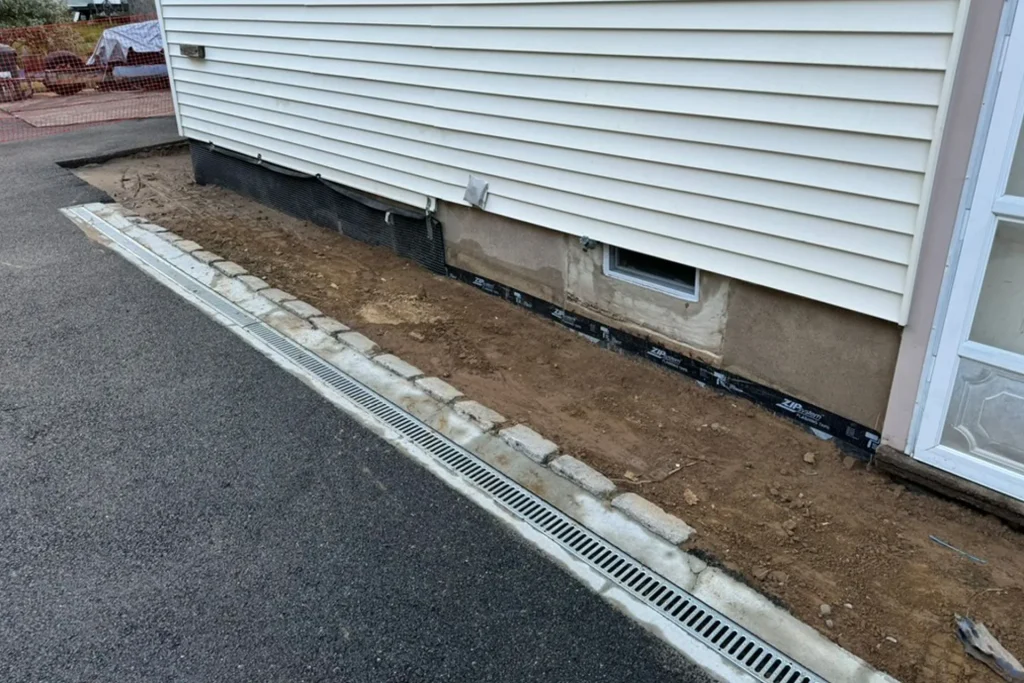
Waterproofing helps here in two ways. First, it often starts with correction at the surface, improving grade, extending downspouts, and reducing roof runoff near the foundation. Second, if moisture has already become a recurring issue, an exterior waterproofing system can create a continuous barrier on the wall and pair it with drainage board or perimeter drain tile so water is intercepted and moved away before it pushes inward.
Surface water issues are among the most fixable, but they are also among the most ignored because the remedy can seem too simple. Homeowners sometimes assume a serious leak must require a complex answer. Often, the first meaningful improvement comes from getting water to leave the perimeter of the house instead of soaking into it.
Hydrostatic pressure and why cracks start leaking
If there is one concept that explains most basement leaks, it is hydrostatic pressure. When soil around a foundation becomes saturated, water builds pressure against the wall and under the slab. That pressure forces moisture through cracks, cold joints, and tiny pores in the concrete. It can also lift or stress the slab enough to make existing defects worse.
This is why a basement can leak even when the crack looks small. A hairline opening may seem harmless during dry weather, then produce a visible seep after several days of rain. The crack did not suddenly become large. The amount of water outside changed, and pressure did the rest.
Vertical cracks are common in poured concrete foundations and may result from shrinkage, settlement, or seasonal movement. Horizontal cracks are more concerning because they can indicate wall pressure from saturated soil. Step cracks in block or brick foundations often reflect movement along mortar joints. Not every crack is a structural emergency, but every recurring leak deserves attention.
A proper waterproofing approach depends on the crack type and the water conditions around it. Interior crack injection can be effective in some poured concrete walls, especially when the crack is stable and accessible. Exterior repair may be the better long-term solution when water is entering repeatedly or when multiple defects are present. In block foundations, interior drainage systems are often used because water can travel within the wall itself and show up far from the original entry point.
The mistake I see most often is a cosmetic patch over an active leak. Hydraulic cement and sealants have their place, but they are not universal answers. If hydrostatic pressure remains high, water usually finds another route.
Joint leaks: where wall meets floor
One of the most common leak locations is not the middle of the wall at all. It is the cove joint, the seam where the basement floor meets the wall. This area is naturally vulnerable because the wall and slab are separate pours. Even in a well-built home, that seam can become a pathway when water pressure builds below or beside the foundation.
Homeowners often mistake cove joint seepage for wall leakage because the water spreads outward across the slab. The wall may look mostly dry while the perimeter edge stays damp. During heavy storms, that dampness becomes a thin line of water or a shallow puddle.
This is where interior Basement Waterproofing systems often make sense. Rather than trying to force the joint to remain perfectly dry under all conditions, an interior drainage channel is installed along the perimeter to capture water and route it to a sump basin. When paired with a reliable sump pump, it relieves pressure and manages water before it reaches living space or storage areas.
That said, interior systems manage water after it enters the wall or reaches the joint area. Exterior systems stop much of it before it gets that far. The right choice depends on budget, access, landscaping, foundation type, and how severe the problem is. There is no single best method for every house, and anyone who says otherwise is oversimplifying the work.
Window wells and below-grade openings
Basement windows create another weak point. Window wells can fill https://shanertgw484.capitaljays.com/posts/basement-waterproofing-for-finished-basements-what-you-need-to-know with rainwater, especially if drains are clogged or missing. Once the water level rises high enough, it leaks around the frame, through failed caulking, or over the sill. I have seen finished basements damaged by nothing more than a buried well drain and one intense summer storm.
Doors to walkout basements, utility penetrations, and service entries can create similar problems. Any break in the wall plane must be flashed, sealed, and protected from ponding water. These areas deserve close attention because they often combine several issues at once, poor grading, failed sealant, and concentrated runoff.
Waterproofing around openings usually involves more than one fix. The surrounding grade may need adjustment. Well drains may need cleaning or replacement. Covers can help in the right setting, though they are not substitutes for drainage. Exterior membranes and proper flashing details are often what turn a recurring problem into a solved one.
When plumbing is the real culprit
Not every basement leak comes from outside. A failed water heater, sweating pipes, a leaking supply line, a drain backup, or condensation on uninsulated ductwork can mimic foundation seepage. The difference matters because the remedy is completely different.
One useful clue is timing. If the basement gets wet only during rain or spring melt, exterior water is more likely. If the moisture appears regardless of weather, or near fixtures and appliances, plumbing or condensation should be investigated first. Water staining patterns can help too. Exterior seepage often appears at perimeter walls, cracks, or floor joints. Plumbing leaks may appear under pipes, near mechanical equipment, or in isolated spots away from the foundation.
Good waterproofing contractors know this and should rule out interior sources before prescribing major work. A careful diagnosis saves money and prevents the frustration of repairing the wrong thing.
Efflorescence, mold, and the early warning signs many people miss
Basement leaks do not always present as standing water. Often the first signs are subtle. White chalky residue on masonry, called efflorescence, indicates that water has moved through the material and left mineral deposits behind. Peeling paint, rust on metal shelving, swollen trim, damp cardboard boxes, and a persistent musty odor all point to elevated moisture.
These signs matter because chronic dampness causes damage even when no puddle is visible. Mold can develop on organic materials. Wood framing can stay wet long enough to support rot. Insulation loses effectiveness. Finished basements trap moisture behind drywall and flooring, where the problem grows quietly.
A quick homeowner check can catch problems early:
- Look along the wall-floor seam for dampness, staining, or mineral deposits.
- Check around basement windows, pipe penetrations, and visible cracks after heavy rain.
- Inspect gutters, downspouts, and discharge points outside the home.
- Notice odors, bubbling paint, or rust on stored items and mechanical equipment.
- Measure humidity if the basement feels clammy, especially in summer.
Catching the issue at this stage is cheaper than waiting until flooring buckles or drywall has to be removed.
How Basement Waterproofing actually helps
The phrase Basement Waterproofing gets used loosely, and that can confuse homeowners. Real waterproofing is not just one product or one repair. It is a strategy to control water movement using a combination of drainage, sealing, pressure relief, and moisture management.
Exterior waterproofing is the closest thing to a full barrier system. The soil is excavated along the foundation, the wall is cleaned and repaired, and a true waterproof membrane is applied. A drainage board may be added to protect the membrane and direct water downward to footing drains. If old perimeter drains are clogged or absent, new drain tile can be installed. This method is disruptive and usually more expensive, but it addresses the water where it starts and is often the most comprehensive option.
Interior waterproofing is usually about collection and control. Water that reaches the inside perimeter is captured in a drainage channel and directed to a sump pump. Vapor barriers may be installed on walls to guide moisture downward into the system. This approach does not stop water from reaching the exterior side of the wall, but it can be highly effective for keeping the basement dry and usable. In many homes, especially where excavation is impractical, it is the most sensible solution.
Crack repair, sump pump installation, battery backup systems, dehumidification, and grading corrections all fit under the broader umbrella of moisture control. The right package depends on the problem. A minor seep through one wall crack is different from broad seepage through a block foundation after every storm. Good waterproofing work is diagnostic first, corrective second.
Interior versus exterior methods, and the trade-offs
Homeowners often ask which is better, interior or exterior waterproofing. The honest answer is that each solves a different part of the problem.
Exterior systems excel when the goal is to keep water away from the wall entirely. They protect the structure, reduce saturation around the foundation, and can be ideal during major renovations or when excavation is already happening. The downside is cost, labor, and disruption. Landscaping, patios, decks, or driveways can complicate access. In dense neighborhoods, property lines and utilities may limit options.
Interior systems shine when access is difficult or when hydrostatic pressure at the floor joint is the main issue. They are usually less disruptive from the outside and can be installed year-round in many climates. Their limitation is philosophical as much as practical: they manage water rather than completely excluding it from the exterior face of the wall.
For many homes, the best answer is a hybrid. Fix the grading and roof drainage first. Repair obvious cracks. Add an interior perimeter system where seepage persists. Upgrade the sump pump if power outages are common. The goal is not to follow a script. It is to match the remedy to the house, the site, and the way water behaves there.
Sump pumps, backups, and why reliability matters
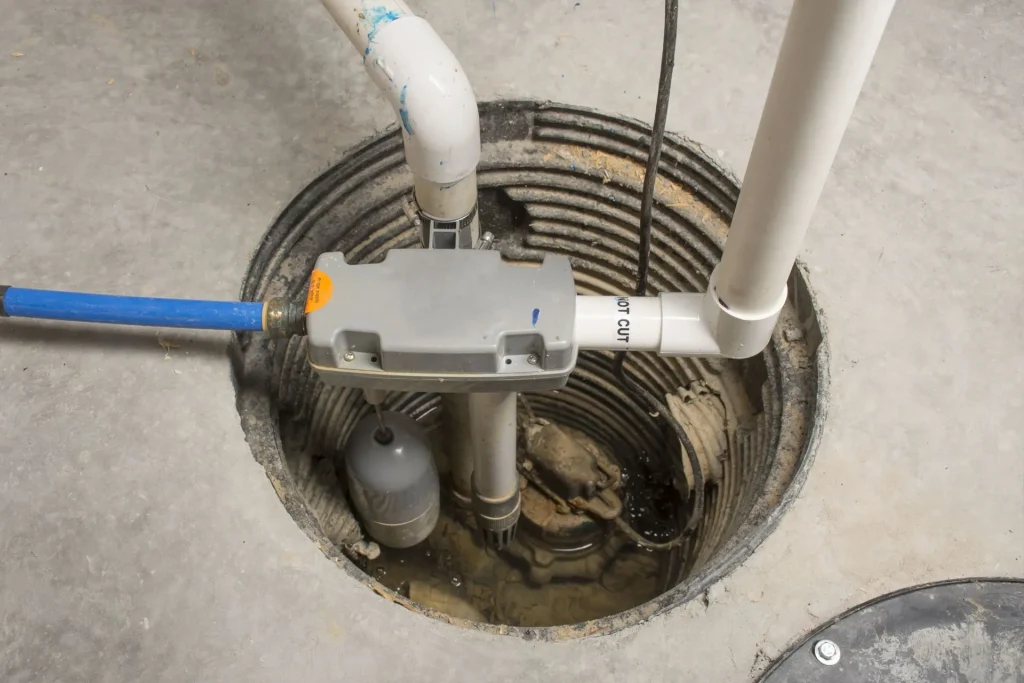
A sump pump is one of those components people forget exists until it fails. In an active waterproofing system, that little machine is doing essential work. If water is being collected and redirected to a sump basin, pump reliability is not optional.
The most important questions are not just whether the pump works today, but whether it can handle peak flow and keep working during a storm. Heavy rain often comes with power outages. That is why battery backups or water-powered backup systems deserve serious consideration in many areas. An undersized or aging pump can turn a manageable water issue into a cleanup emergency in a matter of hours.
Discharge lines also matter. If the outlet freezes in winter, gets buried, or empties too close to the foundation, the system cannot perform as intended. I have seen well-installed interior drainage systems undercut by a discharge line that dumped water right back beside the house.
What a thorough inspection should uncover
A basement leak is rarely solved well by staring at one wet spot for five minutes. A proper inspection looks at the whole water story of the property, roof runoff, grading, soil conditions, foundation type, visible cracks, drainage infrastructure, humidity levels, and signs of past repairs.
An experienced eye will also ask useful questions. Does the leak happen only in spring? Only after wind-driven rain? At one corner or across the perimeter? Has the issue changed since a patio was added or landscaping was redone? Was the basement recently finished, making an old moisture problem more obvious?
Those details shape the solution. They can also reveal edge cases. For example, a home on a slope may need uphill interception rather than just perimeter work. A house with a high water table may require more robust pump capacity. A historic stone foundation may need breathable materials and a different moisture strategy than a poured concrete wall.
Preventing a small problem from becoming an expensive one
The financial difference between early intervention and delayed repair can be dramatic. Redirecting downspouts and repairing one crack is one level of expense. Replacing mold-damaged drywall, flooring, trim, insulation, and stored contents is another. If moisture contributes to structural movement or chronic indoor air quality issues, costs rise further.
The good news is that prevention is usually practical. Most homeowners can reduce risk significantly by paying attention to drainage outside, monitoring moisture patterns inside, and acting on early warning signs. Waterproofing does not always mean a major excavation project. Sometimes it means a smart sequence of targeted corrections that work together.
Here are the prevention priorities I recommend most often:
- Keep roof water moving well away from the foundation.
- Maintain positive grading so soil slopes away from the house.
- Repair cracks and failing sealants before repeated wetting enlarges the problem.
- Install or maintain sump and drainage systems where conditions justify them.
- Control interior humidity so minor moisture does not become mold growth.
Simple steps do not solve every leak, but they reduce the load on the foundation and give bigger systems a better chance to succeed.
The value of fixing causes, not just symptoms
A dry basement is not just about comfort. It protects structural materials, preserves indoor air quality, and makes the lower level usable with far less risk. Whether the space is unfinished storage or a fully finished family room, moisture has a way of limiting what the basement can safely become.
That is why leak repairs work best when they focus on the source of the water and the route it takes. Paint, fans, and patch compounds have their role, but they should support a real water-control plan, not replace one. Basement Waterproofing is most effective when it recognizes that water pressure, drainage, soil behavior, and building details all interact.
Every basement has its own story. Some leak because runoff was never managed. Some because a crack opened after seasonal movement. Some because an old drain system gave up years ago and nobody knew. The right waterproofing approach brings those hidden causes into view and deals with them directly. Once that happens, the basement stops being the place where water wins quietly, one storm at a time.
ARD Waterproofing
98 Smull Ave, West Caldwell, NJ 07006, United States
+1 917-691-8411
FAQ About Basement Waterproofing
Can you 100% Waterproof a Basement in West Caldwell?
A properly designed system can substantially reduce basement water intrusion, but no method can promise protection against every flood, equipment failure, or future change in site conditions. The first step is identifying whether moisture comes from surface runoff, groundwater, plumbing, or condensation. Solutions may include grading and gutter improvements, drainage, foundation repairs, and a sump system. Review the specific coverage and exclusions of any written warranty.
How much does it cost to professionally waterproof a basement in NJ?
There is no single price that fits every basement. Cost depends on the cause of the leak, the area needing work, access, excavation requirements, drainage design, sump equipment, and restoration of disturbed finishes or landscaping. Request an on-site assessment and an itemized written estimate that explains the scope, exclusions, and maintenance requirements before comparing proposals.
How long does foundation waterproofing last in West Caldwell, NJ?
Service life varies with the waterproofing materials, installation quality, soil and water conditions, and maintenance. Drainage components and pumps may require servicing or replacement even when other parts of the system remain functional. Keep gutters, drainage outlets, and sump equipment maintained, and have recurring leaks or changes in foundation condition assessed. Ask for product-specific expectations and written warranty terms rather than relying on one lifespan for the entire system.
Public Last updated: 2026-10-20 01:27:32 PM