Roof Washing for Historical Homes: Gentle Approaches
Historic roofs carry more than shingles and tiles. They hold years of weather, local craftsmanship, and small decisions made long before we arrived. When they go dark with algae or hide under moss, the instinct to “blast it clean” can do real harm. The right approach trades speed for care. It keeps original materials intact and helps your roof shed water the way it was designed to, long before modern membranes and fasteners took over.
I work along the coast and inland, where weather swings from salt air and storms to hot, still summers. In places like Myrtle Beach, algae loves the humidity, and older roofs often sit under mature trees. Roof Cleaning and Roof Washing, done the right way, can add years to the life of a historic roof. Done the wrong way, it can uproot slates, strip protective oils from cedar, and wash fragile mortar from open joints. Soft Wash Roof Cleaning is the quiet, careful process that usually fits these structures best, as long as the chemistry and the technique are tailored to the material.
What makes a historic roof different
A hundred years ago, builders chose materials for local climate, cost, and what the sawmills or quarries could deliver. The result is a mix of surfaces, each with its own limits.
- Slate sheds water well and can last a century or more, but it is brittle. Pressure at the wrong angle can snap a corner or open a hairline. Older slate sometimes hides “nail sickness,” where iron fasteners decay and lose bite. Any foot traffic or tugging can start a slide.
- Cedar shakes and shingles breathe and dry. Their natural oils resist rot, but harsh chemicals strip those oils and speed up checking. Soft tools, gentle cleaners, and patience keep cedar alive.
- Clay and terracotta tile hate foot traffic on unsupported spans. The glaze, if present, can lift or craze with heat shock. Aggressive cleaning turns hairline cracks into pathways for water.
- Tin and terne metal want mild cleaners, not the high pH or chlorinated mix that can pit finishes. Old solder joints at seams are easy to disturb.
- Early asphalt shingles have more filler and less robust mat than modern ones. Granules are often loose after decades of UV. A big spray head at high pressure can send those granules into the gutter in a minute.
On top of the materials themselves, detailing on old roofs is often more delicate. Think lime-based mortar at chimneys, copper valleys with a cherished patina, open ridge vents, and cedar dormers where flashing hides under wood. The goal is to clean biological growth without dislodging what keeps the roof watertight.
Why growth shows up and how to tell what you are seeing
In humid coastal zones like the Grand Strand, algae is the headliner. The dark streaks on asphalt shingles come from gloeocapsa magma, a blue-green algae that feeds on limestone fillers in shingles and thrives where shade lingers. Moss and lichens follow. Moss sends rhizoids into porous materials, locking on and holding moisture. Lichen forms stubborn discs that etch slowly into stone and clay.
On cedar, you might see a gray film of weathering, which is normal, alongside green algae and black mildew in the damp north faces. Slate often carries lichen colonies that are tenacious but not an urgent threat unless they trap water in freeze-thaw climates. In Myrtle Beach, freeze-thaw is mild, so the bigger worry is moisture held against the surface after a storm. Either way, long soak times and gentle removal protect the substrate better than any shortcut.
The risks of pressure washing on old surfaces
A pressure washer can make a mess look clean fast, but on a historic roof it acts like a chisel with bad aim. High pressure blows off granules and opens fibers on cedar. It rips lichen discs free along with thin layers of glaze on clay or the face of slate. Water gets driven under laps and into nail holes. With older flashing and dried sealants, that intrusion finds plaster ceilings later.
Low pressure matters. For historic roofs, I want application pressures closer to a garden hose, typically in the 60 to 100 psi range at the tip. The power lies in the chemistry and the dwell time, not the push. When I hear a machine racing and see a tight stream, I back away. When I see a wide fan at low pressure, a steady wetting pattern, and no visible blast, I know the approach is on the right track.
Soft Wash Roof Cleaning, tuned for heritage materials
Soft washing pairs low pressure with targeted cleaners that loosen organic growth. The mix and the method change depending on the roof.
- Asphalt shingles, newer or older, respond to a diluted sodium hypochlorite solution with surfactants that help it cling. I stay between about 0.5 and 1 percent available chlorine on the surface for historic shingles, sometimes stepping up to 1.5 percent on stubborn algae but giving it more dwell time instead of more concentration. The goal is to kill and release growth without stripping granules. Rinsing can be minimal on pitched roofs, since the next rain carries away residues, but near skylights, copper, and painted trim I prefer a controlled rinse.
- Slate calls for the same chemistry at the lower end, often 0.5 to 1 percent with a wetting agent, applied in light passes. Lichen needs time, and a second visit may be smarter than scraping. There is no reason to scrub slate aggressively. A soft bristle brush gets a place or two where drips pooled, but wide areas should be left to the chemistry and weathering.
- Cedar prefers oxygen-based cleaners, such as a sodium percarbonate solution in water. This releases hydrogen peroxide in contact with water and organic matter, lifting stains without harsh pH. On historic cedar, I use a solution mixed to the manufacturer’s mid-range and add a plant-safe surfactant. Gentle agitation with a soft brush moves the cleaner into the grain. Cedar should be flushed thoroughly. Chlorine-based mixes can be used cautiously by pros who understand the risk, but I avoid them on original shakes because they leach oils and can mute color in uneven patterns.
- Clay and terracotta tile clean well with a mild chlorine solution if the glaze is sound, often around 1 percent, but any efflorescence or spalling calls for extreme care. A neutral pH cleaner with biocide can follow to slow regrowth without pushing alkalinity.
- Metal roofs on historic buildings cover a wide range. Painted standing seam behaves differently than old terne plate or copper. Painted steel tolerates mild detergent and a quaternary ammonium biocide. Copper should not see chlorine, which stains and can accelerate corrosion. A neutral wash, soft brush, and fresh water rinse preserve a natural patina.
When I mention percentages, I am talking about the solution on the surface, not stock. Professionals use proportioners or batch mix with known concentrations. Homeowners guessing at a jug-and-bucket recipe can end up far too hot. If the smell of chlorine is heavy and stinging, the mix is almost always stronger than needed for a heritage roof.
Protecting plants, paint, and people
Any cleaner that kills algae can stress landscaping. Preparation is not optional. Before I treat a roof, I saturate plant beds with fresh water so leaves and soils are not thirsty. Light covers or tarps protect delicate shrubs. I keep a neutralizing agent on hand, like sodium thiosulfate, to mist any leaves that might have caught overspray. After the wash, I rinse plants again and return the area to neutral. Advanced Power Wash Roof Washing In hot sun, this step matters even more, because chemicals dry fast on leaves.
Old paint around eaves can contain lead. Aggressive rinsing at high volume spreads chips and contaminated runoff. With soft washing, runoff is limited, but I still manage water. Gutter outlets can be bagged or diverted into containers for controlled disposal. If the home sits in a historic district, local guidelines may outline runoff rules. It is best to check with the municipality before scheduling a large Roof Washing job.
Safety matters, too. Old roofs often have steeper pitches and hidden weak points. I prefer work from ladders with stand-offs, roof pads that spread weight on slate or tile, and lifts where trees allow. Rope and harness setups prevent a slip from turning into a fall. If someone proposes walking the entire roof in boots, ask how they will protect the material and themselves.
A short pre-clean checklist that saves headaches
- Identify the roof material and its condition, including fasteners, flashing, and any cracked or loose pieces.
- Map sensitive areas, like copper accents, old paint, thin mortar, and leaded glass, and plan to shield or avoid them.
- Test a small, inconspicuous area with the chosen cleaner at the intended strength, then wait to see the full reaction.
- Pre-wet and protect plants, and stage neutralizers, tarps, and clean water for immediate use.
- Confirm weather, especially wind and heat. Calm, overcast days are ideal for controlled dwell time.
How Myrtle Beach climate shapes strategy
Roof Cleaning Myrtle Beach projects face persistent humidity, warm nights, and salt carried inland by wind. Algae thrives in this mix. Afternoon pop-up storms are common, so scheduling during a few stable days helps. I favor morning starts, when tiles are cool and solutions do not flash dry. Heat spikes shorten dwell time and increase the risk of streaking on uneven surfaces.
Salt adds a wrinkle. On metal, salt crystals draw moisture and can accelerate corrosion. A gentle fresh water rinse, even without chemicals, is valuable on metal roofs near the beach. For slate, salt spray mainly feeds lichen where moisture lingers. Trimming back trees to increase sun and airflow pays dividends here. After a hurricane or a week of heavy surf, a simple hose-down can reduce salt load on accessible areas without poking at fragile surfaces.
Local building history helps. Many Myrtle Beach cottages use cedar and asphalt mixes, or clay tile on Mediterranean revival homes. Roof Washing Myrtle Beach teams that know these stock details move faster on protection and set expectations better.
The right tools for a soft wash
You do not need a trailer full of pressure washers to clean a historic roof correctly. The best kits look modest: a 12 volt diaphragm pump or air diaphragm unit that delivers 2 to 5 gallons per minute at low pressure, chemical-rated hose, a long wand with a gentle fan tip, and metering for precise dilution. A separate water source for rinsing, ideally through a garden hose or low-pressure booster, keeps chemistry and rinse lines apart.
Surfactants deserve a mention. They reduce surface tension so the cleaner wets evenly and clings to pitched surfaces without racing into gutters. I look for products that rinse clean and do not leave sticky residue that attracts dust. Some contractors add a small amount of soap designed to mask chlorine odor, which is helpful in tight neighborhoods.
For agitation, think soft. Natural bristle brushes or flagged synthetic bristles move cleaner into cedar grain or lift debris from terracotta Roof Cleaning without scratching. Metal scrapers have no place on slate or clay. If lichen needs persuading, I tap the edge of a plastic putty knife very gently, then let the next rain and another round of treatment finish the job.
A field story, two roofs, and what they taught
There is a 1927 bungalow not far from the water, with original cedar shingles preserved under shade trees that rake salt up the block. The owners wanted the black film and patches of green gone. A quick bleach mix would have stripped the color and left a blotchy look. We mixed sodium percarbonate in warm water with a mild surfactant and worked in three sections. Wet the surface, apply the cleaner from the bottom up, let it dwell for about 15 minutes, then softly brush along the grain and rinse with fresh water. The first pass lifted the green bloom. The second treatment a week later evened the tone. A month on, the roof had that silvered cedar look without the smears you get from hot chlorine.
Another job, a Queen Anne with a slate roof from the 1890s, carried heavy lichen on the north face. We set a lift on the driveway to avoid walking the slate. A 0.75 percent chlorine solution with surfactant went on in light coats. No scrubbing, just patience. After 20 minutes, the lichen went from green to gray. We left it. Rains over the next six weeks loosened the discs. Some pieces clung because they had etched in. We returned with the same mix and a plastic blade, teasing only the edges that had lifted. The owner sent a photo after a summer storm. The gray freckles had thinned to a few pale marks, with the slate’s natural tone restored.
Both projects needed protection for lead paint at eaves, and both homeowners were surprised at how quiet the process was. No roaring motors. No fans of water hitting windows two stories up. That quiet translates to control, which is what you want on an old roof.
Step by step, the gentlest path
- Document the roof with photos, then make small repairs first. Secure loose slates or cracked tiles, and replace lifted cedar that will snag a brush.
- Stage protection: cover delicate plants, set gutters to capture runoff if needed, and shield copper or zinc where chlorine would stain.
- Mix cleaners precisely. Start mild. You can always add a second pass, but you cannot un-etch clay or un-strip cedar oils.
- Apply evenly from the lower courses up so cleaner does not run through dry areas and leave streaks. Watch for dry spots. Keep the surface evenly damp, not soaked.
- Allow adequate dwell time, then rinse or allow weather to rinse, depending on the material. Resist the urge to scrub hard. Inspect after it dries fully, then schedule a second light treatment rather than changing to aggressive tactics.
Special cases that demand extra judgment
Not all roofs should be cleaned with the same bottle.
Copper and historic zinc gain a protective patina that owners often cherish. Chlorine stains them and may accelerate corrosion at seams. If algae mars the surface, a neutral pH detergent and soft cloth or brush, followed by a fresh water rinse, will clean without stripping character. If runoff from a near roof would drip chlorine onto copper gutters or flashing, cover those metals during treatment and flush them afterward.
Asbestos cement shingles still exist on some mid-century homes. They are brittle and present a health risk when fibers turn airborne. Cleaning them should be left to specialists who understand containment and legal disposal. In many cases, the correct move is to leave light staining alone or use a very mild biocide with no agitation, along with protective gear and containment measures.
Mortar at chimneys and parapets changes over time. Historic lime mortar is softer than modern Portland mixes. Pressure or harsh rinsing erodes it quickly. If the joints look friable, I keep the cleaner away from direct spray and hand rinse with a gentle trickle. If algae has colonized a parapet cap, it might be time to consult a mason for joint repair before any cleaning.
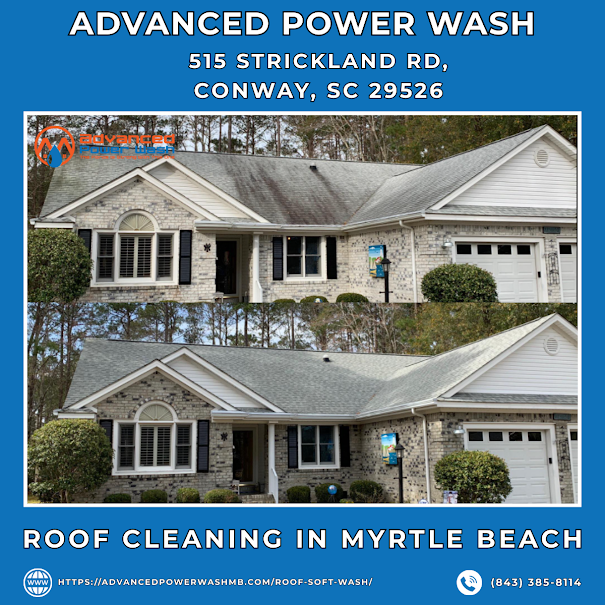
Setting expectations: time, cost, and results
Gentle cleaning takes time, especially with thick lichen or a mix of materials. A 2,000 square foot roof of asphalt shingles might be treated in half a day. A similar area in slate or clay tile, with full protections and a lift, can take a day or two, plus a follow-up visit. On cedar, add the time to brush and rinse thoroughly.
Costs vary by region, access, and material. In coastal South Carolina, a simple asphalt roof on a one-story cottage might run a few hundred dollars. Complex slate with limited access, or tile requiring lift work and plant protection, pushes into the low thousands. I avoid promises like “good as new.” The right metric is a clean, healthy surface with intact materials and no scars. Lichen ghosts can linger on slate and tile after the organisms die. Over a season, those marks fade as the surface weathers.
Warranties for Roof Cleaning or Roof Washing tend to cover regrowth for a year or two. In Myrtle Beach conditions, that can be realistic for algae but not a guarantee against airborne spores finding shade again. The best warranty is a maintenance plan.
How to choose a pro for Roof Cleaning Myrtle Beach
Experience with historic fabric matters more than logo flash. Ask how they protect plants and metals, what concentrations they use on your material, and whether they plan to walk the roof. A good answer sounds measured, not macho. Insurance is nonnegotiable. Ask for references from similar homes and for photos that show protection steps, not only the before and after glamour shots. If a contractor insists on high pressure or scoffs at soft washing, keep looking.
Local knowledge helps in this region. Roof Washing Myrtle Beach teams deal with salt, wind, and quick storms. They should plan for weather windows, bring neutralizers, and understand the local historic district’s rules on runoff and exterior work.
Maintenance that slows regrowth
Algae and moss return if the conditions suit them. After a careful cleaning, small changes make a big difference. Trim back branches that shade the roof and drop organic Soft Wash Roof Cleaning litter. Keep gutters clear so water does not back up at eaves and drip down a face in permanent streaks. Consider zinc or copper strips near ridges on asphalt or some tile roofs, where rain can carry trace metals that discourage algae. On cedar, make sure the attic breathes so the roof dries between rains. An annual walk-around with binoculars, after pollen season, spots new colonies before they set anchors.
For coastal metal roofs, add a fresh water rinse after a big storm or once a month in the high-salt season. It is as simple as a hose and a calm morning. That habit, mixed with a gentle biocide wash every year or two, keeps paint bright and seams healthy.
When not to clean
Sometimes the smartest move is to stop. If slate shows widespread delamination or you hear the crunch of spalling underfoot, conservation might come before cleaning. If cedar crumbles to touch where moss holds it together, replacement panels or a partial restoration should lead. Clay tiles with many cracks can break under their own weight after you lift the cushion of moss. In those cases, cleaning waits until repairs put the roof back in a condition that can be safely maintained.
A last word on patience
Historic roofs reward restraint. The temptation to turn a knob and see instant white again is strong. Every time I have chased that feeling with more pressure or a hotter mix, the roof told me later that it was a bad idea. Every time I have chosen a lighter solution, returned in a few weeks, and let weather help me, the results lasted longer and the material stayed sound.

If you own a historic home in a humid zone like Myrtle Beach, plan Roof Cleaning as part of your wider stewardship. Gentle chemistry, low pressure, and a thoughtful sequence protect the investment that sits above every room. With the right approach, the roof does its old job, water runs where it should, and the house keeps its story intact.

Public Last updated: 2026-04-30 04:10:40 AM