Dedicated AI Servers vs. Cloud Instances for Growing Workloads
Choosing the Right Compute Setup for AI Workloads
As AI projects move from experimentation to production, the question of infrastructure becomes central. Teams often find themselves weighing two broad options: investing in dedicated on-premise servers or scaling through cloud-based instances. Each path offers distinct trade-offs in control, cost, and flexibility. Understanding these differences helps match the infrastructure to the workload's stage and demands.
Understanding the Core Difference
At its simplest, the choice is between owning hardware and renting compute time. Dedicated AI servers are physical machines installed in a data center or server rack, fully under your control. Cloud instances are virtualized slices of compute resources provided by a third party, accessed over the network. Both can run the same model training and model inference tasks, but the experience of managing them diverges sharply.
For a growing workload, the decision often comes down to how predictable the demand is and how much operational overhead the team can handle. A dedicated server gives you a fixed amount of compute, memory bandwidth, and interconnect capacity. That stability is valuable for workloads that run continuously, such as serving a recommendation model or processing a steady stream of data. Cloud instances, on the other hand, allow near-instant scaling. If your workload spikes during a marketing campaign or a research push, you can provision more instances in minutes.
When Dedicated AI Servers Make Sense
Dedicated servers shine when workloads are consistent and resource requirements are well understood. Once you know the size of your model and the throughput needed for inference or training, you can spec a machine with the right number of AI accelerators, the appropriate memory bandwidth, and sufficient power efficiency for your power budget. The total cost ownership over three years often becomes predictable because you are not paying per hour of compute.
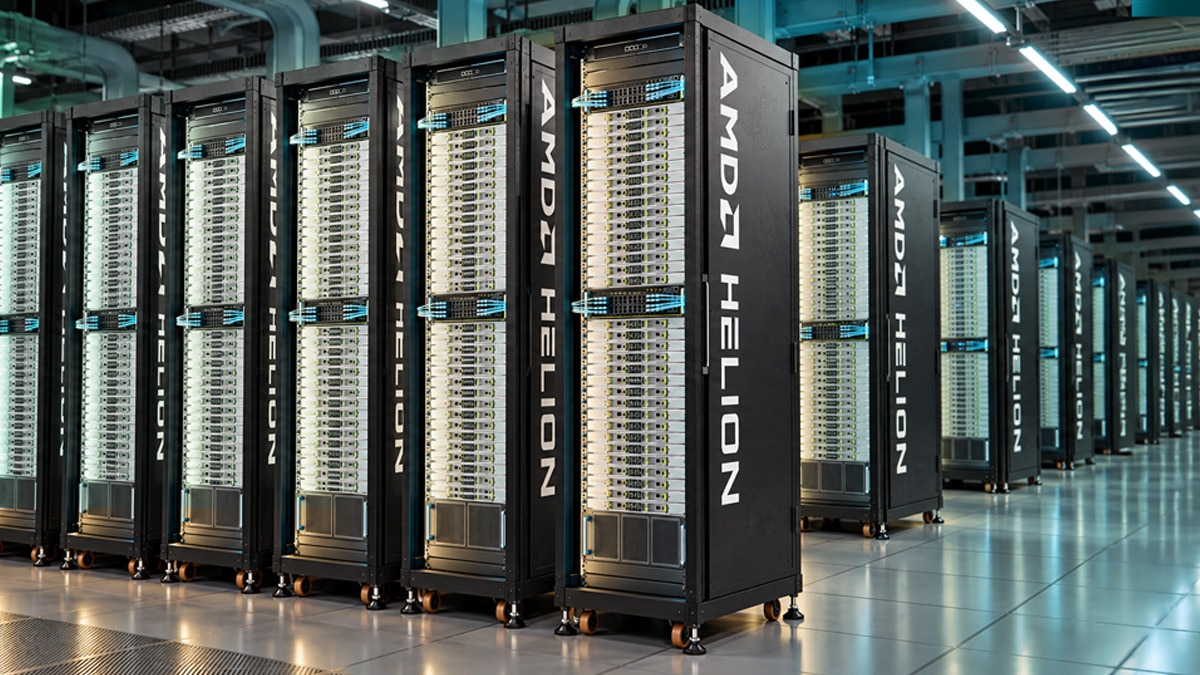
Another advantage is data locality. For organizations that handle sensitive data, keeping everything on premises or in a controlled colocation facility avoids the complexities of moving data across public networks. Latency also drops when the compute and storage are on the same local network, which matters for real-time inference tasks.
However, dedicated servers require upfront capital expenditure and a team capable of maintaining hardware, monitoring system health, and planning capacity. If your workload grows faster than expected, you may find yourself waiting for new hardware to arrive. This is where the flexibility of cloud instances becomes attractive.
When Cloud Instances Are the Better Fit
Cloud instances excel in scenarios where demand is variable or unpredictable. Startups, research groups, and teams running many short experiments benefit from paying only for the compute they consume. You can spin up a hundred instances for a large training run and tear them down when the run finishes, avoiding idle hardware costs.
The cloud also provides access to the latest generation of AI accelerators without a long procurement cycle. If a newer chip offers better memory bandwidth or power efficiency, you can switch to it with a configuration change. For model training especially, where the workload may only need a cluster for a few days, cloud instances reduce the risk of investing in hardware that becomes obsolete.
That said, cloud costs can escalate if you are not careful. Sustained high utilization, such as running inference 24/7, often makes cloud instances more expensive than a dedicated server over a multiyear period. Network latency and data transfer fees also add friction for latency-sensitive applications.
Hybrid Approaches and What to Watch For
Many teams adopt a hybrid model: a dedicated server for baseline workloads and cloud instances for bursts or experiments. This approach balances the predictability of owned hardware with the elasticity of the cloud. The key is to design your software stack so that it can run in either environment without major rework. Containerization and orchestration tools help achieve that portability.
When evaluating either option, pay close attention to the interconnect. Distributed training requires fast communication between nodes, so the network fabric within a server rack or across cloud instances matters as much as the raw compute. Similarly, memory bandwidth becomes a bottleneck for large models that need to move parameters in and out of accelerator memory efficiently.
Power efficiency is another consideration. Dedicated servers run at a fixed power draw, which can be optimized for your specific workload. Cloud providers often offer instances with different efficiency profiles, but you have less control over the underlying hardware mix. For organizations with sustainability targets, understanding the power usage of each option is important.
One resource that provides more detail on the hardware side of dedicated AI servers is amd.com. Their documentation covers CPU and GPU architectures optimized for AI workloads, including memory bandwidth and interconnect specifications that influence server design. Whether you are building a server rack or configuring cloud instances, the principles of matching compute resources to model requirements remain the same.
Practical Decision Framework
To decide between the two, start by characterizing your workload:
- Is the workload continuous or intermittent? Continuous workloads favor dedicated servers; intermittent ones favor cloud instances.
- How fast is the workload growing? If you expect to double compute needs within six months, the cloud offers easier scaling.
- What is your team's hardware expertise? Dedicated servers require sysadmin skills; cloud instances shift that burden to the provider but introduce complexity in cost management.
- How sensitive is the data? Strict data residency requirements may push you toward dedicated hardware.
- What is the total cost over the expected lifecycle? Model out three years of usage, including power, cooling, maintenance, and staffing for dedicated servers, versus compute and data transfer costs for cloud instances.
No single answer fits every scenario. The right choice depends on the specific balance of control, cost, and flexibility that aligns with your organization's priorities.
Looking Ahead
AI hardware continues to evolve rapidly. New AI accelerators, improved interconnects, and better power efficiency are arriving regularly. Both dedicated servers and cloud instances will benefit from these advances, but the pace of change might tilt the scales toward cloud instances for teams that want to stay on the leading edge without large capital commitments. Meanwhile, organizations with stable, high-utilization workloads will continue to find dedicated servers cost-effective.

As you plan your infrastructure, revisit the decision periodically. The workload that justified a dedicated server six months ago may now be better served by cloud instances, or vice versa. Staying flexible and monitoring actual usage patterns will help you avoid overcommitting to one approach. For a deeper look at the hardware components that make up modern AI servers, resources like amd.com offer technical specifications that can inform your server design choices.
Ultimately, the goal is to match compute resources to the workload's demands without overspending or undershooting. Whether you choose dedicated servers, cloud instances, or a mix, understanding the trade-offs in memory bandwidth, interconnect, power efficiency, and total cost ownership will guide you to a setup that grows with your AI projects.
Public Last updated: 2026-11-20 09:09:40 AM