Why aren't local ad clicks turning into real customers?
You are spending money on local pay-per-click ads. People click. They land on your site. Then nothing happens. No phone call. No form fill. No sale. The clicks look good in the report, but the register does not match. If this sounds familiar, the problem is rarely that local ads do not work. The problem is almost always a gap between what the ad promises and what the visitor finds.
The promise on the ad and the reality on the page
A local search ad is a promise. It says: "Click here and you will get exactly what you need, right now." When someone searches for "emergency plumber near me" or "same-day dry cleaning Chicago," they are not browsing. They are ready to act. If your ad says "24-hour service" and your landing page mentions normal business hours without a clear after-hours number, the visitor feels misled. Even a small mismatch kills trust. The visitor leaves.
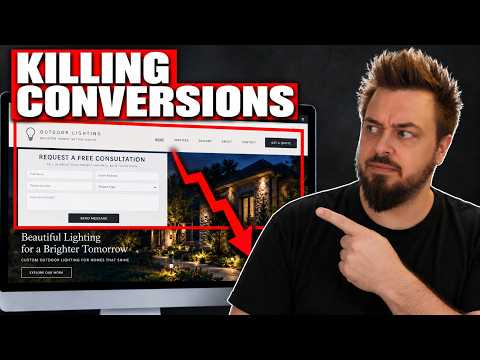
Most local businesses run ads that are too generic. A broad ad for "landscaping services" brings clicks from people who want lawn mowing, tree removal, or patio design. If your landing page talks only about mowing, the patio customer bounces. Every click that does not convert costs you money. The fix is to match the ad copy directly to the landing page content. If you run an ad for "patio installation," the page it sends people to should talk about patios, not general landscaping. That sounds obvious, but many local advertisers skip this step because they want one page to do everything.
Click quality versus click quantity
Local PPC management is not about getting the most clicks. It is about getting the right clicks. A campaign set to maximize clicks will show your ad to anyone, including people who will never buy. Someone searching for "free mulch" will click a paid ad that says "mulch delivery" because it looks relevant. But that person has no intention of paying for mulch. They cost you money and never convert.
The audience targeting in your campaign matters a lot. Local ads need location targeting that is narrow enough. If you serve only the north side of Chicago but your location radius covers the whole metro area, you pay for clicks from people outside your service area. They click, realize you do not come to their neighborhood, and leave. You paid for that click.
Negative keywords also play a big role. Without them, your ad can show for search terms that have no buying intent. A roofing company might show up for "how to fix a roof leak yourself." That searcher is not hiring a roofer. Adding negative keywords like "diy," "repair cost," and "how to" filters out tire-kickers. A well-managed local campaign spends money on people who are ready to hire, not on people who are researching a hobby.
The landing page experience
Even with perfect targeting, a bad landing page stops conversions. Local visitors want to see three things fast: your phone number, your service area, and proof you are real. If your page buries the phone number in a footer, or if the contact form asks for too much information, people give up.

Speed is another factor. A landing page that loads in three seconds loses about half of mobile visitors. Most local searches happen on a phone. If your page is slow, the click was wasted. Mobile-friendliness goes beyond speed. Text that is too small to read without pinching, buttons that are hard to tap, or a form that requires typing a lot of detail on a tiny screen all cause drop-offs.
Trust signals matter more than most business owners realize. A local visitor wants to see that you are established. A clear address, a phone number that matches the area code, and a brief mention of how long you have served the area all help. If your landing page looks like a template with stock photos, the visitor wonders if you are a real local business or a fly-by-night operation. Lemur Marketing works with Chicagoland businesses on website design and local SEO, and one thing they see often is that even a well-designed site can lose trust if the contact information is hard to find or inconsistent.
Ad scheduling and budget timing
Many local businesses run their ads 24/7 without checking when calls actually come in. If your busiest phone time is between 9 AM and noon, but your ads run all night, you pay for clicks at 2 AM when no one answers the phone. The visitor gets voicemail and calls your competitor who answers. Ad scheduling lets you show your ad only during hours when you can respond. That alone can double the conversion rate without changing anything else.
Budget also affects conversion quality. If your daily budget is very small, your ad shows only a few times per day. It might show to people at the wrong moment, or not show at all when the best prospects search. A tiny budget spread too thin rarely produces enough data to optimize. Sometimes spending a little more on a tighter set of keywords, with careful scheduling, brings in more customers than a larger budget spread across broad terms.
Tracking what happens after the click
One of the biggest blind spots in local advertising is not knowing what happens after the click. Google Ads will tell you someone clicked and stayed on the page for a few seconds. But did they call? Did they fill out a form and get an error? Did they open the contact page and then leave because the form did not work on their phone? Without call tracking and form tracking, you are guessing.
Call tracking gives you a phone number that is unique to the ad campaign. Every call from that number is recorded and attributed. You can listen to calls and hear whether the person was ready to book or just asking about hours. That feedback helps you adjust your ad copy and landing page. Form tracking tells you if submissions are actually reaching your inbox. It sounds basic, but forms break surprisingly often. A broken form means you pay for clicks that can never convert.
Lemur Marketing helps Chicagoland businesses with paid advertising, and part of that work includes setting up proper tracking so you know which clicks lead to a conversation. Without tracking, you cannot tell if the problem is the ad, the page, or something else entirely.
Competition in local search results
In a competitive local market, your ad might show below three other ads and a map pack. Even if someone clicks your ad, they might have already seen several competitors. They may click your ad just to compare prices. That kind of click rarely converts on the first visit. Local PPC management needs to account for the fact that many visitors are shopping around. Your landing page should make it easy for a serious shopper to see your value quickly and get in touch.
One way to handle comparison shoppers is with a clear offer that stands out. A flat-rate price for a common service, a free estimate with no obligation, or a guarantee on workmanship can make your listing more compelling. If every competitor says "call for a quote," the visitor picks the one that answers first. If you offer something concrete, you increase the chance that a comparison shopper chooses you.
What local PPC management should do differently
Managing local ads well means looking beyond the click rate. It means checking that every click has a reasonable chance of turning into a customer. That starts with tight keyword targeting and location settings, continues with a landing page that loads fast and shows trust signals, and ends with proper tracking so you know what works.
If your local ad clicks are not producing customers, start by auditing the gap between your ad and your landing page. Then check your targeting, negative keywords, and ad schedule. Make sure your phone number is prominent and your contact form works. If you fix those things and still see low conversion, consider whether your offer stands out enough in a crowded local market. Small adjustments in any of these areas often produce a much better return on the ad spend you are already making.
 LinkedIn
 Facebook
 YouTube
Public Last updated: 2026-11-25 05:33:29 PM