How to Prove Driver Distraction in a Denver Bicycle Accident Case
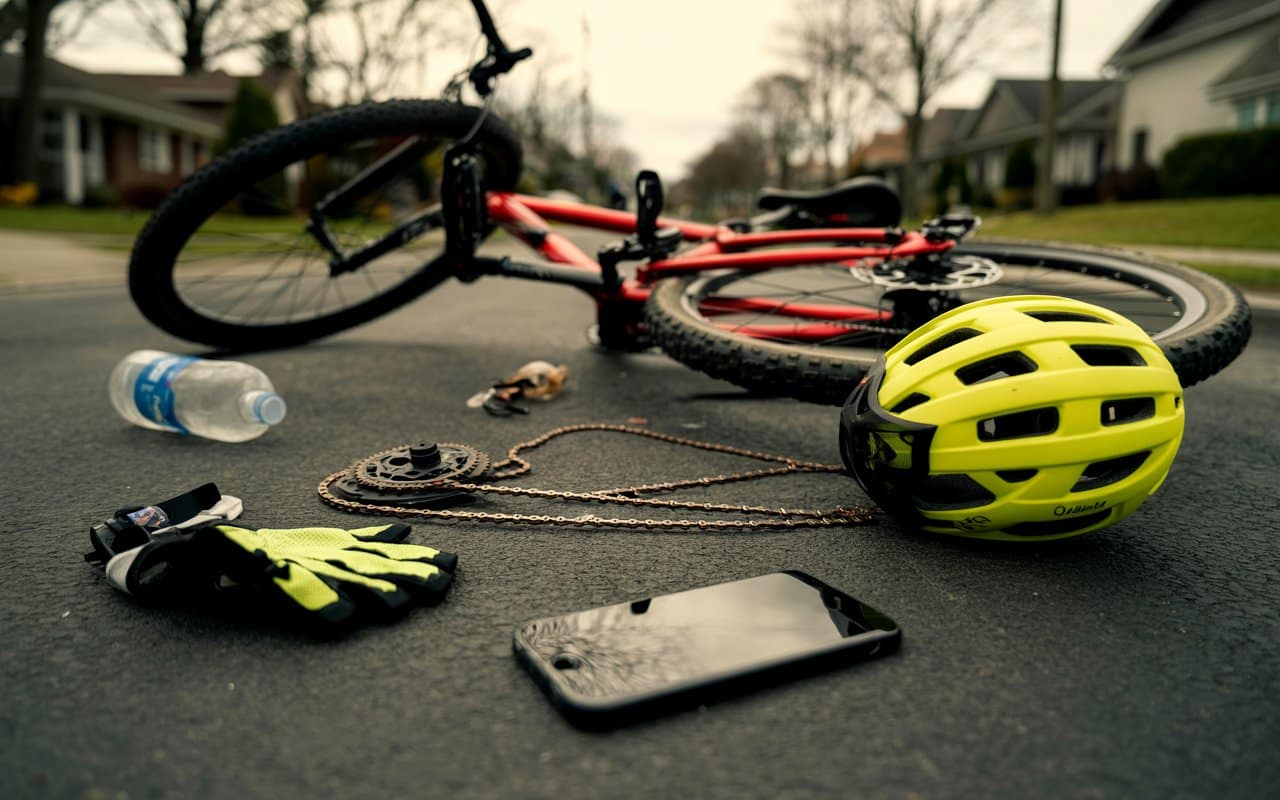
A bicycle crash can turn on a single moment of inattention. A driver glances at a phone, reaches for coffee, taps a navigation screen, looks over a shoulder for traffic, then rolls through a bike lane or clips a rider in an intersection. The problem for an injured cyclist is that distraction rarely announces itself. Few drivers admit, right at the scene, that they were texting, scrolling, or fiddling with a playlist. Most say some version of the same thing: “I didn’t see the cyclist.”
That sentence matters, but not for the reason many people think. In a Denver bicycle accident case, “I didn’t see them” can point straight toward negligence. Drivers are expected to look, register what is there, and react reasonably. If a cyclist was visible and the driver failed to notice them, distraction may explain why. Proving that, though, takes more than suspicion. It takes timing, physical evidence, witness accounts, digital records, and a careful reconstruction of what happened in the seconds before impact.
Denver has no shortage of roads where these cases arise. Busy downtown corridors, neighborhood streets with parked cars, protected lanes that disappear at awkward points, and intersections where drivers turn across bike traffic all create settings where divided attention becomes dangerous. When a rider is badly hurt, proving distraction can make the difference between a denied claim and a strong one.
Why distraction cases are different
A standard crash case often focuses on obvious violations, speeding, failure to yield, running a red light, or unsafe lane changes. Distraction cases overlap with those issues, but they usually require a deeper look into the driver’s behavior before the collision. That is because distraction is often invisible after the fact. There may be no breath test like in a DUI case, and no skid marks if the driver never braked.
What you are really trying to prove is that the driver’s attention was compromised at the precise time they should have been scanning for hazards, checking mirrors, respecting the bike lane, or yielding at a turn. In practice, that means building a timeline so detailed that it becomes hard to explain the crash any other way.
Colorado negligence law does not require a smoking gun in every case. You do not always need a text message sent at the exact second of impact. Strong circumstantial evidence can be enough if it points in one direction. For example, a driver who drifts into a bike lane on a clear afternoon, leaves no evidence of braking, gives conflicting statements, and has a phone record showing activity within a minute of the crash has a problem. So does a driver who turns right across a cyclist’s path after telling police they “never saw” the rider, despite an unobstructed line of sight and surveillance footage showing the cyclist had the green.
That is where a seasoned Bicycle Accident Lawyer Denver riders trust can make a practical difference. The legal issue is not just what happened, but what can still be obtained before it disappears.
The first few days often decide the strength of the case
Evidence of distraction is fragile. Security video gets overwritten. Nearby business cameras may keep footage only for a few days. Vehicle data can be lost if the car is repaired or totaled. Phone records are not self-executing. Witnesses forget details quickly, especially subtle ones like whether the driver looked down just before impact.
Early action matters more in bicycle cases than many people realize because the rider is often taken from the scene by ambulance and has no chance to gather information personally. By the time pain subsides enough to ask questions, the roadway has reopened and the ordinary traces are gone.
If the crash happened in Denver, a lawyer investigating promptly may look for street-facing cameras on apartment buildings, light rail stations, retail storefronts, city traffic systems, school properties, or parking facilities. Not every source will have usable footage. Some cameras only capture still frames. Some point the wrong direction. But when video exists, it can answer critical questions: Did the driver slow at all? Were they tracking the roadway or looking down? Did they drift? Did the cyclist have a visible position in the lane long enough to be seen?
The first days are also the best time to preserve the bicycle, helmet, damaged clothing, lights, and electronics. A bent rear wheel, a broken taillight, scrape patterns, and transfer marks can all help tell the story of how the impact occurred.
What driver distraction actually looks like in a bicycle case
People often picture distraction as texting. Texting is common, but it is far from the only form. In real cases, distraction can involve navigation apps, calls, social media, food, pets, children in the back seat, adjusting climate controls, or simply staring at something outside the vehicle instead of the road. The legal principle is broader than phone use. A driver who takes eyes, hands, or mental focus away from safe operation can still be negligent even if no text was sent.
In bicycle collisions, certain patterns recur. Right-hook crashes are one. A driver passes a cyclist and turns right across the rider’s line before leaving enough space or checking mirrors. Left-turn crashes are another, where a driver turning across oncoming traffic claims the rider “came out of nowhere,” even though the cyclist was approaching in plain sight. Dooring incidents can also involve distraction when someone in a parked vehicle opens a door into a bike lane without looking. Rear-end bicycle crashes on straight roads are especially suspicious because they often suggest the driver failed to perceive a visible rider ahead.
None of these patterns proves distraction by itself. What they do is narrow the likely explanations. If the cyclist was lawfully where they were supposed to be, had lights if conditions required them, and remained visible for a meaningful stretch of time, then a failure to detect them raises serious questions.
The evidence that tends to matter most
In these cases, proof usually comes from many small pieces that reinforce each other rather than one dramatic piece of evidence. Some of the most useful include:
- Cell phone records showing calls, texts, data sessions, or app activity near the time of the crash.
- Video footage from traffic cameras, businesses, homes, buses, or dashcams.
- Vehicle data, including braking, speed changes, steering inputs, and infotainment use when available.
- Witness statements about the driver looking down, drifting, failing to brake, or making admissions at the scene.
- Physical and scene evidence, including point of impact, debris field, bike damage, and sight lines.
Cell phone records deserve special attention because people often misunderstand what they show. Standard carrier records may identify call times and text timestamps, but not always detailed app use. In some cases, deeper forensic analysis of the device itself may be needed, and that usually requires aggressive preservation efforts and formal legal process. It is also worth knowing that a driver can be distracted without active use at the exact second of impact. Reading a message moments before a turn, entering an address while approaching an intersection, or glancing down repeatedly over several seconds can be enough.
Video footage can be even more powerful because it bypasses memory and self-interest. A grainy camera may still show that the driver never reduced speed, failed to signal, or initiated a turn while the cyclist was already alongside. Sometimes the best footage does not capture the impact directly but catches the seconds before it, which can be just as important.
Vehicle data varies. Newer cars often record more information than older ones, but access is not guaranteed, and the scope differs by make and model. Some systems log events only when airbags deploy or when a threshold event occurs. Others may preserve data related to braking or steering. Infotainment systems can also become relevant if the issue was active touchscreen use.
Witnesses remain crucial, especially in urban Denver crashes where pedestrians, transit riders, or nearby drivers may have seen the event. A witness who noticed the driver holding a phone or looking down into their lap can change a case. So can a neutral witness who says the cyclist had a clear lane position and the driver simply turned into them.
How phone evidence is obtained, and why delay hurts
People sometimes assume a lawyer can simply “pull the phone records.” It is rarely that simple. Carriers maintain certain records, but those records may be limited in detail and retained for different periods. Device-level evidence often requires a court order, subpoena, or inspection protocol that protects privacy while preserving relevant data. If the driver changes phones, deletes data, replaces the device, or repairs a damaged vehicle integrated with the phone, the opportunity can shrink fast.
That is why preservation letters matter. When sent promptly, they put the driver, insurer, and any relevant third parties on notice that potentially relevant evidence must not be destroyed. They do not guarantee compliance, but they create a record and can influence how later discovery disputes are handled.
There is also a strategic point here. Insurance companies know that distraction is hard to prove and often test whether an injured cyclist has the resources and patience to pursue it. If a claim is presented with a vague allegation that the driver “must have been on the phone,” it will likely go nowhere. If the claim is built around a precise timeline, preserved footage, witness statements, scene analysis, and pending digital evidence requests, the posture changes.
Scene evidence can speak loudly even when no one saw the phone
Physical evidence often fills gaps that testimony cannot. Suppose a cyclist is hit from behind on a straight Denver street with good daylight, no weather issue, and a clear line of sight for several hundred feet. The bike is struck squarely from the rear. There are no meaningful skid marks and no visible attempt to swerve. That combination does not prove texting, but it strongly suggests perception failure. Drivers who are paying attention usually react somehow, even if they react too late.
The layout of the road matters too. Protected lanes, painted lanes, shared lanes, curbside parking, and turn pockets all affect what the driver should have expected and where the cyclist should have been visible. A reconstruction may examine lane widths, signage, signal timing, approach angles, and whether parked cars or landscaping truly obstructed the view. In many right-turn cases, the driver’s claim that the cyclist was in a “blind spot” falls apart once the geometry is reviewed carefully. Blind spots exist, but they do not excuse a turn made without proper checks.
The bicycle itself can be informative. Impact to the side of the front wheel may suggest a turning conflict. Rear frame damage can support a rear-end scenario. Embedded paint, mirror fragments, and scrape direction can help establish vehicle position and movement. Helmets and clothing can also reveal where the rider was thrown, which sometimes matters when the defense disputes point of impact.
Statements made at the scene can help, or hurt
A surprising amount of evidence comes from things said in the first ten minutes after a crash. Drivers under stress often speak more candidly before they have talked to an insurer. “I was looking for parking.” “I was checking my map.” “My phone fell.” “I thought you were stopping.” These are not always formal admissions, but they can be repeated by witnesses, included in body camera footage, or reflected in police notes.
Cyclists can help themselves by paying attention, if physically able, to what the driver says and does. Was the phone in the driver’s hand? Did the driver immediately pick it up from the floorboard? Did they apologize for not looking? Did a passenger say, “I told you to watch out”? Those details may sound small, but small details win hard cases.
That said, injured riders should resist the urge to argue roadside. The goal is not to extract a confession. The goal is to get medical care and preserve information. A short, calm observation to police, such as “I saw the driver looking down before impact,” is more useful than a heated exchange.
Police reports help, but they are only the starting point
In Denver bicycle crash cases, police reports can be useful, especially if they identify witnesses, road conditions, and basic fault indicators. Sometimes an officer notes that the driver admitted using a phone or being distracted. Sometimes a citation is issued. But many reports are sparse, and some are plainly incomplete on the distraction issue.
That should not discourage a claimant. A police report is not the final word. Officers often arrive after the fact, work from limited information, and are not conducting a civil discovery process. A report that simply says “driver failed to yield” may still support a distraction theory when combined with video and records. On the other hand, a report that seems neutral or even mildly unfavorable can sometimes be overcome once a fuller investigation is done.
The common mistake is treating the report as the whole case. It is not. It is one piece.
Medical records can reinforce the liability story
At first glance, medical records seem relevant only to damages, not fault. In practice, they can support the distraction theory indirectly. Timing of ambulance transport, reported mechanism of injury, and trauma patterns can align with the physical evidence. A rider thrown a significant distance may support a claim that the driver failed to brake. Severe side impact injuries may fit a turn-across collision. Records also anchor the chronology, which matters when insurers later imply that the crash was minor or that the cyclist’s account changed.
There is a practical reason to address treatment early and consistently. Distracted driving cases often face resistance from insurers on both liability and value. Gaps in care, vague symptom reporting, or delayed evaluation can create avoidable friction. A well-documented medical course does not prove distraction, but it strengthens the claim overall and reduces side disputes.
The defenses drivers and insurers commonly raise
Once distraction is alleged, the defense typically shifts in predictable ways. One common response is simple denial. The driver says they were not on the phone and were fully attentive. Another is visibility, claiming the cyclist wore dark clothing, moved suddenly, rode outside the lane, or came from an unexpected direction. A third is comparative fault, arguing the rider failed to use lights at dusk, filtered improperly, ignored a signal, or occupied the wrong roadway position.
Colorado’s comparative negligence rules matter here. If the cyclist shares fault, recovery can be reduced, and if fault reaches a certain threshold, recovery may be barred. That makes the factual fight important. Insurers know this and often search for any cyclist behavior they can frame as careless.
The answer is not to ignore weaknesses. It is to evaluate them honestly. If a rider did not have a required light, that should be addressed directly. If lane markings were confusing or partially faded, that context matters. Real cases are rarely perfect. A persuasive claim acknowledges the full setting while keeping the focus on the central issue: whether the driver exercised reasonable care.
A good Bicycle Accident Lawyer Denver claimants hire will usually test the defense theories against the hard evidence. If the insurer says the cyclist “appeared suddenly,” how far back does the video show the rider? If they claim dark clothing made the cyclist invisible, what were the lighting conditions, and did the bicycle have reflectors or lights? If they argue the rider was outside the lane, where does the debris field place the impact?
What injured cyclists should do after the crash
The strongest cases are often built from practical, unglamorous steps taken early. If you are physically able, focus on preserving information while the scene is still fresh.
- Get medical help first, even if adrenaline is masking pain.
- Identify witnesses and ask for names and contact information.
- Photograph the bike, vehicle, roadway, lane markings, signals, and any visible phone or in-car items.
- Save damaged gear, clothing, lights, and electronics exactly as they are.
- Avoid detailed recorded statements to the insurer before getting legal advice.
Those steps do not guarantee proof of distraction, but they often preserve the pieces needed to establish it later.
Denver-specific realities that shape these cases
Denver bicycle cases have local quirks. Seasonal light conditions can change quickly, especially during evening commutes. Road design varies from modern protected corridors to older streets with patchwork accommodations. Construction is constant enough that normal traffic patterns may be altered by cones, temporary lane shifts, or blocked bike facilities. All of that affects what a driver should have expected and what a cyclist could reasonably do.
There is also the urban visibility problem. Downtown and in dense neighborhoods, drivers process a lot at once: pedestrians, scooters, parked cars, delivery vehicles, transit, rideshares, and signal phases. That does not excuse distraction. If anything, it raises the duty to pay attention. But it does mean investigators need to distinguish between true obstruction and simple inattention. A driver may say they were “watching for pedestrians,” yet that explanation can still amount to negligence if they turned through a bicycle lane without checking for riders.
Another Denver reality is that many useful cameras are privately owned. A coffee shop patio https://johnathanhgos427.currentvale.com/posts/denver-bicycle-accident-lawyer-insights-on-medical-bills-after-a-crash camera, a condo entry camera, or a nearby bus dashcam may end up being far more important than any official traffic system. That is why local familiarity helps. Knowing where footage is likely to exist, and how quickly to ask for it, is not glamorous lawyering, but it wins cases.
Building a persuasive claim from imperfect evidence
Most distraction cases are not neat. The video cuts off just before impact. The best witness only saw the aftermath. The driver’s phone records show activity close to the crash, but not the exact content. The police report is bare bones. This is normal.
A strong claim comes from synthesis. The cyclist was visible for several seconds. The driver made no meaningful evasive move. The crash pattern fits inattention. The witness saw the driver look down. The phone record places active use near the moment of collision. The driver’s own statement shifted over time. Together, those pieces can be compelling.
This is also where judgment matters. Not every bicycle crash should be framed as a distraction case. Sometimes the better theory is straightforward failure to yield, unsafe passing, or lane violation without overreaching on phone use. Credibility matters. If the evidence supports distraction, pursue it hard. If it does not, forcing it can weaken the broader claim.
For injured riders, the practical takeaway is simple. Do not assume a lack of direct proof means there is no case. Many distracted driving claims are proven through disciplined investigation rather than dramatic confessions. The question is whether the available facts, gathered quickly and interpreted carefully, show that the driver’s attention drifted at the exact moment it needed to be fixed on the road and the cyclist ahead.
When that showing is made well, the defense line that “I just didn’t see the bike” stops sounding like an excuse and starts sounding like the evidence of negligence it often is.

Public Last updated: 2026-09-23 09:17:04 AM