The Math Behind the Pit Wall: How Machine Learning Actually Drives Race Strategy
If you have spent any time on a pit wall, you have heard the word "instinct" thrown around to describe a brilliant strategic call. Let me be clear: that is nonsense. When a strategist calls for a pit stop five laps before the window, they aren't relying on a "gut feeling." They are relying on a complex, shifting landscape of probability provided by machine learning. The "instinct" is just the human brain trying to catch up to a computer that has already run 10,000 simulations in the blink of an eye.
Modern race strategy tools have moved beyond simple spreadsheets. We are no longer just looking at fuel consumption rates; we are analyzing the stochastic nature of traffic, tire degradation, and weather patterns. This is not "magic," and it certainly isn't "game-changing" in the sense that it solves racing—it is simply a better way to map out potential futures.
The Data Density Problem: Telemetry as the Foundation
Before we talk about machine learning, we Helpful site have to talk about telemetry. The volume of data coming off a modern prototype or GT car is staggering. We aren't just looking at brake pressure and throttle position anymore. We are looking at high-frequency sensor data that tracks everything from internal tire carcass temperature to the micro-vibrations in the gearbox.
When you aggregate this data across a season, you create a massive training set. In academic literature, such as recent publications in Applied Sciences (MDPI), the focus is often on how this high-density data is used to model vehicle dynamics in real-time. For us on the pit wall, this means we can predict not just *if* a tire will fail, but the probability distribution of that failure occurring over the next 15 laps.
It is important to note, however, that telemetry alone is descriptive. Machine learning is what makes it predictive. Without the modeling layer, you are just looking at a dashboard of "what happened." The predictive analytics engine is what tells you "what is likely to happen" based on the degradation curves we have mapped over thousands of laps.
Probability Over Certainty: The Monte Carlo Principle
One of the most persistent myths I encounter is the idea that data provides a single "correct" answer. That is a dangerous mindset. In endurance racing, we deal in distributions, not certainties. This is where the Monte Carlo principle becomes the backbone of our strategy.
When I run a Monte Carlo simulation, I am essentially asking the computer to race the final two hours of a 24-hour event ten thousand times. In each iteration, the model introduces variables: an extra three seconds in a pit stop, a yellow flag in sector two, or a competitor’s tire failing. By aggregating these results, we don't get a "win," we get a probability distribution.
Let's do a quick back-of-the-envelope sanity check. If our car has a 70% chance of maintaining a 1.5-second gap and a 30% chance of hitting heavy traffic that costs us 5 seconds, the "expected value" of our lead is not a static number. If you choose to ignore the variance—the 30% risk—you are setting yourself up for failure. A model that hides this variance is useless. I need to see the "long tail" of the distribution to know if the gamble is worth the potential podium.
Comparative Overview: Old-School Strategy vs. Predictive Analytics Feature Old-School Strategy Modern ML-Driven Strategy Primary Basis Historical averages (static) Real-time probabilistic modeling Reaction Time Human observation Latency-minimized automated alerts Risk Assessment Gut feeling / "Experience" Monte Carlo distribution analysis Complexity Linear calculations Multi-variate neural networks
Real-Time Decision Making: The Pit Wall Reality
When the race is live, the pit wall is a place of extreme focus. I have seen companies like MrQ apply data-driven risk management in their sectors, and the parallels to racing are striking. It is about understanding the odds of an outcome and executing when the expected value is positive. If the machine learning model suggests a 65% probability of a safety car within the next 10 laps based on historical crash density in wet conditions, we have to adjust our fuel window immediately.
However, I must be careful here. I have seen teams over-rely on models to the point of paralysis. As MIT Technology Review has noted in its coverage of AI decision-making, the biggest challenge is "algorithmic transparency." If the strategist doesn't understand *why* the model is suggesting a change, they lose the ability to override it when the physical reality on the track (like an unusual oil leak or a driver complaining about front-end graining) deviates from the sensor data.
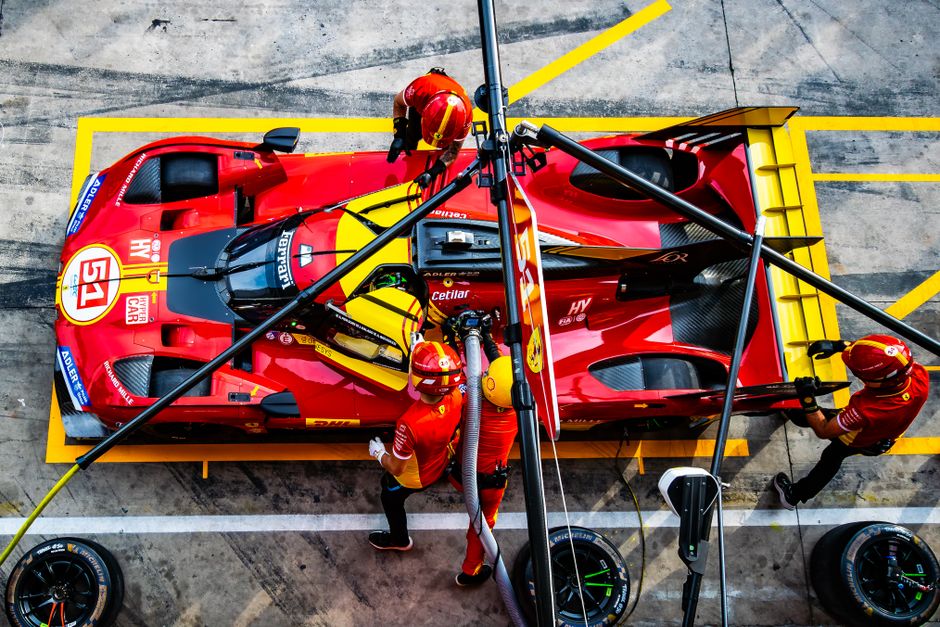

The model is a tool, not the commander-in-chief. If the model says "box now," but my driver says the car feels stable, the human must weigh the telemetry vs. the sensory input. A partial comparison to note: a car model trained on dry-track data will be utterly useless in a rainstorm, regardless of how "advanced" the algorithm is. You cannot replace real-world physical nuance with code alone.
Why We Need to Stop Overstating "Game-Changers"
I find it frustrating when people talk about machine learning as if it is a panacea. It is not. It is an iterative optimization tool. If you have bad data—garbage in—you will get garbage out, no matter how sophisticated your Monte Carlo simulation is.
My workflow is simple:
https://varimail.com/articles/the-geometry-of-the-pit-wall-how-to-spot-a-strategy-race/
- Data Ingestion: Syncing live telemetry with historical base-sets.
- Distribution Mapping: Using Monte Carlo simulations to find the current "most likely" outcomes.
- Sanity Check: Does this outcome make sense based on the car's current wear state? (The back-of-the-envelope phase).
- Action: Executing the strategy call based on the highest probability of success.
The shift toward predictive analytics has made racing safer and arguably more competitive. It forces teams to be precise. You can no longer rely on luck; you have to engineer the conditions where luck is statistically more likely to break your way. But let us be honest about what it is: it is math, it is probability, and it is a cold, hard look at the numbers before the flag drops.
If you want to understand the future of the sport, ignore the marketing fluff about "instinct" and start looking at the distributions. The teams that win are not the ones with the best "gut feeling"—they are the ones that understand the math of the race better than the field.

Public Last updated: 2026-06-16 11:50:54 AM