Ceramic Coating for Daily Drivers: Is It Worth It?
Ceramic coating earned its reputation in performance garages and concours circles, but most of the vehicles we coat are not trailer queens. They are daily drivers that rack up miles in traffic, sit under trees, and endure automatic car washes when life gets busy. The question is not whether ceramic coating works in a lab. It is whether it changes the daily reality of owning and maintaining a car that lives outdoors, commutes in the rain, and squeezes into tight parking lots.
I have coated hundreds of vehicles with different chemistries in different climates, from coastal salt to hot inland summers. The short answer is that a good ceramic coating, applied after proper preparation, gives you measurable benefits that last far longer than wax or sealants. The long answer is more nuanced. Coatings are not bulletproof. They do not erase neglect. They reward good habits and expose bad ones. The right way to decide is to understand how coatings behave on real paint, what they protect against, and where they fall short.
What a ceramic coating is really doing
A professional ceramic coating is a thin, hard, and chemically resistant layer that bonds to clear coat after surface preparation. Most modern coatings use silicon dioxide or silicon carbide chemistry that cures into a semi-permanent layer. On the scale of microns, the coating levels microscopic pits and pores in the paint, so dirt and water have fewer footholds. The result is tight water beading and easier cleaning.
Despite the marketing gloss, a coating is not armor plating. A rock kicked up by a truck will not care. If you drag a gritty wash mitt across a coated panel, you can still create swirls. The difference is in daily maintenance. Road film, brake dust, bugs, and mineral deposits release far more easily. In my notebook, the average hand wash time on a well-maintained, coated SUV drops by 30 to 40 percent after the first few months of curing and use. That means fewer wash-induced scratches over time and fewer hours spent.
How daily drivers beat up paint
A daily driver sees a mix of predictable and sneaky hazards. UV exposure slowly oxidizes paint and plastics. Tree sap and bird droppings etch if left hours too long in the sun. Winter roads lay down brine that cakes into wheel barrels and under rocker panels. Automated tunnel washes use strong detergents and stiff brushes. All of that builds up a gray film that loves to cling to unprotected clear coat.
I can spot a freeway commuter by the peppering across the front bumper and lower fenders, and a city parallel parker by the rash of scuffs at bumper corners. Coatings do not change the driver’s route, but they do change how contaminants interact with surfaces. Bugs that once baked on like epoxy now come off with light agitation. Road film that needed a strong alkaline prewash often releases with a pH-neutral shampoo and a gentle pre-rinse. The paint still needs kindness and sensible technique, yet it forgives more.
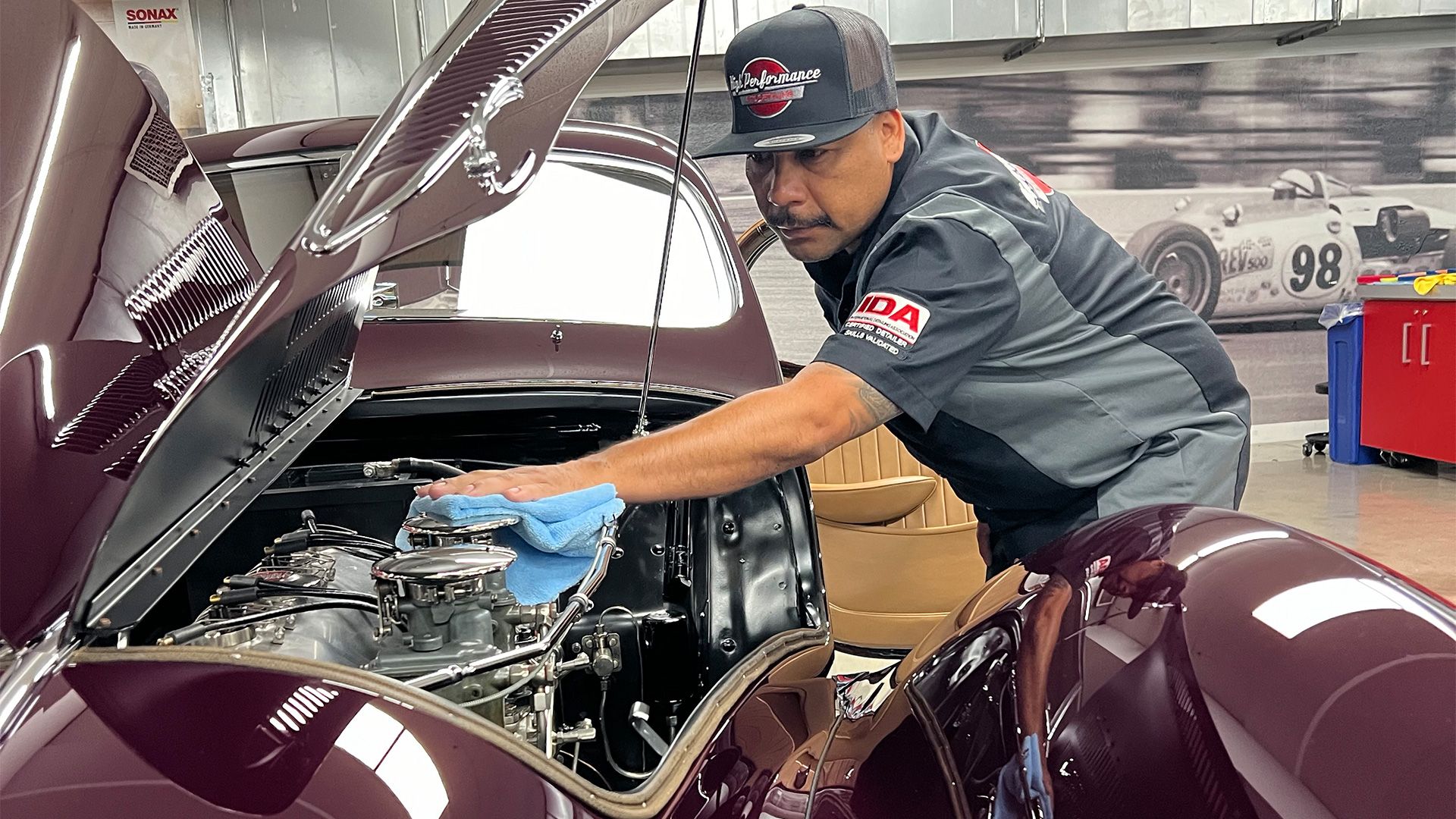
Wax, sealant, or ceramic coating for a daily driver
Year after year, the same conversation repeats across driveways and shop bays. Traditional carnauba waxes look warm and can be therapeutic to apply, but they tend to wash off within weeks of regular use and weather. Synthetic sealants last longer, usually a couple of months, with a more glassy look. A true ceramic coating, properly applied, lasts years, not weeks or months, while maintaining stronger chemical resistance and hydrophobics.
Here is the practical snapshot many owners find helpful:
- Wax: great gloss and warmth, lasts weeks, low chemical resistance, quick to apply.
- Sealant: crisp shine, lasts a few months, moderate resistance, easy reapplication.
- Ceramic coating: deep gloss with sharp reflections, lasts years with maintenance, high chemical resistance, requires prep and cure time.
For the owner who washes monthly and appreciates a sharp, durable finish, coatings offer obvious value. For someone who hits the automatic wash weekly and never hand dries, a coating still helps, but the results will not match the brochure.
The fine print that matters: preparation and paint correction
A coating locks in whatever sits beneath it. That is a blessing if the paint is clean and polished, and a curse if you skip preparation. At minimum, the process involves an alkaline prewash to strip traffic film, an iron remover to dissolve embedded ferrous particles, a clay pass to shear off bonded contaminants, a precise polish to refine the surface, and then a panel wipe to remove polishing oils before application. The level of paint correction varies. Some daily drivers benefit from a simple one-step polish that recovers gloss without chasing perfection. Others, especially darker vehicles with years of wash marring, warrant a more involved correction.
I have seen more regret from rushed prep than from any other step. On a white Tacoma that lives under a pepper tree, the paint looked clean after a basic wash. Under proper lighting, it showed a constellation of sap etchings and faint water spots. A quick ceramic coating would have sealed in that map of defects. With two rounds of targeted polishing, the paint looked five years younger. The coating then preserved that look, so the owner did not have to repeat heavy polishing again anytime soon.

Does ceramic coating prevent scratches?
No coating on the consumer market will make your paint scratch proof. Some coatings test higher on pencil hardness scales, but that metric does not map neatly to scratch resistance in the field. The real advantage for a daily driver is that hydrophobics and slickness reduce the need for aggressive scrubbing. Less friction means fewer micro-marring events over the course of hundreds of washes. Think of it as risk reduction, not immunity.
On a black German sedan I maintain quarterly, the owner used to need a light machine polish annually to refresh gloss from wash-induced swirls. After a thorough paint correction and a pro-grade coating, we shifted to a gentler maintenance routine. Three years in, the vehicle has needed only a spot polish on high-touch areas like the driver door handle and trunk lip. The coating did not stop scratches, but it reduced the pace at which they accumulated.
Coating longevity in real life
Manufacturers often quote multi-year lifespans. In controlled conditions, with perfect wash technique and indoor parking, those numbers are achievable. For daily drivers that park outside and see real weather, two to four years of meaningful performance is a reasonable expectation for a professional coating. Budget coatings and sprays fall shorter. Top-tier ceramics and ultra-high-solids products, when maintained, routinely exceed that range.
The signal to watch is not just water beading. Hydrophobics might taper in appearance but can be revived with topper products. The deeper indicators are chemical resistance and slickness. If bug splatter begins to require harsh chemicals or scrubbing where it used to release easily, the coating is losing its edge. Regular decontamination washes and a silica-based maintenance spray can stretch performance for years.
Maintenance habits that make or break a coating
Even the best ceramic coating depends on owner habits. A two-bucket hand wash with quality mitts, buckets, and drying towels preserves finish. Avoid spinning brushes and freebie towels that feel like Velcro. Rinse off bird droppings and fresh sap promptly, especially in summer heat. Use pH-neutral soaps for routine washes and save stronger cleaners for periodic decontamination. If you go through automatic car washes, opt for touchless when available, and follow with proper drying.
A simple maintenance rhythm looks like this:
- Routine wash every two to four weeks with pH-neutral shampoo and soft mitts.
- Quick silica spray topper every second or third wash to refresh slickness.
- Decontamination wash every four to six months with iron remover, then rinse thoroughly.
- Inspect high-impact zones quarterly, such as the lower doors, rear bumper, and behind wheels.
- Replace worn towels and mitts before they become scratch pads.
That is the entire list. If you stick close to it, the coated finish stays sharp, and wash time drops.
Where coatings shine beyond paint
Coatings are not limited to paint. On daily drivers, I see strong returns on wheels, glass, and trim. Brake dust that once baked onto bare aluminum faces will hose off coated wheels with far less agitation. On glass, coatings improve wet-weather visibility and make morning frost easier to clear. Fresh plastic trim benefits from UV resistance and a consistent satin look instead of chalking. Pair these with proper headlight restoration when lenses turn hazy, then seal the clarity with a ceramic topper designed for polycarbonate. That keeps night visibility strong and avoids premature re-yellowing.
I often coat the barrels of performance wheels as part of comprehensive car detailing, especially if the vehicle sees heavy urban stop and go that generates dusty pads. The difference in cleanup after a rain ride is immediate. The brownish slurry that used to smear now breaks and rinses clean.
The cost side of the decision
For a daily driver, the spreadsheet answer matters. Professional ceramic coating requires time, surface preparation, and careful application. The initial investment is higher than wax or sealant. Over a span of three years, however, reapplying wax monthly or a sealant quarterly adds both product cost and owner time. If you value time at even a modest hourly rate, the math begins to tilt. A coating amortizes across years, while gloss, UV resistance, and easy cleaning remain consistent.
There is also the avoided cost of heavy correction later. Clear coat is finite. Every machine polish removes a measurable fraction. By reducing the need for aggressive correction cycles, a coating conserves that finite layer. On one fleet of sales sedans that park outdoors at an office park, we halved annual correction time after moving to coatings. That saved paint thickness and maintenance dollars without changing drivers’ habits dramatically.
When a coating is not the answer
If you want perfect paint every time you walk up to the car, but you park under a messy tree and never hand wash, a coating cannot reconcile that gap. Likewise, if the vehicle is due for bodywork or repaint soon, wait. Coatings are not ideal over fresh paint until it fully outgasses per the painter’s guidance, often 30 to 90 days depending on products and booth conditions. If the car is a short-term lease return that already looks acceptable, a light polish and sealant may be the pragmatic choice.
There are edge cases. Matte or satin finishes require coatings designed for low-sheen surfaces to avoid streaking or unwanted gloss. Single-stage paints, usually older, can still be coated, but preparation must be adjusted because pigment transfers to pads, and aggressive polishing can thin the layer quickly. In all cases, judgment beats a one-size-fits-all recipe.
How Hugo's Auto Detailing prepares a daily driver for coating
Across different makes and paint systems, our sequence stays disciplined, and the tools adapt. At Hugo's Auto Detailing, we begin with a thorough inspection under proper lighting. We measure paint thickness where appropriate, and we note prior repairs and sensitive areas. Wash steps include a pre-rinse, snow foam dwell to soften grime, and a lubricated contact wash with dedicated mitts for upper and lower panels. Iron remover and clay follow, with special care on high-contamination zones like the rear hatch and lower doors.
Paint correction depends on what the paint tells us. A white crossover with light swirling might only need a fine finishing polish on a soft foam pad. A black pickup with wash trails and dealer-installed holograms may require a heavier cut, then refinement. We wipe panels with a proper solvent wipe to remove polishing oils, then apply the ceramic coating in small sections, leveling high spots before cure. We also set expectations. Owners leave knowing exactly how to maintain the finish, with written steps and product recommendations that fit their time and tools. This same attention to detail carries into other services like headlight restoration and engine detailing, where surface safety and material compatibility matter.
Real-world results from Hugo's Auto Detailing clients
One commuter brought us a two-year-old compact SUV that did everything a family car does. Groceries, soccer practice, highway miles to see grandparents. The owner washed in the driveway with a generic sponge and dish soap, not realizing how much that was dulling the paint. We performed a one-step paint correction to clear the haze and laid down a pro-grade ceramic coating. Six months later, the owner returned for a maintenance wash and asked what wizardry we had used on the front bumper, because bug cleanup had gone from a five-minute scrub to a 30-second rinse and swipe. That is not magic. It is a protected and slick surface doing its job.
Another case involved a performance sedan that the owner tracked twice a year but used for daily commuting. Brake dust was the bane of his Saturdays. We coated the wheels, including the barrels, and set him up with a gentle wheel cleaner and soft brushes. The following spring, he reported that post-track cleanup time on wheels dropped by about half. He still had to tend to rubber marbles and tar, but the baked dust rinse-off felt like cheating. For a daily driver that occasionally lives hard, those are the practical wins that justify the upfront work.
Mobile detailing, weather, and timing the application
Ceramic coating does not demand a fixed shop if conditions and processes are controlled. Mobile detailing setups can achieve excellent results with proper shade, temperature control, and dust management. In hot climates, we prefer early morning or evening application windows to avoid flashing too quickly. On humid days, cure characteristics change, so we adjust leveling time and panel size. If weather is unpredictable, we plan for a safe indoor cure or delay application. Few things frustrate owners more than water spotting during early cure because ceramic coating High Performance Auto Detail a surprise shower hit an hour after leveling.
For daily drivers, timing often lines up with a seasonal change. Before winter, a coating helps resist salt and makes rinse-downs quick. In spring, it fortifies against pollen storms and sap. If you opt for paint correction and ceramic coating ahead of a road trip, budget enough cure time so you do not hit a high-pressure wash within the first day. The coating will continue to harden over the next week, but it is surprisingly robust within hours if handled correctly.
The role of paint correction in preserving clear coat
Paint correction deserves a clear-headed view. On a daily driver, chasing 100 percent defect removal costs time and clear coat for gains you do not notice at three feet in daylight. Skilled auto detailing pros temper ambition with restraint. We target the most visible swirls and random isolated defects, refine the finish until it glows, and preserve as much clear coat as possible. The ceramic coating then locks that look. When you need a refresh years later, it is a gentle polish, not a return to aggressive cutting.
I keep a paint depth gauge on hand for a reason. I have measured hoods that started at a healthy 120 to 140 microns and, after years of enthusiastic but heavy-handed corrections elsewhere, sat in the 80s. That owner inherited a fragile finish. Modern clear coat is thin to begin with. The smart path is minimal removal plus protection.
Myths that muddy the decision
A few claims refuse to die. One says that ceramic coatings eliminate the need to wash. That is fantasy. Dirt still lands and sticks, just less stubbornly. Another says coatings cause paint to crack or peel. If a coating caused a failure, the paint was already compromised, usually from poor repair or contamination. A third insists that water beading equals protection. Beading looks pretty, but the useful measure is release behavior and chemical resistance. A coated panel that sheets slowly might still resist etching far better than a freshly sealed but uncoated panel that beads aggressively for a week.
There is also confusion around warranties. Many include maintenance clauses that require proofs of periodic care. Read them. A warranty that sounds like a safety net can be a framework to keep you engaged in good habits, which is not a bad thing if you know it upfront.
Integrating ceramic coating with broader car care
A daily driver benefits from holistic car detailing, not just one treatment. If the headlights are yellowing, restore them and apply a protective layer. If the engine bay is caked with dust and oil mist, a careful engine detailing session makes leak inspection easier and reduces grime that can migrate to paint when you open the hood in wind. Interior care matters too. A clean cabin keeps you using proper wash tools because you maintain pride in the whole vehicle. These pieces reinforce each other. A coated exterior that stays easy to clean encourages you to maintain it, which keeps the finish nicer for longer, which reduces the need for heavy-handed correction later.
On wheel faces and barrels, coating pairs well with routine iron removal. On glass, a wiper blade refresh can make as much difference as the coating itself. On trim, gentle cleaners prevent drying and chalking so the coating sits on healthy plastic. Viewed as a system, ceramic coating is the anchor, with supportive care around it.
A realistic yes for most daily drivers
Is ceramic coating worth it for a daily driver? For most owners who appreciate a clean car and can keep up with basic maintenance, yes. The finish stays glossier for longer. Washes go faster with less aggression. The paint endures UV, chemicals, and weather with greater resilience. The investment pays back in time saved and reduced need for polishing. If your habits or circumstances make regular hand washing impossible, the benefits still show, just moderated by harsher washing methods.
At Hugo's Auto Detailing, I have watched skeptical owners come around after living with a coated vehicle through a full season. The shift is not just aesthetic. It is behavioral. When washing becomes easier and the car looks great with less effort, people keep up with it. That feedback loop protects value and satisfaction.
If you decide to coat, set it up to succeed
Two final pointers help daily drivers get the most from a ceramic coating. First, choose preparation that matches your paint’s condition. Do not seal in defects that will bother you every time the sun hits the hood. Second, commit to a light, sensible maintenance plan that fits your time. Keep a small kit in the garage or trunk with a pH-neutral shampoo, a dedicated wash mitt, a drying towel, and a silica-based topper. If bird droppings land, deal with them the same day. If you face a heavy bug night, pre-rinse in the morning before the sun bakes them on.
The rest is simple. Enjoy the way rain glides off the hood, the way dust rinses free, and the way the color seems to hold its pop through the seasons. For the vehicles that see real life, not red carpets, that is what ceramic coating buys you.
High Performance Auto Detail
790 S Coast Hwy 101, Encinitas, CA 92024
(760) 994-3462
FAQs
How Long Does Car Detailing Take?
Car detailing typically takes between 2 and 8 hours, depending on vehicle size, condition, and whether paint correction or ceramic coating is included.
Is Paint Correction Required Before Ceramic Coating?
Paint correction is recommended when surface defects are present, as proper preparation helps ensure optimal performance of the ceramic coating.
What Does A Full Boat Detail Include?
A full boat detail typically includes exterior washing, surface decontamination, oxidation removal as needed, and interior cleaning. Protective treatments are then applied based on the boat’s materials, usage, and coastal exposure conditions.

Public Last updated: 2026-03-19 09:30:34 AM