Does Low sodium Influence the Anion Gap?
What Is the Anion Gap?
The anion gap is a derived value used in a blood test to help interpret the status of electrolytes in the body. It is typically obtained from the main measured ions in a serum chemistry panel: sodium, chloride, and bicarbonate. Because not every charged particle is directly measured, the anion gap helps determine the difference between measured cations and unmeasured anions.
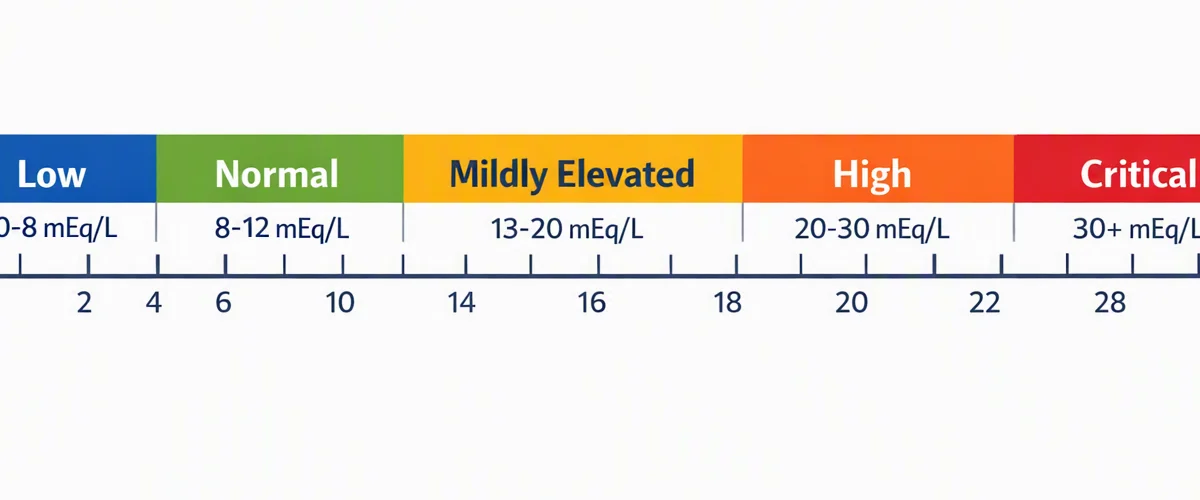
In simple terms, the anion gap is a practical diagnostic tool for assessing acid-base balance. A normal result suggests a narrower range of likely causes, while a low anion gap or high anion gap can suggest different types of acid-base disorder. Clinicians often rely on an electrolyte panel or broader serum chemistry to calculate it as part of a metabolic evaluation.
The most common formula is:
Anion gap = Sodium - (Chloride + Bicarbonate)
Because the result depends heavily on the sodium concentration, any condition that changes sodium can change the calculation. That is why sodium, chloride, and bicarbonate level are key to understanding the result.
Understanding Hyponatremia?
Hyponatremia describes a reduced serum sodium value. This is one of the most common electrolyte abnormalities encountered in clinical practice and usually reflects an imbalance in water balance rather than a actual loss of sodium alone. In many cases, the body has too much water compared with sodium, which reduces the measured concentration.
To understand hyponatremia, clinicians also consider osmolality, which reflects the concentration of dissolved particles in blood. The pairing of serum sodium and osmolality helps determine whether the sodium abnormality is due to excess water, true sodium loss, or some other mechanism. This is important because a low sodium value may be part of a broader electrolyte imbalance or a separate issue that does not directly change the anion gap.
Hyponatremia can be linked to many different conditions, including volume changes, hormonal problems, medications, and severe illness. The key point is that the low sodium itself does not automatically mean there is an acid-base disorder. It may be present with one, but the association is not guaranteed.
Can Sodium deficiency Alter the Anion Gap?
Indeed, a sodium deficit can change the anion gap because sodium is part of the calculation. If the sodium value decreases while chloride and bicarbonate remain unchanged, the calculated gap may be lower. That said, the effect depends on the general pattern of lab interpretation and not just the sodium number alone.
Using an anion gap calculator can make clear how changes in serum sodium influence the result. Still, a low sodium level does not always lead to a truly abnormal gap in a clinically meaningful way. In some cases, the value changes on paper because of the math, while the underlying acid-base status remains balanced.
This is why, the anion gap should never be interpreted in isolation. A person may have low sodium from a dilutional process, yet the gap may still be normal after considering the rest of the serum electrolytes. Alternatively, a low sodium value may accompany disorders that also lower bicarbonate or shift chloride, leading to a more significant change in the gap.
Clinical clinical interpretation depends on the full pattern of laboratory values, symptoms, and the suspected diagnosis. The anion gap is one clue, not the final answer.
How Sodium Concentrations Affect the Calculation
The anion gap formula is directly influenced by sodium concentration because sodium is the first value in the calculation. When sodium decreases, the numerical gap usually decreases as well, assuming chloride and bicarbonate stay similar. This is a simple math effect, but the body’s chemistry is far more complex than the formula alone suggests.
Bicarbonate and chloride shift can influence the result in opposite ways. For example, if bicarbonate is low because of metabolic acidosis, the anion gap may rise if the fall in bicarbonate is not matched by a corresponding rise in chloride. On the other hand, if chloride rises to offset the change, the gap may appear normal even though an acid-base problem exists.
Albumin also matters because it is a major unmeasured anion. Lower albumin reduces the anion gap even when the sodium level is stable. So in a patient with hyponatremia, a low gap may indicate both the sodium change and the effect of albumin. This is why a simple calculation can be deceptive without considering the rest of the blood chemistry.
In practice, the lab math works best when viewed as part of the full acid-base balance picture. Sodium does influence the number, but it is only one component of the broader interpretation.
When the Low Anion Gap Is Observed
A reduced anion gap is not as frequent than a high one, and it often deserves careful review. One major cause is hypoalbuminemia, since albumin is a key unmeasured anion. When albumin falls, the gap often decreases too, even without a major change in the underlying acid-base state.
Laboratory error is another important possibility. Mistakes in specimen handling, measurement, or reporting can create a falsely low result. If the number does not fit the clinical picture, repeat testing is often necessary before drawing conclusions.
Paraproteinemia can also reduce the anion gap. Abnormal proteins may behave as unmeasured cations or alter the electrochemical balance in ways that lower the calculated gap. This is especially relevant when the patient has other findings that suggest a plasma cell disorder.
In some cases, unmeasured cations such as lithium or marked increases in other positively charged substances can lower the calculated gap. That is why a low result should prompt review of medications, the overall electrolyte panel, and the broader clinical context.
Adjusting the Anion Gap
Because albumin greatly influences the calculation, clinicians often use an correction for albumin to estimate a more accurate adjusted anion gap. This adjustment helps account for the fact that low albumin can mask an elevated gap or make a normal gap appear low.
The normal range for the anion gap varies slightly by laboratory method, so interpretation should always use the range reported with the patient’s laboratory values. A value that looks low in one setting may fall within another lab’s expected range. Method differences matter, particularly when comparing results across systems.
Correcting for albumin is especially useful when evaluating possible metabolic acidosis. For example, a patient with low albumin and a “normal” gap may still have an elevated corrected gap that more clearly shows hidden acid accumulation. In that situation, the correction can shift the direction of the clinical interpretation.
The goal is not to replace judgment with a formula, but to improve it. A corrected value offers a better estimate of the true acid-base picture and helps identify whether the apparent abnormality is driven by albumin, sodium, chloride, bicarbonate, or a combination of factors.
Using an Anion Gap Calculator
An anion gap calculator is helpful because it rapidly combines the important input values from serum electrolytes. By entering sodium, chloride, and bicarbonate, the calculator gives the calculated gap and often helps compare that value with the expected reference range. This is especially useful when examining complex clinical interpretation scenarios.
For patients with hyponatremia, the calculator can show whether the low sodium concentration is likely to have a major effect on the gap. It can also help reveal whether the result is better explained by hypoalbuminemia, a hidden high anion gap, or another abnormality in the lab pattern. In that sense, the calculator is a useful diagnostic tool for bedside decision-making.
When working with the calculator, make sure the values come from the same specimen and same blood test. Mixed or delayed results can distort the calculation. A careful review of serum chemistry results, along with the patient’s symptoms and history, improves accuracy more than the number alone.
The best use of an anion gap calculator is not just to produce a number, but to support a thoughtful interpretation of the overall metabolic picture.
What Other Tests Should Be Checked?
When the anion gap is out of range, other tests often can clarify the cause. A blood gas can reveal pH and confirm whether there is an acid-base disorder. It also helps determine whether the patient has acidemia, alkalemia, or a mixed disturbance.
Serum bicarbonate should be assessed carefully because it is directly part of the calculation and a major clue to metabolic acidosis. If bicarbonate is low, the clinician should think about causes such as lactic acidosis, ketoacidosis, renal impairment, or toxin exposure.
Lactate is important when evaluating an elevated https://anion-gap-reader975.cloudhinter.com/posts/anion-gap-calculator-for-high-anion-gap-acidosis gap, especially if poor perfusion, infection, or tissue hypoxia is possible. Elevated lactate suggests accumulation of unmeasured acids and can explain a meaningful shift in the gap.
Ketones should also be checked when the clinical setting suggests ketoacidosis, starvation, or severe insulin deficiency. Ketone accumulation increases unmeasured anions and can significantly raise the anion gap. In a patient with hyponatremia, these additional tests help separate a true acid-base problem from a simple sodium imbalance.
Other data may include kidney function, medication review, and assessment for toxin exposure. Together, these help determine whether the abnormal value reflects a transient laboratory issue or a real metabolic problem.
Frequently Asked Questions
Can hyponatremia lower the anion gap?
Yes, it can. Because sodium is part of the anion gap formula, hyponatremia can lower the calculated anion gap. However, the size of the effect depends on the full pattern of chloride, bicarbonate, and albumin. A low sodium value does not always mean the gap is clinically important.
Does a low sodium level always mean a low anion gap?
No. A low serum sodium does not automatically produce a low gap. The final result depends on the balance of electrolytes, including chloride and bicarbonate, as well as factors like hypoalbuminemia and lab method. Many cases of hyponatremia have a normal anion gap.
How can you adjust the anion gap for low albumin?
You apply an albumin correction to determine the corrected anion gap. Since albumin is a important unmeasured anion, low albumin can make the gap look smaller than it really is. Correcting for albumin enhances clinical interpretation, especially when evaluating possible metabolic acidosis.
When ought a low anion gap be repeated or confirmed?
A low gap should be repeated when the result does not align with the patient’s condition or when lab error is possible. Confirmation is also reasonable if the value is unexpected, if the specimen quality is uncertain, or if there is concern for paraproteinemia or unmeasured cations. Repeating the test can help separate a real abnormality from a spurious one.
What other tests help interpret an abnormal anion gap?
Helpful tests include a blood gas, serum bicarbonate, lactate, and ketones. These studies help identify whether the abnormality is part of an acid-base disorder, such as metabolic acidosis, or whether it is more related to sodium changes, albumin changes, or another electrolyte imbalance.
Public Last updated: 2026-08-30 02:38:50 PM