Basement Waterproofing Services Near Me: Mississauga Homeowner’s Guide
Basements in Mississauga do two jobs at once. They hold up the house, and they sit in soil that swings from snowpack and ice to spring thaws and summer cloudbursts. That soil swells, shrinks, and channels water toward your foundation. If the original drainage is tired or a crack opens up, that water will find a way inside. When people search for waterproofing services near me, they are not just shopping, they are racing a clock. The right call, and a well planned fix, will protect the home’s structure and your sense of security.
I have spent years walking around wet basements after March melts and late summer storms. The patterns repeat, but each house answers a little differently. Below is a practical guide to help you understand what is happening under your feet, what a waterproofing contractor can actually solve, and how to judge proposals from mississauga waterproofing specialists without overpaying or under-fixing.
Why Mississauga Basements Get Wet
The Credit River, Cooksville Creek, and a patchwork of clay and silt set the stage. Many neighborhoods sit on heavy glacial clay that drains poorly. After a week of rain, the soil becomes a saturated sponge pressing on your foundation. In winter, freeze-thaw cycles open hairline cracks in poured concrete or widen mortar gaps in block walls. Downspouts that discharge too close to the footing load water right where the wall is most vulnerable.
Homes built before the mid-1970s may have original clay weeping tiles that are now collapsed or clogged with silt. Newer homes use perforated plastic pipe, which lasts longer, but can still choke on fines and roots. Window wells without working drains behave like bathtubs in a storm. A sump pump that never had a proper check valve, or a discharge line that freezes at the exterior, will quietly fail on the one night you need it.
The point is not to panic. Most leaks trace back to a cluster of known causes, each with clear fixes once you identify the root.
Reading the Signs Inside and Out
Water leaves clues. A faint white powder line at the base of a wall is efflorescence, mineral salts left behind as moisture evaporates through the concrete. It points to chronic seepage, not a one-time spill. A diagonal hairline crack running from a basement window corner down toward the slab is common in poured walls and can often be injected. Water at the cove joint, where the wall meets the floor, hints at hydrostatic pressure below the slab that may call for interior drainage tied to a sump. Staining on joist ends or rust on lally columns suggests humid air and condensation, not necessarily bulk water, which a dehumidifier and air sealing can handle.
Outside the foundation, spongy soil against the wall after a dry week, or a depression along the foundation line, tells you surface grading is directing water to your footing. Downspouts that empty within a meter of the house or eavestroughs that overflow in moderate rain are low hanging fruit. You would be surprised how often a landscaper raises bed height above the dampproofing line, trapping water against the wall. A five centimeter mistake there can undo a perfect foundation.
How a Professional Diagnoses a Basement Leak
Good waterproofing services begin with a proper site assessment, not a sales script. Expect a contractor to ask what weather preceded the leak, and whether it was a first time event or part of a pattern. A thorough walkthrough covers the entire house perimeter, gutter lines, downspout routing, grading, and any hardscape that might trap water. Inside, they should check all wall faces, pipe penetrations, and the cove joint. If you have a finished basement, infrared imaging can pick up cooler damp areas behind drywall, though it is not a substitute for selective opening.
On older homes, a contractor may recommend a camera inspection of the footing drains, sometimes called weeping tiles. From a cleanout or a small excavation at the exterior, a scope can verify whether the pipe is intact and free flowing. Dye testing, where a safe tracing dye is flushed into a downspout or window well to see where it reappears, can quickly reveal cross connections or breaks.
A strong diagnosis draws a boundary around what is known and what remains uncertain. For instance, you might hear, the wall crack at the northeast corner is a discrete source we can inject, but the persistent moisture at the cove joint during spring thaws points to a saturated slab and likely a failed weeping tile. That kind waterproofing contractor of clarity makes for fewer surprises later.
Methods That Actually Work in Mississauga
There is no one size fits all cure. The soil, the wall type, the leak source, and your tolerance for exterior excavation or interior disruption all matter. Here is how the common solutions stack up in local conditions.
Exterior excavation and waterproofing. This is the gold standard when lateral pressure and exterior wall permeability are the main problems. The crew excavates the foundation down to the footing, cleans the wall, repairs cracks, and applies a waterproof membrane. Instead of thin dampproofing tar, robust systems use a rubberized membrane, then a dimpled drainage board to create a capillary break. The weeping tile at the footing is replaced or added, wrapped in filter fabric, and connected to a sump or storm outlet as permitted. Expect disturbed landscaping and access challenges in tight side yards. In Mississauga’s glacial clay, this method performs well because it keeps water off the wall in the first place. Typical cost ranges run from roughly 150 to 350 CAD per linear foot depending on depth, access, and finishing, with small corner excavations on the lower end and full perimeters on the higher.

Interior drainage with sump basin. When hydrostatic pressure under the slab drives water up at the cove joint, an interior perimeter drain can be the cleanest fix, especially when exterior access is impossible. The crew saw-cuts a strip of slab at the wall line, installs a perforated drain alongside the footing, and routes it to a sealed sump basin with a pump and check valve. This relieves pressure so seepage never reaches finished surfaces. In clay soils, interior systems can reliably handle persistent groundwater, but they do not protect the exterior face of the wall from moisture. Still, for many finished basements, this option is a lower cost, lower disruption path, often in the range of 80 to 180 CAD per linear foot, plus the sump system.
Crack injection. Poured concrete walls often crack at window corners or mid spans during settlement. Low pressure epoxy or polyurethane injection seals the crack from inside the wall. Epoxy glues the crack and restores structural continuity. Polyurethane foams and expands to seal against water movement and works better on active leaks. Most single crack repairs fall between 400 and 1,200 CAD per crack depending on length and accessibility. If the crack is paired with exterior grading or downspout issues, fix those too, or the crack may find a way to weep again along a new plane.
Window wells and drains. A window well needs a gravel base and a working drain tied to the footing drain or a dedicated drywell. Many older wells are just rusty shells sitting on compacted soil. During a fast rain, water stacks up against the sill and pours through. Rebuilding the well, adding a vertical drain pipe wrapped in fabric, and topping with clear stone prevents bathtub behavior. Cost varies widely with depth and tie-in complexity, but you can expect a few thousand dollars for a full rebuild when excavation and drainage connection are involved.
Grading and downspouts. The simplest waterproofing lives above ground. In many Mississauga neighborhoods, redirecting downspouts to grade, adding extensions to discharge at least two to three meters from the wall, and restoring a gentle slope away from the foundation solves chronic dampness. This is not a cure-all for failed weeping tiles, but it is a vital first step that costs hundreds, not thousands, and improves the performance of any other system you install.
Backwater valves and sanitary lines. Not every wet basement is a foundation leak. During intense storms, combined sewer systems can back up through the floor drain or a low bathroom. A licensed plumber can install a backwater valve on the sanitary line to prevent reverse flow. Some municipalities in the GTA have offered partial subsidies for this work. The City of Mississauga and the Region of Peel have, in some years, provided rebates for backwater valves and sump upgrades. Check the current programs and eligibility before scheduling the work. Installation typically runs from 1,500 to 3,500 CAD depending on location and restoration.
Dehumidification and air sealing. A cool basement in summer will condense moisture from warm air, wetting pipes and walls even in a perfectly waterproof foundation. Sealing rim joists, insulating cold water lines, and running a right-sized dehumidifier in July and August can keep relative humidity between 45 and 55 percent, which protects finishes and inhibits mold.
Choosing Between Exterior and Interior
Clients often ask which route is better, exterior or interior. I usually start with first principles. If the leak source is lateral water pushing through the wall, and you have workable exterior access, stopping the water before it reaches the wall gives the most durable result. Exterior systems also protect the foundation from freeze-thaw cycles, especially important with clay that holds moisture.
If the problem is hydrostatic pressure under the slab, interior drainage to a sump is a more direct way to relieve that pressure. When you cannot excavate an exterior wall due to property lines, decks, or additions, an interior system can be the right compromise that still handles real groundwater loads. It is fair to combine approaches. For example, inject a crack near the walkout door, extend downspouts, and add an interior drain along the rear wall where water rises at the cove joint.
The wrong move is to paint on a sealing product and hope. Interior coatings can slow vapor, but they do not hold back liquid water under pressure for long. Use them as part of a broader plan, not as a standalone cure for active leaks.
A Walkthrough of a Typical Project Timeline
Picture a south Mississauga bungalow with a finished recreation room and a utility area left open. After a June thunderstorm, the homeowner notices a damp carpet line along the back wall. An inspection finds a consistent damp strip at the cove joint, minor efflorescence, and gutters that dump two downspouts within a meter of the rear foundation. The homeowner extends the downspouts that week and cleans the gutters. During the next storm, the leak lessens but returns. That suggests a combined problem, both surface water and rising groundwater.
A contractor proposes an interior drain along the rear and half the side walls, tied to a new sealed sump with a quiet, cast iron pump and battery backup. The finished wall comes off the back side to access the slab. The crew saw-cuts and removes a 30 centimeter strip of concrete, digs to the footing, lays a perforated pipe in washed stone, adds a vapor barrier at the wall edge, and routes the pipe to the sump. After installing the pump and check valve, they pour back the concrete and reframe the removed sections.
The job takes three to four days with a two person crew. The homeowner can walk on the new concrete within a day. A week later, a plasterer and painter restore the finished wall. Along with the drain, the contractor cuts in a window well drain on the rear egress window to a small drywell, and the landscaper subtly reshapes the rear grade with a long, low swale to steer water toward the side yard. That combination keeps the recreation room dry through the late summer storms and the following spring thaw.
What Good Waterproofing Services Look Like
When you search for waterproofing services Mississauga or waterproofing contractor, you will see a mix of dedicated foundation companies and general contractors who take on occasional leaks. Skill matters, but so does process. You want a firm that treats the diagnosis as seriously as the fix.
Ask to see proof of liability insurance and WSIB coverage. Check whether they pull permits when work touches plumbing, sanitary connections, or structural elements. For exterior dig work, they must call for utility locates. On interior drain jobs, dust control and protection of finished areas is a mark of respect, not a luxury. I have seen tidy crews hang poly barriers, use negative air machines, and leave a space cleaner than they found it.
Warranties are a signal, though many are only as good as the company offering them. A transferable warranty on a specific repair, such as a crack injection or an interior drain section, shows confidence. Read what is excluded. No warranty covers new problems in a different part of the wall, or leaks caused by disconnected downspouts years later.
Finally, weigh how the contractor explains trade-offs. If every answer is a full perimeter dig no matter what you describe, be cautious. Conversely, if every cure is paint and hope, look elsewhere. The better companies can show photos from similar homes in Lorne Park, Streetsville, or Port Credit and walk you through why they chose those methods.
Costs You Can Use for Planning
Ballpark numbers help you budget before you invite quotes. The following ranges reflect typical Mississauga conditions and recent material and labor trends.
- Exterior excavation and waterproofing: 150 to 350 CAD per linear foot depending on depth, access, and restoration, with corner repairs from 4,000 to 8,000 CAD and full sides often 12,000 to 25,000 CAD or more.
- Interior perimeter drain with sump: 80 to 180 CAD per linear foot, sump systems 900 to 2,500 CAD for pump, basin, and check valve, with battery backups adding 600 to 1,500 CAD.
- Crack injection: 400 to 1,200 CAD per crack, more for long or multiple-plane cracks.
- Window well rebuild with drain: 1,000 to 3,500 CAD depending on depth and tie-in.
- Backwater valve installation: 1,500 to 3,500 CAD.
Materials, access, and finishing drive spread in these ranges. Tight side yards and deep footings need more shoring and time. Finished basements take longer to protect and restore.
A Short Pre‑Appointment Checklist
- Photograph leaks when they happen, including weather conditions and where water enters.
- Note dates and frequency. One spring event differs from monthly seepage.
- Map utilities, sump location, and any previous repairs or additions.
- Walk the exterior and write down downspout locations and discharge points.
- Gather property surveys or past contractor reports if you have them.
What To Do On the Day You Find Water
- Kill power to affected outlets if water pools near electrical strips or appliances.
- Stop the source you control. Reconnect or extend downspouts, clear a clogged window well, or close a failing hose spigot.
- Move furniture and lift carpets so materials can dry quickly.
- Document damage for insurance with photos and short videos.
- Call a local waterproofing contractor and, if you suspect backup, a licensed plumber to check the sanitary line.
Local Code, Permits, and Practicalities
Waterproofing usually does not need a building permit when it is like-for-like replacement of drainage and exterior membranes, but digging near property lines and public rights of way can trigger requirements. Plumbing work, including backwater valves and sump discharge ties, generally requires a permit and inspection. Discharge rules vary, and in Mississauga you cannot route a sump to the sanitary line. Many homes are allowed to discharge to grade if it does not create a nuisance for neighbors, but some areas direct you to tie into a storm connection if present. A knowledgeable contractor will check current by-laws, which do get updated.
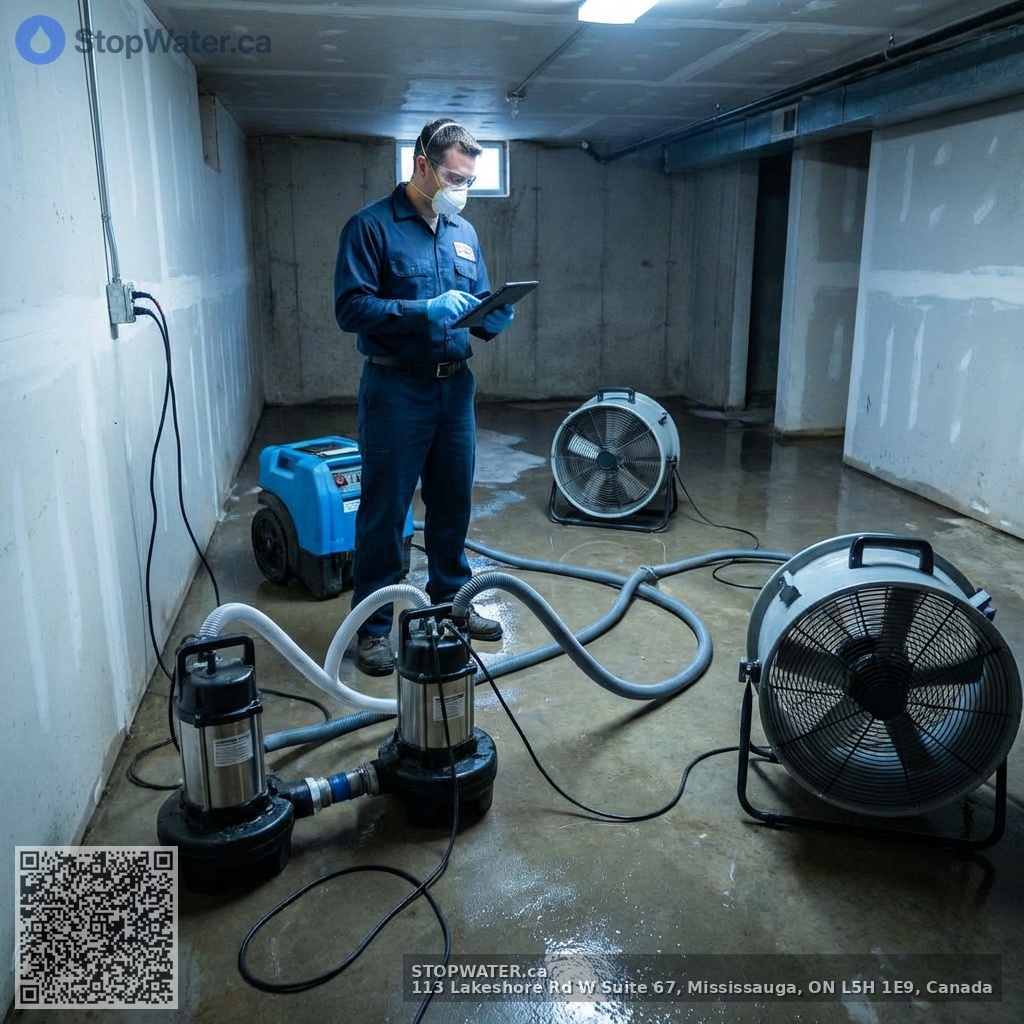
Before exterior excavation, utility locates through Ontario One Call are mandatory. Inside, negative air and dust control should be standard if you are living through the work. Expect some noise and vibration during saw-cutting. If you have a finished basement, plan for baseboard removal and patching. If the work is near a furnace or water heater, the crew should protect combustion air supplies and keep the area clean of silica dust.
Special Cases in the City
Poured concrete foundations are common from the 1960s onward, and respond well to injections for discrete cracks and to exterior membranes. Concrete block walls from older stock in Streetsville or Clarkson behave differently under pressure. Water can track through block cells and show up far from the exterior entry point. In those cases, interior drains that relieve wall and slab pressure often outperform single point repairs.
Homes near floodplains or in lower pockets of Cooksville and Mineola may deal with both high groundwater and stormwater routing from upstream. In 2013, a historic storm overwhelmed drainage and flooded many basements. Those homeowners learned that storm routing above ground, such as swales and catch basins, works hand in hand with foundation work. If your lot regularly sees sheet flow from adjacent properties, involve a landscape drainage specialist along with a foundation pro. The best outcomes come when both surface and subsurface water get planned together.
Townhomes and semi-detached units complicate access. Shared walls, narrow side yards, and party line easements limit exterior excavation. In these settings, interior options become more practical, and cooperation with neighbors may be the only way to touch a problem side.
Keeping It Dry After the Fix
A good repair can be undone by simple neglect. Clean gutters each spring and fall. Check that downspouts still discharge well away from the footing. Walk the perimeter twice a year and add a few bags of topsoil where settling has created a trough. Test your sump pump before the wet season by lifting the float and confirming discharge. If you have a battery backup, replace the battery on schedule. A five minute check once a quarter can save a midnight scramble.
Inside, keep humidity in check. If the basement smells musty in July, run a dehumidifier and keep the relative humidity near 50 percent. If you keep storage against exterior walls, allow a bit of air space so cardboard does not wick moisture. Any time you notice new efflorescence or a dark line at the baseboard, do not ignore it. Small changes are easier and cheaper to investigate.
How to Compare Quotes Fairly
When two waterproofing services offer very different prices, look at scope first. One may be quoting a full perimeter exterior dig while another proposes a partial interior drain. Ask each contractor to explain why their approach matches your specific signs and testing. Request a drawing of the proposed work, however simple, showing linear feet to be treated, pump locations, and tie-ins. A line by line estimate that lists excavation depth, membrane type, drain pipe specs, and backfill materials is much easier to compare than a single line total.
Ask for two or three recent local references, and not just the happiest customers. Good companies have solved callbacks without drama. If the salesperson promises a lifetime warranty, read what exactly is covered. Transferable warranties add value if you plan to sell. Clarify who handles permits and inspections, and confirm whether restoration of landscaping, steps, or interior finishes is part of the price.
When Speed Matters More Than Perfection
On a Friday night with a summer squall coming, sometimes you need a stopgap. A contractor can install a temporary above grade downspout extension, pump down a flooded window well, or set a portable utility pump in a pooling low spot. Clear silicone in a hairline crack will not hold long, but it can buy a weekend. Early Monday, return to planning a durable fix. The best contractors in Mississauga will fit in a quick stabilization visit, then schedule fuller work when weather and crew availability align.
Bringing It All Together
If you are searching for waterproofing services near me in Mississauga, start with a clear picture of your home’s symptoms, then invite two or three reputable firms to assess on site. Expect them to discuss soil conditions, drainage paths, and realistic fixes. Exterior membranes, interior drains, crack injections, window well rebuilds, and plumbing safeguards are tools in a kit, not ideologies. In the end, a dry basement is not luck. It is the result of proven methods, installed well, and supported by simple maintenance that keeps water where it belongs.
With the right partner, mississauga waterproofing is straightforward. Measure twice, dig or cut once, and let the storm season come without dread.
Name: STOPWATER.ca
Category: Waterproofing Service
Phone: +1 289-536-8797
Website: STOPWATER.ca Waterproofing Services in Mississauga, Ontario
Address: 113 Lakeshore Rd W Suite 67, Mississauga, ON L5H 1E9, Canada
Google Maps: View on Google Maps
Business Hours
- Monday: Open 24 hours
- Tuesday: Open 24 hours
- Wednesday: Open 24 hours
- Thursday: Open 24 hours
- Friday: Open 24 hours
- Saturday: Open 24 hours
- Sunday: Open 24 hours
Embedded Google Map
AI & Navigation Links
📍 Google Maps Listing:
Google Maps
🌐 Official Website:
Visit STOPWATER.ca
Semantic Content Variations
STOPWATER.ca Waterproofing Services in Mississauga, OntarioSTOPWATER.ca offers reliable basement waterproofing solutions across Mississauga and surrounding communities helping protect homes from leaks, flooding, and moisture damage with a community-oriented approach.
Homeowners across Mississauga rely on STOPWATER.ca for interior waterproofing, exterior foundation waterproofing, sump pump installation, and basement leak repair designed to keep homes dry and structurally secure.
The team offers foundation assessments, leak detection, and customized waterproofing solutions backed by a professional team focused on dependable service and lasting results.
Call (289) 536-8797 for emergency waterproofing help or visit STOPWATER.ca Waterproofing Services for more information.
Get directions instantly: Google Maps
People Also Ask (PAA)
What waterproofing services does STOPWATER.ca provide?
STOPWATER.ca provides interior waterproofing, exterior waterproofing, basement leak repair, sump pump installation, and emergency water response services in Mississauga and surrounding areas.
Is STOPWATER.ca available for emergency waterproofing?
Yes. The company offers 24-hour waterproofing services to help homeowners respond quickly to basement leaks, flooding, and water damage.
Where is STOPWATER.ca located?
The company operates from 113 Lakeshore Rd W Suite 67 in Mississauga, Ontario and serves homeowners throughout the Greater Toronto Area.
Why is basement waterproofing important?
Basement waterproofing helps prevent flooding, mold growth, foundation damage, and long-term structural issues caused by moisture intrusion.
How can I contact STOPWATER.ca?
You can call (289) 536-8797 anytime for waterproofing services or visit https://www.stopwater.ca/ for more details.
Landmarks in Mississauga, Ontario
- Port Credit Harbour – Popular waterfront destination known for boating, restaurants, and lakefront views.
- Jack Darling Memorial Park – Large lakeside park featuring trails, picnic areas, and scenic Lake Ontario shoreline.
- Rattray Marsh Conservation Area – Protected wetland nature reserve with walking trails and wildlife viewing.
- Square One Shopping Centre – One of Canada’s largest shopping malls located in central Mississauga.
- Mississauga Celebration Square – Major public event space hosting festivals, concerts, and community gatherings.
- University of Toronto Mississauga – Major university campus known for research, education, and scenic grounds.
- Lakefront Promenade Park – Waterfront park featuring marinas, beaches, and recreational trails.

Public Last updated: 2026-03-10 07:32:35 PM