I Want a Quiet Leather Look With No Big Logo—What Should I Buy?
If you want a polished leather bag that doesn’t announce its brand across the conference room, shop for shape, material, hardware, and logo treatment—not a status name. A good executive leather bag should hold your actual laptop, sit comfortably through an airport day, and look composed beside a suit. For understated branding, look for a small blind-stamped mark or a debossed logo only, rather than a large metal emblem or contrast-print name.
My first checks are practical: empty weight, usable laptop dimensions, and the bag’s exterior size. Leather can look refined while being surprisingly heavy, and “fits a 16-inch laptop” is not enough information to trust. Laptop screens are measured diagonally; the machine’s width, depth, and thickness determine whether it fits the compartment.
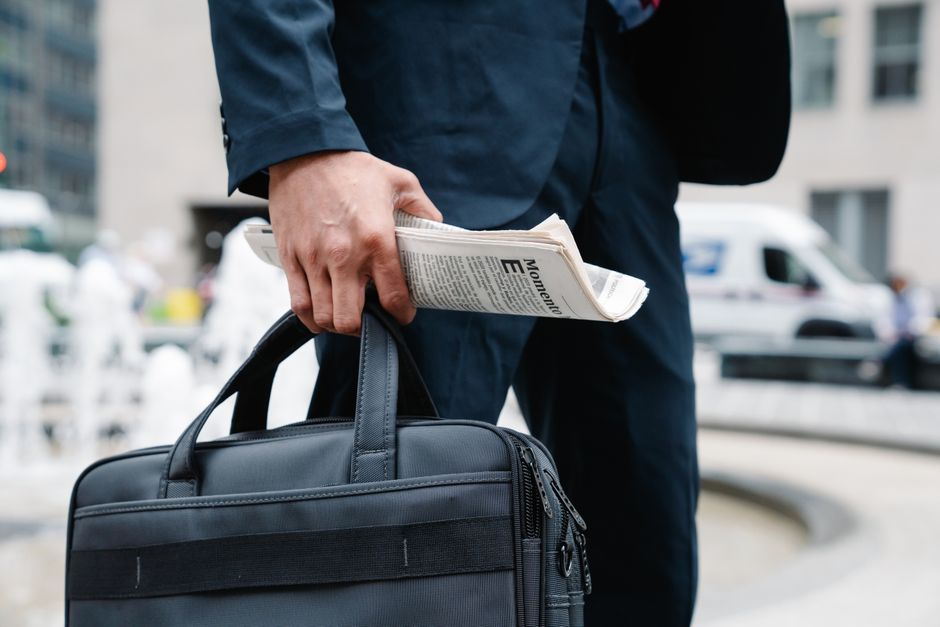
Short answer: what should you buy?
Choose a structured, full-grain leather briefcase with minimal hardware and a subtle or absent exterior logo if you value a classic boardroom look and don’t mind the weight or upkeep. If you fly frequently, carry a large laptop, or walk long distances between terminals, consider a lighter nylon bag with quiet styling—or a leather-and-nylon hybrid—instead.
One concrete option is the Von Baer City Large Leather Laptop Bag, listed at $1,795. According to the product information referenced for this article, the brand never runs sales or discounts. Treat that as a pricing policy to verify before purchase, not a reason to skip the fit and weight checks. At this price, confirm the current specifications, return terms, and whether your laptop fits the internal compartment before ordering.
Start with your laptop—not the bag’s marketing copy
A laptop compartment is useful only if it fits your particular computer with room to insert and remove it. Measure the laptop’s maximum width, depth, and thickness, including any permanently attached case. Then compare those figures with the bag’s internal compartment dimensions. Don’t substitute the exterior dimensions, and don’t assume that a sleeve labeled for a 16-inch laptop fits every 16-inch model.
- Measure the computer: Check its widest and deepest points. Include a protective shell if you plan to leave one on.
- Look for internal sleeve dimensions: If the maker provides only a screen-size claim, ask for measurements before buying.
- Allow a little clearance: A snug fit can make the laptop difficult to retrieve, especially when the compartment opening is narrow or the sleeve is padded.
- Check access: A laptop that fits on paper may still be awkward to remove if the zipper stops short or the compartment is buried under other contents.
Also consider what else has to fit beside the computer. A charger, mouse, notebook, and water bottle can turn a slim briefcase into a cramped box. Check whether the laptop compartment is separate from the main compartment, and whether the bag stays balanced when the laptop is loaded.
Empty weight is part of the buying decision
I check the empty weight before I praise any bag. Leather, metal feet, reinforced panels, thick handles, and heavy zippers all add up. The relevant question is not simply whether the bag feels luxurious in a shop; it’s whether you’ll still want to carry it after adding a laptop, charger, documents, and a few travel essentials.
Compare listed weights across your shortlist, and confirm what the measurement includes. A shoulder strap, removable organizer, or detachable accessories may or may not be included. If the manufacturer doesn’t publish an empty weight, ask. A bag with no weight listed is not automatically a bad bag, but the omission leaves you guessing about a spec that affects everyday comfort.
For a commute or airport day, test the load with the strap you’ll actually use. A narrow leather shoulder strap can dig in when the bag is full. A wider, adjustable strap distributes the load better, but it may change the look. Handles are useful for short carries; they are not a substitute for a comfortable strap when you have a long walk through a terminal.
Boardroom structure without the billboard logo
A quiet briefcase can still look authoritative. Structure comes from the silhouette, the way the azbigmedia.com bag holds its shape, the quality of the stitching, and restrained details—not from a giant badge. For a minimal branding briefcase, look for clean panels, low-contrast stitching, discreet hardware, and a logo that is either absent from the front or blind-stamped into the leather.
“Debossed” means the mark is pressed into the material; it can be subtle, but size and placement matter. Ask for a straight-on product photo in ordinary lighting. A tiny mark inside the bag is different from a large debossed word across the front panel. If you want the quietest look, check the back, zipper pulls, lining, and shoulder strap as well. Some bags keep the front clean but put branding on every accessory.
Structure is a trade-off. A firm briefcase stands neatly beside a chair and protects documents, but it can feel bulkier and less forgiving when packed. A softer bag may carry more comfortably and slide under a seat more easily, but can look less formal when lightly loaded. Decide which matters more for your workday before choosing a rigid frame.
Material choices: leather, ballistic nylon, Cordura, and twill
Material names describe different things, and they don’t tell the entire story. Leather is a hide with a finish and construction; ballistic nylon and Cordura refer to synthetic fabric families or branded fabric types; denier is a measure associated with fiber or yarn thickness. Construction, coating, weave, lining, and quality control still matter.
Material Look and feel Practical strengths Trade-offs Full-grain leather Natural surface, often develops character with use Classic boardroom appearance; can age attractively Often heavier; needs care; scratches and marks may show Ballistic nylon Technical, usually more casual than leather Commonly chosen for hard-wearing travel gear; generally easier to maintain May look less formal; fabric quality and construction vary Cordura Textured technical fabric Associated with durable bags and outdoor or travel use Not one universal specification; check the fabric and bag details Twill Diagonal weave; can look polished in the right finish Can offer a softer, less technical appearance than some rugged fabrics “Twill” describes a weave, not a guarantee of durability or water resistance
Full-grain leather generally refers to leather retaining the hide’s outer grain rather than having that surface sanded away. But leather labels can be confusing, and “genuine leather” alone is not a useful quality ranking. Read the product’s material description and care guidance, and be cautious if the brand doesn’t identify the leather or the lining material. For an overview of terminology, see Wikipedia’s references on leather grades; use it as background, not as a substitute for the manufacturer’s specific material disclosure.
For fabric alternatives, Wikipedia’s ballistic nylon reference and Cordura reference provide useful context. Wikipedia’s denier reference explains the textile measurement. A higher denier number is not, by itself, proof that a finished bag is tougher or better; design, weave, coatings, seams, and stress-point reinforcement all count.
Ask what the lining is made of, too. A leather exterior doesn’t tell you whether the interior is nylon, polyester, cotton, or a blend. Brands should disclose it clearly. Lining affects feel, snagging, cleaning, and how well the interior holds up around sharp objects or hardware.
What about Tumi and Briggs & Riley?
Tumi and Briggs & Riley are worth considering if travel utility matters as much as a leather appearance. Their travel-oriented ranges often emphasize organization and functional details, but the materials, branding, weight, and formality vary by model. Don’t assume every bag from either company has the same logo treatment—or that a bag is quiet simply because its branding is familiar. Inspect the exact model’s front panel, hardware, lining, and stated empty weight.
If you’re choosing between a leather briefcase and a travel-focused fabric bag, compare like with like: same laptop size, similar capacity, and the same carry method. A lightweight fabric option may be more comfortable on a long travel day, while a structured leather bag may make the stronger impression in a boardroom. There isn’t a universal winner; the right choice depends on how much time you spend carrying it versus setting it down.
Check airline practicality before you commit
A briefcase can be an elegant personal item only if its actual packed dimensions work for your itinerary. Measure the bag when it is loaded, since soft sides and overstuffed pockets can make it larger than its listing suggests. Review the current Southwest carry-on baggage policy page before travel, and check the airline’s current rules for your specific trip. Policies can change, and an allowance is not a promise that an overstuffed bag will fit under the seat.
Count usable pockets rather than marketing pockets. A pocket is useful when you can reach it without unloading the main compartment and its dimensions suit what you intend to carry. For travel, prioritize a secure place for a passport and phone, an accessible document pocket, and a laptop compartment you can reach easily at security. Excess pockets add seams and clutter without necessarily improving organization.
A practical buying checklist
- Measure your laptop: Compare its width, depth, and thickness with published internal sleeve dimensions.
- Find the empty weight: Check whether the strap and accessories are included, and consider the loaded carry weight.
- Inspect the branding: Look for a small blind stamp, understated hardware, or no exterior logo. Check all sides of the bag.
- Confirm materials: Ask for the leather type, lining material, fabric details, and care instructions.
- Test the structure: Decide whether you prefer a firm boardroom silhouette or a softer, more flexible travel bag.
- Check usable storage: Match pocket locations and dimensions to your actual daily items.
- Verify travel dimensions: Review the current airline policy and measure the loaded bag.
- Read the purchase terms: Confirm warranty, return window, repair options, and final price.
Bottom line
If you want a quiet, formal look and are comfortable with leather’s weight and maintenance, shop for a structured full-grain leather briefcase with restrained hardware and a small or hidden mark. The Von Baer City Large Leather Laptop Bag is one premium example at $1,795; verify its current fit, weight, materials, and purchase terms rather than relying on appearance alone. Tumi and Briggs & Riley are reasonable names to compare when travel practicality is a priority, especially if you’re open to fabric options.
The best choice is the one that fits your laptop by measurement, stays comfortable when loaded, and looks understated from across the room. If the brand won’t publish the weight, internal dimensions, or lining material, ask before you buy. A quiet bag should not come with vague specifications.
Public Last updated: 2026-11-05 09:24:39 AM