How to Pick the Right Dune Buggy in Dubai for Your Desert Drive
Choosing a dune buggy in Dubai is less about picking the boldest looking vehicle and more about matching the machine to the driver, the terrain and the kind of day you want. The desert around the city can feel open and simple from a distance, but sand dune terrain changes under the wheels, and a good choice makes the drive calmer from the start.
One local option is Quad Biking Dubai and Dune Buggy Ride. Whether you book locally or compare several providers, work through the decision in a clear order. Each step gives you a practical way to narrow the field without relying on guesswork.
Start with the driver, not the vehicle
Before looking at buggy models, be honest about who will drive and who will ride along. Age, driving confidence, physical comfort and the length of the outing all shape the right choice. A powerful buggy may look exciting, yet it can be tiring for a newcomer who is still learning how a vehicle behaves on soft sand.
Check whether each driver has the relevant licence or experience required for the activity, and confirm age rules before making plans. If children or less confident riders are joining, look for seating arrangements that keep everyone secure and within the operator's stated limits. The aim is a vehicle that suits the whole group, not one that only impresses the most experienced person.
View the location on Google Maps
Also think about physical fit. You should be able to reach the pedals, hold the steering wheel comfortably and see clearly without straining. Clothing matters too. Loose scarves, hanging straps and unsecured bags can catch or shift during a bumpy ride. Ask what clothing and footwear are advised, then plan for sun, dust and sand rather than city conditions.
Decide between single-seat and two-seater
Buggy capacity is one of the first real decisions. A single-seat buggy gives the driver a more direct feel and leaves less to manage. It can suit someone who wants a focused drive and does not need to carry a passenger. A two-seater works better for couples, friends or family members who want to share the experience, but it changes the weight balance and may feel less nimble.
Do not choose a two-seater only because it seems better value. Passenger comfort, seat position and clear instructions matter. If the second rider is not comfortable with rough movement, a shorter route or a different activity may be the better fit. If the driver wants more control and the group can rotate, several smaller buggies can be easier to manage than one larger vehicle.
When comparing options, confirm the maximum number of people allowed in each buggy and follow it strictly. Capacity is not just a comfort note. It affects handling, braking and what the vehicle was designed to carry.
Match the power to the terrain and experience level
Engine horsepower often gets the most attention, but it is only one part of the ride. More power can help on climbs and when crossing softer patches, yet it also asks for smoother control. On sand, sudden steering, harsh acceleration and poor line choice can slow the buggy or cause it to sink. A driver who stays balanced often has a better time than one chasing the biggest engine.
Ask what kind of route the buggy is intended for. Gentle desert tracks, rolling dunes and more demanding routes place different demands on the vehicle. If the outing includes steep dunes or longer stretches away from firm ground, the buggy needs suitable power, tyres and suspension for that setting. A general description of the route is enough to tell you whether the vehicle is being matched sensibly.
Pay attention to the condition of the tyres and suspension as well. Tyres should be appropriate for sand and in sound condition. Suspension should feel controlled rather than loose or knocked. These points are not details for experts only. They affect how steady the buggy feels when the surface changes.
Check the safety setup before you commit
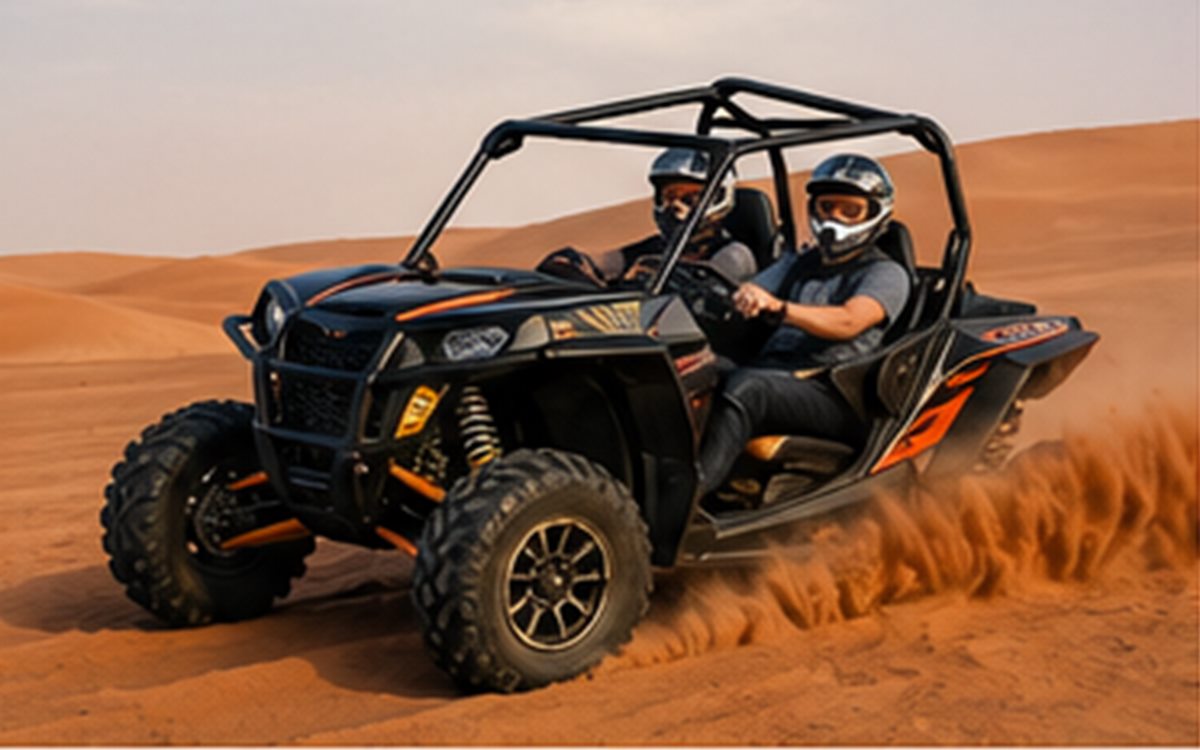
Safety equipment should be part of the choice, not an afterthought. A roll cage is designed to protect occupants if the buggy tips, and its presence and condition matter. A harness seatbelt should fit properly, sit snugly and be used as instructed. Loose or twisted straps are a warning sign, not a minor inconvenience.
Ask about helmets and any other required protective gear. Find out whether the operator gives a safety briefing and what rules drivers must follow during the drive. Clear rules are a good sign because dune driving depends on spacing, awareness and predictable movement. If the answer sounds vague, treat that as a reason to keep comparing options.
Do not try to repair or adjust mechanical safety parts yourself. Problems with brakes, steering, seatbelts or engine systems should be reported and handled by a qualified professional. As a customer, the sensible checks are the visible ones: clean seating areas, intact straps, suitable tyres, working lights where needed and clear instructions before departure.
Read the route and timing carefully
The same buggy can feel different at different times of day. Heat, light and wind all change the desert. A morning drive may be cooler and easier for new drivers, while late afternoon brings softer light and longer shadows. A night buggy experience has a distinct atmosphere, but it also calls for strong visibility, clear route markers and firm rules about staying with the group.
Ask how long the drive lasts, what is included in that time and whether the route has stops. A short session may still feel full if it includes briefing, practice and a steady route. A longer session can become tiring if there are few breaks or if the pace is too demanding. Aim for a format that leaves you alert and comfortable rather than worn out.
Find out where the drive begins and how the group moves between the meeting point and the desert area. This helps avoid confusion on the day. Confirm the meeting details with whichever business you choose, since arrival arrangements and start times are practical points worth checking directly.
Compare price only after the basics are clear
Price matters, but it should come after vehicle fit, safety setup, route and group needs are sorted. A cheaper option is not automatically a poor choice, and a higher price does not prove a better drive. Compare what is included, such as the buggy type, duration, protective gear, guidance and any stated route details.
Watch for unclear terms. If a listing uses broad language but cannot explain what the driver gets, ask direct questions before paying. Check rules about extra passengers, cancellations and what happens if weather affects the outing. These points can change the value of the experience more than the headline figure suggests.
For general research, the Quad Biking Dubai and Dune Buggy Ride official site may be one place to check how information is presented before you contact any provider. Use it as part of a wider comparison, alongside current terms from other local options. A clear answer is more useful than a polished description that leaves practical questions open.
Look for signs of a well-run choice
A well-run dune buggy outing usually has a calm structure. The driver understands the vehicle, the route is explained, safety gear is checked and the group knows what to expect. None of this needs to feel formal. It simply needs to be clear enough that people can relax and enjoy the drive without guessing what happens next.
When speaking with a provider, notice how questions are answered. Specific replies about buggy capacity, safety equipment, route type and meeting arrangements are more helpful than broad promises. If a question cannot be answered, that is a prompt to slow down and ask again or choose somewhere else.
Desert settings also deserve care. Follow marked routes, respect protected areas and avoid driving where vegetation or wildlife could be disturbed. A responsible driver treats the desert as more than a backdrop. That attitude helps keep the activity enjoyable and reduces avoidable damage to fragile ground.

Make the final choice with a simple check
By the time you are ready to book, the decision should be fairly narrow. The buggy should suit the driver, the passenger plan, the terrain and the time of day. The safety setup should look sound, the route should be understandable and the booking terms should be clear. If one of those points feels uncertain, pause before committing.
A practical final check is to write down your must-haves. They may include a two-seater, a shorter route, a morning start, clear helmet provision or a buggy suited to a beginner. Then compare each option against that list. The right choice is usually the one that meets the essentials without pushing anyone beyond their comfort level.
If you want another reference point while comparing local wording and booking details, the Quad Biking Dubai and Dune Buggy Ride official site can be reviewed alongside other sources. Keep the decision grounded in what the driver needs and what the provider confirms directly.
Quad Biking Dubai and Dune Buggy Ride is located at DAMAC Smart Heights - G Floor Office R6 Al Saef 2 street - Al Thanyah First - Barsha Heights - Dubai - United Arab Emirates.
Public Last updated: 2026-11-29 12:16:17 AM