How Jamaican Food Reflects Jamaica’s Diverse Heritage
Jamaican food tells the story of the island more clearly than almost anything else. A plate of ackee and saltfish, a pot of mannish water, or a roadside serving of jerk pork carries more than flavor. It carries memory, movement, survival, trade, adaptation, and pride. Jamaica’s cuisine did not emerge from a single tradition. It formed over centuries through the meeting, and often the forced collision, of Indigenous knowledge, African cooking methods, European ingredients, Indian spices, Chinese techniques, Middle Eastern trade habits, and the practical intelligence of ordinary Jamaicans making meals from what the island and the market could provide.
That is what makes Jamaican food so compelling. It is deeply local, yet unmistakably global. It feels rooted because it is rooted, in soil, in sea, in mountain, in sugar estates, in fishing villages, in urban yards, in Rastafarian ital kitchens, in family Sunday dinners. At the same time, it reflects a long history of migration and exchange. The result is a cuisine that tastes bold and self-assured because it has been tested by history.
A cuisine shaped by encounter
Jamaica’s food culture developed under conditions that were rarely gentle. Before European colonization, the island’s Indigenous Taíno people cultivated cassava, maize, peppers, and other crops, and they used methods that left a lasting mark. The word “barbecue” is often linked to Indigenous Caribbean cooking practices, and Jamaica’s famous jerk has roots in these early techniques of preserving and slow-cooking meat over smoke.
Spanish colonization began in the late fifteenth century, followed by British rule in the seventeenth century. Enslaved Africans were then brought in vast numbers to work plantations. After emancipation, indentured laborers from India and migrants from China, the Middle East, and elsewhere added their own tastes, ingredients, and food habits. Few cuisines reveal this sequence as vividly as Jamaican food. You can taste empire, resistance, and reinvention in a single meal.
What stands out, especially to anyone who has spent time in Jamaican kitchens, is that foreign influence never simply replaced what came before. It was absorbed, reworked, and made Jamaican. Imported salted cod became the national dish when paired with ackee, a fruit originally brought from West Africa. Curry, introduced through Indian laborers, evolved into a style of Jamaican curry that is warmer, often more allspice-driven, and distinct from many South Asian versions. Chinese migrants opened shops and influenced urban eating habits, but Chinese Jamaican cooking also shifted to match local ingredients and palates. Heritage in Jamaica is not preserved under glass. It is lived through adaptation.
The African foundation at the heart of Jamaican cooking
If one influence anchors Jamaican cuisine more than any other, it is Africa. That is not simply a matter of ingredients. It is visible in technique, seasoning logic, communal eating patterns, and the ability to create deeply satisfying food from limited means.
Ackee is one obvious symbol. The fruit traces back to West Africa, where related varieties have long been known. In Jamaica, ackee found a new home and eventually became central to the national identity. Cooked properly, it softens into a texture often compared to scrambled eggs, though that comparison never fully captures its buttery delicacy. Paired with saltfish, onions, scallions, thyme, tomato, and Scotch bonnet, ackee becomes a dish that is both humble and ceremonial. It appears at breakfast tables, at guesthouses, in family reunions, and in diaspora homes where it signals continuity.
Other staples also point to African influence. Callaloo, often sautéed with garlic, onion, tomato, and peppers, belongs to a family of leafy green dishes found across the African diaspora. Yam, plantain, pigeon peas, and okra all connect Jamaica to African agricultural and culinary traditions. So do one-pot preparations, slow simmers, and a seasoning style that layers herbs, spice, smoke, and aromatics rather than relying on a single dominant note.
Then there is the question of ingenuity. Some of Jamaica’s most beloved dishes grew from necessity. Enslaved Africans and their descendants often had to work with cuts and ingredients rejected by plantation owners. Cow foot soup, tripe, saltfish, and other so-called humble foods were transformed by patient cooking and confident seasoning. That transformation matters. Jamaican food is not just a record of what people ate. It is a record of how they asserted skill and dignity through food under brutal conditions.
The Taíno legacy still present in the background
The Indigenous presence in Jamaican food is often mentioned briefly and then passed over, which is a mistake. While colonization devastated Taíno communities, their influence did not vanish. It lingers in ingredients, methods, and culinary vocabulary.
Cassava remains one of the clearest examples. Bammy, a flat cassava bread or cake, descends from Indigenous cassava preparation. Proper bammy has a mild, earthy character and a practical brilliance. It can be soaked lightly in milk or water and then fried or toasted, making it both filling and versatile. Served with escovitch fish, it becomes one of the island’s most satisfying pairings.
The technique of smoking meat and cooking it low and slow over pimento wood also reaches back toward Indigenous practice, though jerk as it exists now reflects later African Maroon development as well. Jamaican cuisine rarely offers tidy origin stories, and that complexity is part of its truth. Food traditions overlap. Methods survive by passing through different hands.
Peppers, cassava, and preservation methods all remind us that Jamaica’s culinary heritage did not begin with colonization. Even when later influences became more visible, older knowledge remained embedded in the way food was grown and cooked.
Jerk, Maroon resilience, and the taste of resistance
No discussion of Jamaican food is complete without jerk, but jerk deserves more than the usual tourist shorthand. It is not simply spicy grilled meat. It is a practice shaped by geography, conflict, and survival.
Jerk is closely associated with the Maroons, descendants of Africans who escaped slavery and established free communities in Jamaica’s interior. Living in difficult terrain and under threat, Maroons developed methods of seasoning, smoking, and concealing cooking fires. Pork was often marinated with salt, Scotch bonnet, scallion, thyme, and allspice, then cooked slowly over pimento wood. The result was preservation, portability, and intense flavor.
That history matters because jerk embodies a larger pattern in Jamaican cuisine. Flavor is not ornamental. It often developed in relation to practical needs. Smoke preserved meat. Spice helped cure and season it. Local wood added aroma that became identity. Today, jerk chicken and jerk pork are sold everywhere from roadside pans in Boston, Portland, to city restaurants abroad, but the dish still carries the mark of Maroon innovation.
Anyone who has eaten jerk at a proper roadside setup knows the difference between style and substance. The smoke gets into the meat gradually. The exterior darkens, sometimes nearly black in places, but the inside stays moist. The heat is real, yet it works with sweetness from allspice and the green freshness of thyme and scallion. Good jerk is not one-note aggression. It is balance built through patience.
British rule, salt cod, and the making of everyday classics
British colonialism brought ingredients and systems that profoundly shaped Jamaican eating habits, though not always in ways the colonizers intended. Saltfish, for instance, became common because salted cod was a cheap, durable imported protein used to feed enslaved laborers. Jamaicans took that ingredient and made it central to a national dish.
Ackee and saltfish is one of the finest examples of culinary transformation anywhere in the Caribbean. Salted cod, once a practical import, is soaked, flaked, and sautéed with local aromatics. Ackee softens beside it. The dish lands somewhere between savory breakfast and ceremonial comfort food. Breadfruit, boiled green bananas, boiled dumplings, fried plantain, or festival often complete the plate. The meal speaks to multiple histories at once: trade routes, African botany, colonial economics, and Jamaican creativity.
British influence also appears in puddings, buns, and tea habits. Spiced bun, often eaten with cheese around Easter, owes something to British baking traditions but is unmistakably Jamaican in its dense texture and generous use of fruit and spice. The same can be said for black cake, with its rum-soaked fruit and rich ceremonial role at Christmas and weddings. These are not imported forms left unchanged. They have been seasoned into local identity.
Indian migration and the Jamaican love of curry
After emancipation, indentured laborers from India arrived in Jamaica and introduced ingredients and cooking traditions that would become inseparable from the national palate. Curry is the most visible example, but its significance runs deeper than the popularity of curried goat.
Jamaican curry differs from many Indian regional curries in obvious ways. The powder itself often leans heavily on turmeric, coriander, fenugreek, cumin, and allspice, and local cooks may “burn” the curry first in hot oil to deepen its flavor before adding meat and liquid. Goat, chicken, shrimp, or vegetables are then simmered until the sauce thickens and clings. Potatoes frequently join the pot, adding body and comfort. Scotch bonnet may sharpen the heat, while thyme brings a distinctly Jamaican accent.
Curried goat became a staple at celebrations for practical as well as cultural reasons. Goat feeds a crowd, holds up well to long cooking, and develops flavor over time. At weddings, funerals, church events, and holiday gatherings, curried goat often appears not as an exotic offering but as expected fare. Its place in Jamaica shows how quickly a once-migrant food can become embedded in national custom.
Indian influence also appears in roti culture, especially in urban areas and among the wider Caribbean exchange. While roti is strongly identified with Trinidad in regional food conversations, Jamaican versions and curry shops show how Indian culinary techniques traveled and adapted across islands.
Chinese and Middle Eastern influences in the Jamaican kitchen
Chinese migrants began arriving in Jamaica in the nineteenth century, and their impact has been especially visible in retail and urban food culture. Chinese Jamaican restaurants, takeaway counters, and family shops became fixtures in many communities. Over time, stir-frying, soy-based seasoning, and certain soup and noodle habits entered the wider culinary landscape.
Yet Chinese influence in Jamaica is not simply about “Chinese food” on the island. It is about hybridization. Fried chicken from a local takeaway might sit beside festivals and pepper sauce. Sweet and sour preparations might use local vegetables and a seasoning profile closer to Jamaican tastes than to Cantonese or Hakka originals. In Kingston and other towns, these crossovers became normal rather than novel.
Middle Eastern migrants, including Lebanese and Syrians, also contributed to Jamaica’s commercial and culinary life. Their influence is less often highlighted in mainstream discussions of Jamaican food, but it is part of the island’s broader heritage of trade, entrepreneurship, and exchange. Food cultures do not only spread through formal recipes. They spread through shops, imported goods, hospitality practices, and neighborhood habits.
Rastafarian ital cooking and a philosophy of nourishment
One of the most distinctive expressions of Jamaican heritage is ital food, developed within Rastafarian communities. Ital cooking is not merely a dietary trend. It is tied to spiritual and ethical principles, especially the idea of living close to the natural vitality of food. Depending on the cook and the community, ital may avoid meat, processed ingredients, and sometimes salt.
What makes ital important in the context of Jamaican heritage is its insistence that food can be both cultural and moral. Pumpkin stews, lentil dishes, coconut-based vegetable run downs, and fresh juices show another side of Jamaican cuisine, one that is often overshadowed by meat-heavy tourist menus. Ital cooking demonstrates the agricultural richness of the island and the Jamaican gift for coaxing depth from vegetables, herbs, coconut milk, and ground provisions.
A well-made ital plate can be every bit as satisfying as a jerk pan lunch. In experienced hands, the seasoning stays lively, the textures remain varied, and the food feels purposeful rather than restrictive. It reflects a different historical thread in Jamaica, one tied to Black consciousness, resistance to colonial values, and respect for natural living.
The geography of the island on the plate
Heritage in Jamaican food is not only ethnic or historical. It is also ecological. The island’s mountains, coastal waters, tropical climate, and fertile soils shape what people cook and how they cook it.
In fishing communities, escovitch fish remains a classic expression of place. Fried whole fish, often snapper, is topped with a sharp dressing of vinegar, onion, carrot, Scotch bonnet, and pimento. The technique has Spanish and broader Mediterranean parallels, but in Jamaica it takes on a brighter, fiercer personality. Served with bammy or festival, it becomes a meeting point between sea harvest and layered https://waylonqdeg957.swiftnestly.com/posts/jamaican-food-favorites-that-make-every-meal-exciting history.
In rural interiors, soups and ground provisions speak to the land more directly. Yellow yam, coco, cassava, dasheen, and green banana appear in hearty broths that are both everyday sustenance and weekend ritual. Saturday soup in Jamaica is not just food. It is tempo. It is a household rhythm. One pot bubbles for hours, and people drift in and out of the kitchen, checking seasoning, arguing lightly over pepper level, tearing thyme, skimming broth, and waiting for everything to settle into itself.
Even the famous pimento, known internationally as allspice, is tied to Jamaica’s landscape. Its warm notes, somewhere between clove, cinnamon, and nutmeg, define jerk and many stews. To understand Jamaican food, you have to understand that seasoning is not abstract. It is botanical, local, and often specific to the island’s climate and soil.
Street food, markets, and the democracy of taste
One of the best ways to understand Jamaica’s diverse heritage is to eat outside formal restaurants. Markets, roadside stalls, cookshops, and bakery counters reveal the cuisine in its most honest form. There, social history sits in plain view.
A patty, for example, seems simple enough, flaky pastry around a savory filling. But even that item reflects layered influences. The concept bears some kinship to British pastry traditions, while the seasoning and the unmistakable yellow crust, often colored with turmeric or curry, point toward Indian influence and local preference. Beef patties are common, but chicken, vegetable, lobster, and soy versions show how the form keeps evolving.
Festival, a lightly sweet fried dough, often appears alongside fish or jerk. Fried plantain, roast breadfruit, pepper shrimp, peanut drops, gizzada, and cornmeal pudding all have their own local histories and social settings. None of these foods exist in isolation. They are part of a daily economy shaped by market women, fishermen, small farmers, bakers, vendors, and family cooks.
A visitor who only eats in resort restaurants will miss much of what Jamaican food is trying to say. The cuisine lives in movement and exchange. It lives in the call from a vendor, the smoke by the roadside, the hand-labeled drink bottle of sorrel or ginger beer, the market table covered in thyme, scallion, chocho, and Scotch bonnet. Heritage becomes visible when food is seen in context, not just plated for display.
What diaspora has changed, and what it has preserved
Jamaican food abroad offers another lens on heritage. In London, Toronto, New York, Miami, and many other cities, diaspora communities have kept culinary traditions alive while also adjusting to ingredient availability, regulation, and changing tastes. This is not dilution by default. Sometimes it is preservation under pressure.
Scotch bonnet may be harder to source consistently in some places. Pimento wood for authentic jerk is often restricted or unavailable. Ackee is regulated because unripe ackee can be dangerous. Goat can be expensive. Green bananas or breadfruit may be seasonal or imported frozen. Good cooks adapt. They use what they can get, substitute carefully, and preserve the essence of the dish through technique and seasoning judgment.
Diaspora kitchens also create new traditions. A second-generation Jamaican family in Birmingham or Brooklyn might serve mac and cheese beside rice and peas at Christmas dinner without seeing any contradiction. That, too, reflects heritage. Jamaican food has always been syncretic. The point is not rigid purity. The point is continuity of flavor, memory, and communal meaning.
A few dishes that capture Jamaica’s layered history
Some foods are especially useful for understanding how different histories meet on the plate.
- Ackee and saltfish combines African botanical heritage with colonial-era imported cod and local Caribbean seasoning.
- Jerk pork reflects Taíno-era smoking traditions, Maroon resilience, African seasoning knowledge, and Jamaican pimento wood.
- Curried goat shows the impact of Indian migration and the Jamaican talent for adapting spice blends to local ingredients.
- Escovitch fish brings together coastal life with vinegar-based techniques linked to European influence and local peppers.
- Bammy preserves Indigenous cassava knowledge in a form still central to modern meals.
Each of these dishes can be read historically, but that would be too neat if left there. They are also simply good to eat. That matters. Heritage survives when food remains desirable, not when it is treated only as a lesson.
Why the complexity of Jamaican food deserves careful attention
Jamaican cuisine is sometimes flattened in popular culture into a few exportable symbols: jerk chicken, rum, patties, maybe rice and peas. Those dishes are important, but they are only the visible edge of a much larger system of meaning. To take Jamaican food seriously is to take Jamaican history seriously, including histories of violence, migration, adaptation, spirituality, and joy.
It is also to recognize how ordinary cooks preserve culture. Not every act of heritage happens in a museum, archive, or national celebration. Sometimes it happens when someone remembers that the soup needs a little more scallion, or that the callaloo should not be overcooked, or that the bun must rest before slicing. These are small acts, but they are cumulative. They keep a people’s story legible.
For anyone trying to understand Jamaica, the kitchen is one of the clearest places to begin. Jamaican food reflects the island’s diverse heritage because it had to absorb difference in order to survive. More than that, it turned difference into strength. That is why the cuisine feels so alive. It is not a relic of mixed origins. It is an ongoing practice of making something distinct, generous, and unmistakably Jamaican from many historical threads.
The power of Jamaican food lies in that confidence. It does not hide its influences. It seasons them, claims them, and serves them hot.
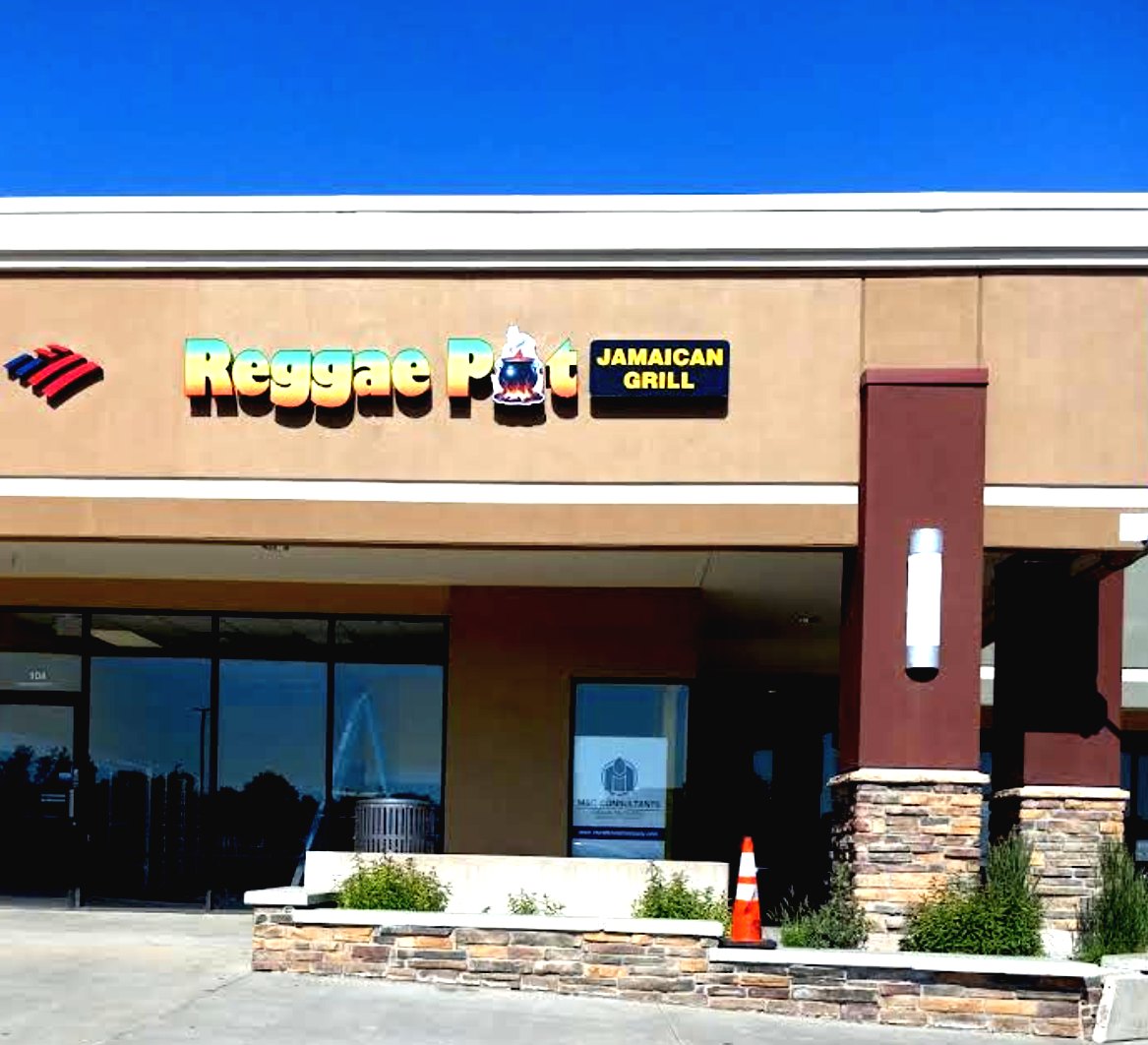
Reggae Pot Jamaican Grill
2243 S Monaco St Pkwy #104
Denver, CO 80222
+1 720-410-2956
FAQ About jamaican food
What is the best Jamaican food to try in Denver?
The best choice depends on your tastes. Popular options include jerk chicken, curry goat, slow-cooked oxtail, and savory patties. Reggae Pot lists these dishes on its menu, with sides such as rice and peas and plantains. Ask the Denver team about current availability and spice levels.
Is Jamaican food very spicy in Denver?
Heat varies by dish and preparation. Jerk seasoning often includes scotch bonnet peppers alongside herbs and allspice, while other dishes may have gentler seasoning. Ask about the heat of the specific dish and any sauce before ordering.
What are some popular Jamaican snacks?
Jamaican patties are a popular snack made with flaky pastry and savory meat or vegetable fillings. Other options include fried dumplings and festival, a sweet fried dough often served with savory dishes. Availability varies, so check the current menu when ordering.
Public Last updated: 2026-11-06 06:46:30 AM