Planning Reusable Flower Containers for a Baby Shower
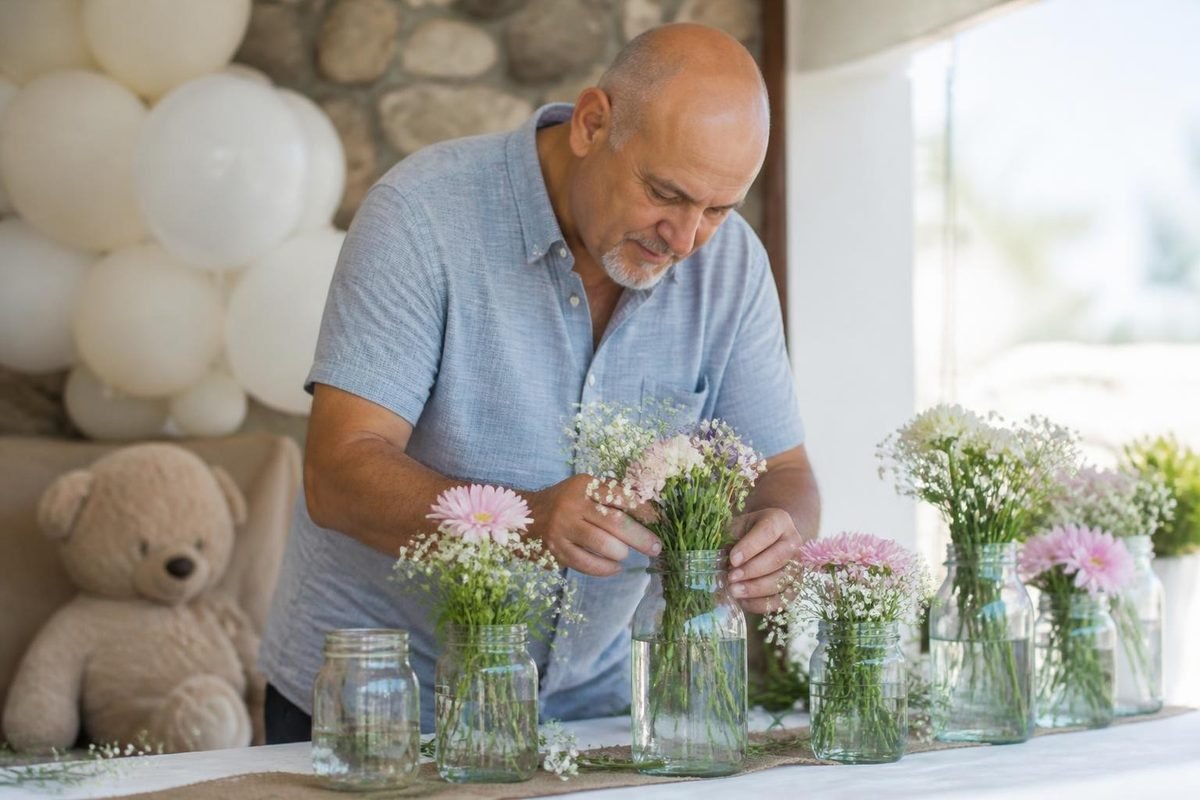
Reusable vessels can cut baby shower waste if they take the place of disposable containers and have another use afterward. The best choices are items people will keep or return, not containers that are likely to be thrown away once the gathering ends.
Pick containers that will be useful later
Before buying anything, check what you already have. Glass jars, pitchers, mugs, and small vases can all hold flowers and serve another purpose after the party. Borrowing from relatives or friends is another way to avoid purchasing items for a single afternoon.
Choose a container that suits both the flowers and the table. A short arrangement in a low, broad jar lets guests see across the table. Longer stems can work in a taller pitcher on a food table, where the height is less likely to interrupt conversation. Make sure every vessel sits firmly and can hold water without leaking.
The containers do not have to be identical. Several clear jars can feel like a group even if they have different shapes, particularly if you use the same flowers in each. Take off any loose labels, then wash the containers before adding water or flowers.
Decide what happens after the gathering
Using a vessel again only reduces waste if it actually gets used again. Plan where each one will go before arranging it on a table. Ask the host, the parents expecting the baby, or the guests what they would like, rather than guessing that everyone needs another jar.
- Give borrowed vases back to the people who lent them.
- Pass arrangements to guests who have said they would like to take them.
- Save useful jars and pitchers for food, storage, or another flower display.
- Offer clean containers to a local organization, if it accepts them.
Tell guests ahead of time if they can take flowers home. They may want to bring a bag or make room in the car for a water filled container. Keep towels close by in case of spills, and leave some space at the top instead of filling vessels to the rim.
Arrange flowers with fewer materials
For many table displays, clean water, a washed vessel, and trimmed stems are all you need. Remove any leaves that would sit under the water, because leaves left submerged can dirty it. Cut stems to fit the container, while keeping enough room for water.
If reducing waste is the goal, leave out disposable floral foam. A container with a narrow opening can help keep a loose group of stems in place. Wider vessels may need additional stems to support the flowers, so choose the container with the flowers you plan to use in mind.
Once the shower is over, compost the flowers and leaves if a suitable compost system or collection is available. Pour out the water, wash each vessel, and let it dry before putting it away or returning it to its owner.
Common questions about flower containers
Should every vessel look the same?
No. A mix of shapes can look good together as long as the containers are clean, steady on the table, and an appropriate size.
Is it fine for guests to take an arrangement?
Yes, provided the vessel was not borrowed and the guest wants it. Confirm the plan before the shower so useful containers are not accidentally taken or left behind.
Will any reusable container reduce waste?
Not by itself. Buying a new vessel that is never used again can create another item to discard. Start with something already on hand or borrowed, and make sure it has a clear next use.
See also: flowers delivered locally in Europe
Public Last updated: 2026-11-26 05:22:39 PM