"What is PRP?" "Are there contraindications?" "How is it made?"
Wat is PRP?
Restorative substances circulate in your blood ready to take to the track when you get a wound. They are the platelets, which regenerate skin and tissues in a short time.
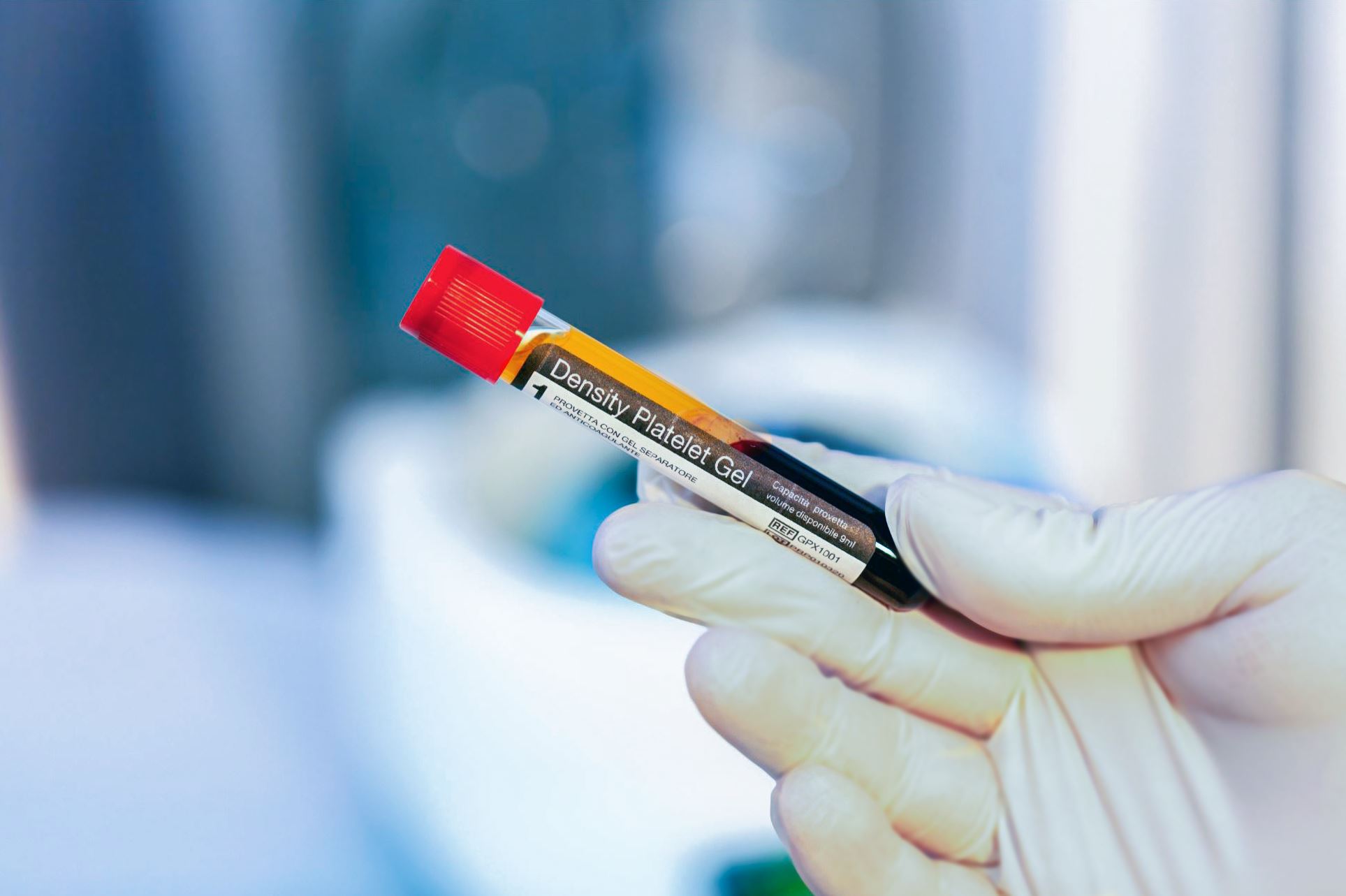
So why not use them in concentrated form to stimulate the reparative processes in a biological way? This is what Prp (platelet rich plasma) is: a sample of your blood plasma, enriched with autologous platelets (that is, coming from the same organism), transformed into a powerful medicine, useful for fighting many problems.
PRP (platelet rich plasma) is a powerful concentrate of growth factors capable of stimulating tissue regeneration. It is obtained thanks to a technique that involves the centrifugation of autologous blood (ie taken from the same patient) within a process that ends with the production of a part of plasma with a high concentration of platelets.
PRP is one of the most recent therapies in skin and scalp regeneration. The platelets in contact with the dermis release a large amount of growth factors that stimulate the production of collagen , giving the skin a more toned and smooth appearance without altering the morphology of the face, and is also useful in other body sites such as hands and neck .
In aesthetic medicine, the use of PRP has spread to the treatment of skin and subcutaneous tissues to improve the appearance of areas such as cheeks, ocular and periocular areas, skin folds of the neck.
In case of alopecia it stimulates the regrowth of new hair .
An application that is giving comforting results concerns non-scarring and areata alopecia . According to recent data, regrowth occurs in most of the cases treated.
The most frequent forms of alopecia are two: androgenetic, linked to an excess of androgens or to a hypersensitivity of receptors to male hormones, and the areata which affects two thirds of women and is due to autoimmune reactions that weaken the hair follicle.
The androgenetic form manifests itself, in men, with the receding hairline that goes from the forehead to the top of the skull, while in the fair sex it causes a thinning even on the nape.
The aerated shape, on the other hand, creates unsightly patchy losses.
In both cases, it can be useful to curb hair loss with micro injections of Prp, done on the entire scalp at one centimeter from each other (there are about fifty but so "micro" and quick as to be painless).
The growth factors released from the platelet concentrate oxygenate and revascularize the hair bulb, arresting the fall and strengthening the shaft. The best results, as shown by a study published in the Journal of Trichology , are obtained not in the presence of total baldness but when the scalp is still covered with a layer of very fine and sparse hair ".
The PRP is also used for the treatment of scars, from the superficial ones (such as the "holes" left in inheritance by acne) to the deeper, harder and raised ones called keloids.
To prevent the new scar from giving rise to a keloid, PRP infiltrations are made along the scar edges or applied by dripping. A study published in the Journal of Surgical Dermatology shows that this protocol avoids the risk of new chelodes in 87% of cases.
Prp is also particularly useful in case of hypertrophic scars resulting from deep 2nd or 3rd degree burns, especially if retracting.
In this case, the keloid is treated with the fractionated C02 ablative laser, which detaches and smoothes it by reducing its thickness, and then Prp is injected all around the curb to regulate the activity of the fibroblasts.
PRP is also effective in healing pressure sores, wounds and diabetic ulcers, which often afflict the feet.
After surgical cleansing, the dense and full-bodied platelet gel is applied with a cannula. It is mainly placed on the edges of the lesion, where the tissue reconstruction starts. A fact that, as dozens of clinical studies have shown, significantly accelerates the healing process.
From a technical point of view, the production of platelet-rich Plasma takes place in a dedicated room, with a totally closed, automated system, which eliminates the risks of microbial contamination. This system allows to separate and concentrate the platelets as required by current legislation.
The PRP is also widely used in Orthopedics: the platelet concentrate is injected into joints, worn out due to arthritis or osteoarthritis and stimulate cellular regeneration. Multiple intra-articular infiltration cycles are usually recommended to obtain a valid result.
Similarly, the injection of Prp is widely used in analgesic therapy at the level of the spinal column: the platelet preparation at the level of the articular facets of the vertebrae helps the regeneration and healing process of the articular surfaces worn over time. If the blood has been centrifuged with special PRP tubes, it is divided into 3 layers:
The top layer (55%): Plasma (PPP) layer with very few platelets.
The core layer, also called as PRP Layer or Buffy Coat layer, is made up of White Blood Cells (WBC) and platelets; it is the most important layer because most of the platelets are found here (94%).
The lower layer (45%): Red blood cells (RBC) layer with reddish appearance.
in fact, it is estimated that the volume of PRP is equal to 10% of the whole blood processed; through our device, consisting of a centrifuge and a special kit, it is possible to obtain a PRP with a platelet concentration 5-6 times higher than the basal one.
A higher concentration of platelets ensures better results.
The blood taken from the patient is immediately subjected, in a closed circuit, to a separation process that allows to isolate and extract a certain amount of plasma rich in platelets , within which the Growth Factors are found.
The treatment lasts 10-15 minutes and generally does not require local anesthesia; in rare cases an anesthetic cream is used previously applied to the area. The personalized protocols provide cycles of 3-5 sessions per year , at a distance of 45-90 days from each other, followed by maintenance sessions 1-2 times a year.
Are there any contraindications? PRP treatment is a safe treatment and there are no contraindications. Of course, it must be prepared in a sterile environment, away from external contamination.

Public Last updated: 2021-04-08 05:26:25 PM