Attachment Therapy and Emotional Regulation Skills
Attachment therapy sits at the crossroads of developmental psychology, trauma therapy, and practical skill building. At its best, it helps people rework the templates they carry for closeness, safety, and autonomy, then anchors those shifts with emotional regulation skills that hold up under pressure. I have watched clients move from chronic shutdown or fire-alarm reactivity into steadier rhythms in a matter of months, not because they learned to think differently, but because they experienced safer connection in the room and practiced the body based skills that go with it. That pairing is the heart of this work.
What attachment therapy looks like in practice
Most people arrive with a mix of relationship pain and nervous system strain. They say things like, “I know my partner loves me, but the minute they look away I panic,” or “I shut down when my child cries and I hate that.” Others notice patterns at work, like agreeing to everything, then resenting everyone. Behind those patterns sit attachment strategies that once protected them, and a set of regulation habits the body still runs automatically.
The early sessions focus on three tracks in parallel. First, we map the client’s history of care, loss, and repair. Not as an excavation project, but to see where trust was built and where it fractured. Second, we look at in the moment relationship patterns, both in life and between client and therapist. Third, we begin concrete regulation practices, because insight without regulation rarely holds under stress. If the client’s system is too revved up or too collapsed, the therapy will not land, so we pace the work inside the person’s window of tolerance.

Attachment therapy is not one technique. It draws from mentalization based work, emotionally focused therapy, parts oriented models, and somatic therapy. The common denominator is that the relationship is the therapy, and skill building is woven into that relationship rather than bolted on as homework.
Internal working models and what they mean in the body
Attachment theory talks about internal working models, shorthand for the expectations and rules your nervous system carries about closeness, conflict, and comfort. These models are not only ideas. They are patterns in the body: how your breath changes when a loved one is late, the micro freeze in your voice when a colleague critiques you, the heat in your chest when someone pulls away.
Secure models anticipate that needs can be expressed and usually met, that separations are tolerable, and that mistakes get repaired. Insecure models skew in a few predictable directions. Anxious strategies heighten proximity seeking and protest, often paired with fast, shallow breathing and a scanning mind. Avoidant strategies mute needs and minimize feelings, often with tight jaw and inhibited breath, and a focus on tasks instead of people. Disorganized strategies oscillate or tangle, with bursts of approach and abrupt withdrawal, the body on a hair trigger, sometimes numbing in seconds.
Helping clients update these models involves two pillars that must be present at the same time: new experiences of safety in connection, and the capacity to regulate arousal enough to notice those experiences. If someone cannot settle enough to register support, closeness will feel like pressure. If they can settle but connection remains unreliable, calm becomes isolation. The pairing matters.
Where trauma therapy fits
Attachment injuries and trauma often travel together. You can work on bonding patterns all day, but if a person’s physiology is stuck in threat responses from earlier shocks, ordinary intimacy will continue to feel risky. Trauma therapy helps discharge those stuck responses and brings the system back into a workable range. Some clients need more bottom up sequencing at first, like orienting and paced breath, before they can talk about needs without flooding.
I rely on a titrated approach that blends narrative work with somatic tracking. We aim for enough contact with the memory to integrate it, not so much that the client re-lives it. Signs we are in the right range include spontaneous sighs, longer exhales, warming hands, and a shift from global fear to a more specific feeling. If panic spikes or the client goes foggy, we back up, reorient to the room, and return when the body signals readiness. Attachment therapy does not rush this part. Fast is often slow.
The practical role of somatic therapy and movement
Regulation is a body job. Somatic therapy and movement therapy give the client levers they can actually pull. In session, I might ask, “What happens in your chest as you say that?” Then I wait for a felt sense, not a theory. If the chest feels tight, we experiment: lengthen the exhale by two counts, place a palm on the sternum for gentle pressure, or shift posture so the back is supported. We look for a change that the client can perceive within 30 to 60 seconds. That feedback loop builds confidence and agency.
Movement therapy does not need to look like dance. Sometimes it is a two minute sequence that matches and then downshifts the client’s arousal. For example, a client who arrives agitated from traffic begins with a brisk paced walk up the hallway, then slows to half speed, then practices stillness for five breaths before sitting. Their body learns that it is allowed to land. Another client who chronically collapses might practice pushing a wall with steady legs for 15 seconds, then releasing, then naming a boundary out loud. These micro practices, done three to five times a week, change baseline regulation over a few months.
Grief is part of attachment work
Many clients carry grief about needs that were not met, love that was conditional, or losses never acknowledged. Grief counseling weaves in naturally. We do not grieve to get it over with. We grieve to honor reality, to clear space for the present, and to make room for new attachment experiences without the body bracing for the old ones. Sometimes grief shows up as tears. Sometimes it shows up as anger finally allowed to have its full shape, or as a quiet recognition of strength that came from surviving.
I think of grief work as a series of permissions. Permission to name what was missing, to tell the story in a way that feels true, to remember what was good without pretending the rest did not happen, and to stay connected to others during the process. People often need co regulation for this, whether from the therapist, a partner, or a friend, so the system does not pair sadness with isolation again.
Core regulation skills clients actually use
Clients ask for a short list of practices that work under real stress. I track what people keep using six months in and prioritize those. The five that endure most often are:
- Ground and orient: shift attention to three things you can see, two you can touch, and one you can hear. Let the eyes move. This interrupts tunneling.
- Lengthen the exhale: breathe in for a count of four, out for a count of six, for one minute. Longer exhales nudge the nervous system toward settling.
- Name and allow: say, “A wave of anxiety is here,” instead of “I am anxious.” This builds a tiny bit of space to respond rather than react.
- Support touch: hand over heart or one hand on heart, one on belly, with gentle pressure for 30 to 60 seconds. Many people feel immediate softening.
- Micro-boundary: say, “I need a minute,” then step away for 60 seconds and return. Short time outs work better than disappearing.
These are not magic. They are simple, repeatable habits that, when practiced outside of crises, show up more reliably inside them. Clients who build a 5 minute daily circuit using two or three of these usually report a measurable change in reactivity within 4 to 6 weeks.

Rupture and repair as the training ground
Attachment therapy lives in the moments when something misfires. The therapist misunderstands, the client feels missed, or an old fear lights up in a new interaction. These moments are not failures, they are lab time. We slow down and name what happened. The client learns to track body signals that precede the rupture, to speak to needs, and to receive repair. The nervous system gets to associate conflict with eventual reconnection, not abandonment or engulfment.
One couple I worked with had a weekly loop. He raised a concern too late at night, she felt ambushed and went silent, he escalated, she left the room. In session we practiced a new sequence. He learned to notice the urge to “get it all out now,” and instead propose a 20 minute morning talk. She learned to say, “I feel the freeze starting, I need a glass of water and then I want to hear you,” and return within two minutes. They rehearsed lines and body positions. After three weeks, the loop shortened. After two months, it happened less than half as often. They still argued, but the arguments no longer tore the fabric.
How to structure a single session for safety and progress
A typical 50 minute session with an individual client touches four arcs. We open with a short orienting practice so the system arrives. We check in on what matters most today, staying curious about attachment lenses underneath the content. We do one or two focused pieces of work, sometimes a memory, sometimes a live relational moment, sometimes skills. We close with integration, naming what shifted and agreeing on a small practice to carry into the week. If the work surfaces big feelings late in the hour, we slow down, build in regulation, and reschedule deeper processing for a time when we have plenty of space. Ending dysregulated often sets people back.
For couples, I pay attention to turn taking, body position, and eye use. Sitting slightly angled, not head on, often reduces threat. Asking each partner to reflect what they heard for 20 seconds, not a full retell, keeps things moving. I time interventions. When arousal climbs past a 7 out of 10, insight drops. That is the moment to pause and downshift rather than insist on finishing the point.
Using attachment therapy alongside medications, groups, and self study
Some clients benefit from short term medications to widen the window of tolerance while skills consolidate. This is especially useful when sleep is severely disrupted or panic attacks are frequent. Medication is not the work, but it can make the work possible. Group therapy, especially interpersonal process groups, also supports attachment shifts by giving clients many reps of asking, receiving, and setting limits. Finally, self study helps, but I encourage people to pair books or courses with real conversations, so the learning is not only cognitive.
Culture, context, and the shape of safety
Attachment patterns do not form in a vacuum. Culture, family roles, race, gender norms, immigration histories, and community safety all inform how people approach closeness. A strategy that looks avoidant in one context may be protective and wise in another. Part of competent attachment therapy is asking, “What counted as safe where you grew up?” and “Who paid the price when rules were broken?” We adjust expectations. Some clients cannot safely practice full emotional openness in their current environment. They can still practice micro honesty, choose safer people, and build internal permission to need.
I also pay attention to financial and logistical realities. Weekly therapy for a year is a privilege. If someone can come twice a month, we set a steadier pace and build more between session structures. Short, frequent touch points by secure text or brief phone check ins can help for a limited time, especially during acute phases like grief surges or major life transitions.
When grief returns in waves
After a loss, attachment systems pulse for months. People often worry they are regressing when a new wave of sadness knocks them sideways. I normalize the physiology. The system looks for the person, does not find them, and alarms. You are not doing it wrong. We build rituals that comfort without numbing. A client who lost a parent created a 3 minute evening ritual, lighting a candle, speaking a memory, then doing three rounds of lengthened exhale. Over eight weeks, the intensity did not vanish, but the peaks softened. Grief counseling pairs well with attachment therapy because both center relationship, presence, and permission to feel.
Teletherapy and in room differences
Attachment and somatic work can be done well over video with a few adjustments. I ask clients to position the camera so I can see shoulders and hands. We agree on signals to pause if arousal spikes. I guide more explicit orientation to the physical space, like looking around the room and feeling the chair, because environmental cues are not shared. When possible, I build in occasional in person sessions for clients who struggle with dissociation. Physical co presence can make settling easier, but the main ingredient is the reliable, attuned attention, not the room.
Skill practice that sticks
Good intentions fade under stress unless they become embodied habits. I ask clients to choose two practices and pair them with daily anchors they already do, like morning coffee or brushing teeth. We set the bar low so success is likely. Two minutes a day is enough to start. We also track outcomes. Did you use the micro-boundary in a real conversation this week? How did your body feel after support touch? Specifics build momentum.
Here is a simple repair conversation structure many clients find workable. It balances truth and tenderness, and it is short enough to remember during a fight.
- Name the moment: “When you looked at your phone while I was talking, my chest tightened and I felt alone.”
- Ask for a pause or presence: “Can we take one minute to reset and try again?”
- Own your piece: “I raised my voice too. I do not want to keep doing that.”
- State a need: “Please look at me while I share this part. It helps me stay with you.”
- Confirm repair: “That helped. I feel closer. Are we okay enough to move on?”
Clients who practice this when the stakes are lower, like during a mild irritation, can usually access it when a bigger rupture arrives. The aim is not perfect technique, it is a felt sense of getting back to each other more quickly.
Trade offs and edge cases
Some patterns shift quickly. Others hold on. People who grew up with chaotic caregiving may need longer and steadier therapy, not because they are doing poorly, but because their systems require many repetitions of safety to trust it. Clients with active substance dependence may need dedicated recovery supports before attachment work can take hold, since substances hijack regulation. Neurodivergent clients often benefit from tailored cues, like visual timers during partner dialogues or explicit agreements about touch. None of this is a barrier. It is information that helps us set realistic plans.
A small number of clients find that increasing contact with feelings initially worsens symptoms. We step back, build more external structure, add behavioral routines like sleep and meal regularity, and keep emotional titration gentle. If intimate relationships are violent or coercive, the work shifts to safety planning. Attachment longings are real, but safety is non negotiable.
What progress looks like over time
After 4 to 6 weeks of focused practice, most clients report a few tangible changes. They catch themselves a breath earlier before saying the cutting line. They ask for short breaks rather than disappearing. They notice their partner softening in response to clear requests. Sleep sometimes improves. Over 3 to 6 months, deeper patterns begin to loosen. The fear that used to spike at a delayed text shows up as a wobble, then passes. People report fewer arguments that last less than 20 minutes, and more moments of ordinary warmth. Metrics help. I often https://cristiandafj808.huicopper.com/somatic-therapy-for-caregivers-regulating-while-caring ask clients to rate reactivity, connection, and recovery speed from 0 to 10 once a month. We look for trends, not perfection.
Parents tell me they can stay with a crying child for 90 seconds longer than before without shutting down. That is progress. Adult children notice they can visit a parent for two hours without reverting to teenage patterns, because they set a limit before resentment builds. Couples mark the first time they argued and then went for a walk together 15 minutes later. These are not small wins. They are the architecture of secure functioning.
The therapist’s stance
Technique matters, but stance matters more. Attuned, steady, curious. The therapist names their own misses, welcomes feedback, and does not scare easily. That steadiness offers a new relational experience. When a client says, “I thought you would be angry when I told you that,” and the therapist stays grounded, a new layer of learning lands. Over time, the therapist becomes internalized as a model of secure relating, not as a crutch but as a reference point the client can consult when stressed: slow down, feel your feet, name what is true, ask for what you need, stay open to repair.
Bringing it all together
Attachment therapy is most powerful when it is paired with emotional regulation skills, informed by trauma therapy, and enlivened by somatic and movement practices. Grief counseling often threads through it, because love and loss live close together. The work is not linear, but it is trackable. We build capacity in the body, we practice new moves in real relationships, and we let the nervous system learn that closeness can be both honest and safe. Clients do not become unflappable saints. They become people who can feel more, connect more, and recover faster when life inevitably shakes them. That is a worthy outcome.
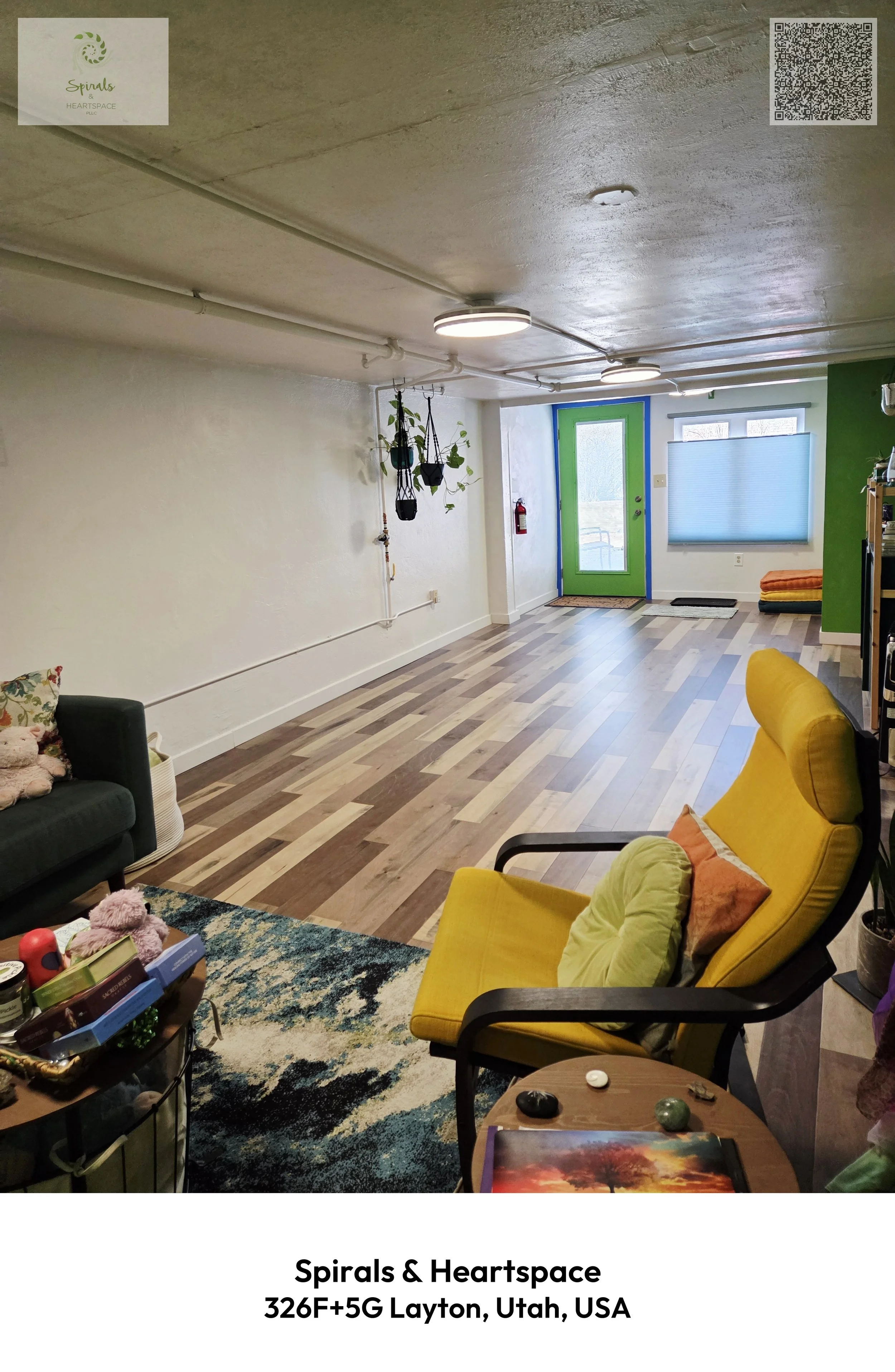
Spirals & Heartspace
Name: Spirals & HeartspaceAddress: 534 W Gentile St, Layton, UT 84041
Phone: (385) 301-5252
Website: https://spiralsandheartspacehealing.com/
Hours:
Sunday: Closed
Monday: 9:30 AM – 7:00 PM
Tuesday: 9:30 AM – 7:00 PM
Wednesday: 9:30 AM – 7:00 PM
Thursday: 9:30 AM – 7:00 PM
Friday: 9:30 AM – 7:00 PM
Saturday: Closed
Open-location code / plus code: 326F+5G Layton, Utah, USA
Coordinates: 41.0604503, -111.9762128
Map/listing URL: https://www.google.com/maps/place/Spirals+%26+Heartspace/@41.0604503,-111.9762128,766m/data=!3m2!1e3!4b1!4m6!3m5!1s0x875303311f1d4d1b:0xc6859e5e3fceafe2!8m2!3d41.0604503!4d-111.9762128!16s%2Fg%2F11x781dbvb
Embed iframe:
Socials:
Instagram: https://www.instagram.com/spiralsheartspace/
LinkedIn: https://www.linkedin.com/company/spirals-and-heartspace-pllc
TikTok: https://www.tiktok.com/@spiralsheartspace
X: https://x.com/SpiralsHea61786
YouTube: https://www.youtube.com/@SpiralsHeartspace
The practice is led by Ande Welling, a licensed clinical mental health counselor with training in dance/movement therapy, somatic work, EMDR, trauma care, relational neuroscience, and embodied attachment.
Listed services include therapy, coaching, consultation, authentic movement, trauma therapy, somatic therapy, grief counseling, movement therapy, and attachment therapy.
The practice serves adults who want a deeper body-aware approach to trauma, anxiety, depression, grief, burnout, self-abandonment, family patterns, and relationship wounds.
Spirals & Heartspace offers both in-person sessions in Layton and online therapy for clients in Utah.
The practice is locally positioned for clients in Layton, Kaysville, Farmington, Syracuse, Clearfield, Clinton, Roy, Ogden, Bountiful, Davis County, and nearby northern Utah communities.
The office is listed at 534 W Gentile St in Layton, with public listing hours Monday through Friday from 9:30 AM to 7:00 PM.
Prospective clients can call (385) 301-5252 or visit https://spiralsandheartspacehealing.com/ to ask about consultation options, session fit, and scheduling.
The public map listing for Spirals & Heartspace can help clients verify the Gentile Street office before planning an in-person appointment.
Popular Questions About Spirals & Heartspace
What is Spirals & Heartspace?
Spirals & Heartspace is a Layton, Utah psychotherapy and coaching practice offering somatic, trauma-focused, expressive arts, movement-based, and attachment-informed support for adults.
Who is the therapist at Spirals & Heartspace?
The official site identifies Ande Welling as the therapist, coach, movement facilitator, and guide behind Spirals & Heartspace. Listed credentials include LCMHC, BC-DMT, NCC, GL-CMA, BSE, EMDR Trained, and CCTP-II.
Where is Spirals & Heartspace located?
The matching public listing and LinkedIn profile list the address as 534 W Gentile St, Layton, UT 84041.
Does Spirals & Heartspace offer online therapy?
Yes. The official FAQ states that therapy is available in person or through a HIPAA-compliant telehealth platform for clients who live in Utah.
What services does Spirals & Heartspace provide?
Listed services include therapy, coaching, consultation, authentic movement, trauma therapy, somatic therapy, grief counseling, movement therapy, and attachment therapy.
What makes somatic therapy different from traditional talk therapy?
The official Layton page explains that somatic therapy works with body sensations, movement, and physical experience because trauma and emotional patterns can be held in the nervous system, not only in thoughts.
Do clients need dance experience for movement therapy?
No. The official Layton FAQ says no dance training or special physical ability is required, and that movement therapy uses a client’s natural capacity for movement to access emotions and process experiences.
Does Spirals & Heartspace accept insurance?
The official FAQ says the practice does not take insurance directly, but may provide superbills or bill for out-of-network benefits when applicable. Clients should confirm current reimbursement options directly before scheduling.
What are Spirals & Heartspace’s listed hours?
The matching public listing shows Monday through Friday from 9:30 AM to 7:00 PM, with Saturday and Sunday closed. Appointment availability should be confirmed directly.
How can I contact Spirals & Heartspace?
Call (385) 301-5252, visit https://spiralsandheartspacehealing.com/, or use the listed social profiles: https://www.instagram.com/spiralsheartspace/, https://www.linkedin.com/company/spirals-and-heartspace-pllc, https://www.tiktok.com/@spiralsheartspace, https://x.com/SpiralsHea61786, and https://www.youtube.com/@SpiralsHeartspace.
Landmarks Near Layton, UT
Spirals & Heartspace is located on West Gentile Street in Layton, Utah, with in-person therapy available locally and online therapy available for Utah residents. Clients near these landmarks can call (385) 301-5252 or visit https://spiralsandheartspacehealing.com/ to ask about somatic therapy, trauma therapy, movement therapy, grief counseling, attachment therapy, and consultation options.
- 534 W Gentile St — The listed office address for Spirals & Heartspace; clients can use the map listing to verify the office before visiting.
- West Gentile Street — The local street connected with the practice’s Layton office location.
- Downtown Layton — A practical local reference point for clients navigating central Layton.
- Layton Hills Mall — A major Layton shopping landmark and useful orientation point for clients traveling through the city.
- Interstate 15 near Layton — A major northern Utah route that helps clients reach Layton from nearby Davis County communities.
- Layton FrontRunner Station — A transit landmark for clients traveling by commuter rail through Davis County.
- Ellison Park — A local park and community landmark in Layton.
- Great Salt Lake Shorelands Preserve — A major natural landmark west of Layton and a recognizable Davis County destination.
- Hill Air Force Base — A major regional landmark near Layton and Clearfield.
- Kaysville — A nearby Davis County city listed in the practice’s surrounding service area.
- Farmington — A nearby Davis County community included in the broader local service-area language.
- Ogden — A nearby northern Utah city; clients can ask whether online Utah therapy or in-person Layton sessions are the best fit.

Public Last updated: 2026-06-23 04:41:04 PM