Garage Door Maintenance and Garage Safety Before a Cyclone
A garage door does far more than cover a parking space. In cyclone-prone areas, it becomes part of the building envelope, and that puts real pressure on every panel, fixing point, and moving part. If that door fails under wind load, the problem is not confined to the garage. Government guidance in Queensland has long treated garage doors as a serious resilience issue because failure can allow wind into the house and increase damage to roofs and walls.
That changes the way sensible homeowners should think about garage maintenance. The job is not only about smooth operation, quieter movement, or preventing a breakdown on a busy weekday. Before storm season, maintenance becomes part of household risk reduction. A garage that opens cleanly, closes properly, and has the right level of wind resistance is not a cosmetic upgrade. It is part of preparing the home for severe weather.
Why the garage door deserves special attention
People often focus on the roof, windows, and outdoor furniture when a cyclone is on the radar. Those all matter. But the garage door is one of the largest openings in many homes, and large openings are always vulnerable in high winds. Queensland cyclone-preparation guidance specifically addresses garage doors for that reason. The advice is clear in principle: the door should comply with the relevant Australian and New Zealand standard for garage doors and be correctly rated for wind pressure, or it should have a bracing system that can be installed before a cyclone.
That creates two separate questions for homeowners. First, is the existing door in good operating condition? Second, is it suitable from a wind-resistance point of view? A well-lubricated or recently serviced door is not automatically cyclone-ready. On the other hand, a wind-rated door still needs to be maintained so it closes as intended and does not have obvious wear, damage, or misalignment.
I have seen plenty of homeowners treat these as separate worlds, maintenance on one side, storm preparation on the other. In practice, they overlap. A door that binds in the tracks, slams shut, struggles to seal, or behaves unpredictably under normal conditions is already telling you something. It is not proof of cyclone weakness, but it is a sign that the system needs attention before the weather turns.
Storm season preparation starts earlier than most people think
By the time a cyclone watch is issued, the best preparation window has usually narrowed. Queensland authorities consistently advise households to prepare before storm season and to stay outside only while it is safe to do so. That matters because garage-related tasks can involve moving vehicles, securing items, installing bracing, and arranging repairs. None of that should be left to the last minute, especially if trades are already booked out across a region.
Pre-season preparation gives you time to inspect the garage door with a calm eye. Open and close it several times. Notice whether it moves evenly. Look at the edges where it meets the frame. Check whether the locking points and any bracing equipment are present and accessible. If the door has documents or labels relating to compliance or wind rating, gather them and store them somewhere easy to find. If you cannot confirm the door’s rating or suitability, that is the moment to ask a qualified contractor, not the afternoon before the wind arrives.
This is also where many households discover that the garage has quietly become a storage room for everything that does not fit elsewhere. Bikes, tools, loose timber, sports gear, shelving units, spare pots, fuel containers, and old appliances all compete for floor space. In ordinary weather, the clutter is inconvenient. Before a cyclone, it can interfere with access, prevent proper door closure, or leave projectiles inside a damaged structure.
What maintenance really means in a cyclone context
Routine garage door maintenance is often described in terms of convenience. Before severe weather, the standard is higher. You are not looking for perfection. You are looking for a system that operates predictably and can be secured properly.
Garage door tracks are a good example. Homeowners usually notice the tracks only when the door becomes noisy or jerky. Before storm season, the issue is less about sound and more about whether the door is sitting and travelling as it should. A visibly bent, obstructed, or damaged track deserves professional attention. The same is true if the door appears to rack or sit unevenly when partly open. Those signs do not automatically mean the door will fail in a cyclone, but they are not details to ignore.
Garage door springs deserve similar respect. Springs are under tension, and they are not a safe do-it-yourself project for most people. If the door feels unusually heavy, does not move smoothly, or shows obvious imbalance, that is not the moment to experiment. It is the moment to stop using the door if necessary and book a qualified technician. In a storm-prone region, a marginally functioning spring system creates more than a nuisance. It can leave the door difficult to secure when timing matters most.
Garage door openers also need a practical check. An opener that hesitates, reverses unexpectedly, or only works intermittently can create problems during preparation. Official storm guidance includes unplugging electrical items, which makes it sensible to know how your opener behaves and how the door can be operated when power is disconnected. You do not want your first attempt at manual operation to happen under pressure as the weather closes in.
None of this requires homeowners to become engineers. It requires a habit of paying attention early enough to act.
The question of compliance, rating, and bracing
For cyclone resilience, one of the most important distinctions is between a door that simply functions and a door that is appropriate for the local wind conditions. Queensland guidance is specific on this point. The garage door should comply with AS/NZS 4505 and be correctly rated for wind pressure, or have a bracing system that can be installed before a cyclone.
That wording matters. It means a perfectly presentable older door may still be a weak point if it is not compliant or appropriately rated. It also means some homes may be better served by a garage door replacement rather than repeated minor repairs to an outdated system. Queensland housing resilience guidance explicitly notes that replacing existing garage doors and frames with wind-rated versions can form part of resilience work, and that non-compliant garage doors can be a cost-effective target for replacement.
There is practical judgment involved here. If a door is relatively recent, in sound condition, and backed by clear product information, the right path may be verification and maintenance. If the door is older, damaged, difficult to identify, or paired with a frame that raises doubts, replacement may become the more sensible long-term choice. The cheapest fix in the short term is not always the least expensive decision over several storm seasons.
A homeowner once described this to me in the most direct way possible: “I kept paying to keep an old door alive because it still opened.” That is a common mindset. The door still opens, the opener still hums, the panels still look passable from the driveway, so the urgency never arrives. But storm resilience is not measured by whether the door opens on a dry Tuesday morning. It is measured by whether the opening remains secure when wind pressure becomes the real test.
A practical pre-cyclone garage check
Use a simple, disciplined review rather than a rushed last-minute sweep.
- Confirm the garage door closes fully and operates without obvious binding, tilting, or hesitation.
- Check whether the door is wind-rated and compliant, or whether a bracing system is available and ready to install.
- Clear the garage interior enough to access the door, walls, power points, and any emergency equipment without delay.
- Park vehicles under shelter if possible and secure loose outdoor items well before conditions deteriorate.
- Unplug electrical items when appropriate as part of broader storm preparation, and make sure you know how to manage the garage door safely if power is off.
That checklist is intentionally basic. It does not replace advice from emergency authorities or a qualified contractor. What it does is force attention onto the points that are often A1 Garage Doors Gold Coast Queensland missed because they seem too ordinary.
Attached garages change the risk profile
An attached garage is not just another outbuilding. It often shares walls, ceiling lines, and internal access points with the rest of the home. That is one reason garage door integrity is treated as a high-priority issue in cyclone preparation. If wind gets into that large opening, the effects may extend far beyond a damaged door curtain or bent hardware.
This is also where related improvements can make sense. Queensland resilience guidance points more broadly to protecting openings and using qualified contractors for vulnerable parts of the home. For some houses, the garage door is one part of a wider hardening strategy that may also involve the treatment of nearby door openings or other exposed areas. The right approach depends on the design of the home and the local wind exposure, but the principle is consistent: weak openings deserve attention before storm season.
The attached garage also tends to become a transition zone for the whole household. It stores evacuation supplies, tools, ladders, and backup items. During cyclone preparation, that function matters. If the garage is too cluttered to work in safely, every task takes longer. If you have to climb over stored items to reach a brace, release an opener, or move a car into position, the risk is no longer abstract. It is right there in the workflow.
Garage door openers, power loss, and safe habits
Garage door openers are convenient until the power drops out. Then convenience gives way to access and safety. Official severe-weather guidance recommends unplugging electrical items, which makes it worth planning around the opener rather than assuming it will always do the work for you.
That does not mean every homeowner needs a technical lesson on opener mechanics. It means you should know whether the door can be secured safely if the opener is disconnected and whether the path to that control point is clear. If the opener has shown signs of erratic behaviour, deal with that before storm season. An unreliable opener becomes especially frustrating when families are trying to move cars under shelter, secure possessions, and avoid unnecessary trips outside.
There is another angle here that gets less attention. Remotes and access devices often live in vehicles or drawers without any clear system. Before a cyclone, that can create needless confusion. If one family member has the only working remote and has driven away, or if batteries are weak and no one has checked them in months, a simple task becomes more complicated than it should be. Practical preparation is often about removing those small points of friction.
When garage door replacement is the smarter decision
Not every problem should be repaired indefinitely. Some doors age out of their useful life as resilience components even if they still provide basic access. Queensland resilience guidance supports the idea that replacing non-compliant garage doors and frames with wind-rated versions can be a practical and cost-effective way to improve household protection.
That does not mean every older door is automatically unsafe. It means age, compliance, frame condition, repair history, and local exposure all need to be weighed together. A homeowner facing repeated service calls on a door with uncertain wind performance may be better off investing once in a system designed for the conditions. There is also a peace-of-mind factor that should not be dismissed. During storm season, clarity has value. Knowing the door was selected and installed with wind resistance in mind removes a layer of doubt when warnings are issued.
Replacement decisions should be made carefully. Ask direct questions about compliance, wind pressure rating, and whether the frame is included as part of the upgrade where needed. A strong door paired with a poor frame does not solve the whole problem. This is one of those situations where professional advice earns its keep.
Safety inside the garage often gets overlooked
Cyclone preparation is not only about the door itself. The garage usually contains some of the most awkward and potentially hazardous items on the property. Power tools, chargers, garden chemicals, ladders, and stacked storage all deserve a second look before severe weather.
Queensland storm guidance advises securing loose outdoor items and parking vehicles under shelter if possible. For many households, the garage is where those tasks either succeed or fall apart. If the car cannot fit because the garage is overloaded, sheltered parking is lost. If outdoor gear is piled just inside the opening, the door may not close cleanly. If charging devices and appliances are scattered across benches and floors, unplugging electrical items becomes a rushed and messy exercise.
One practical standard works well here: the garage should be clear enough that an adult can move through it quickly, reach the door controls safely, and shift a vehicle inside without rearranging half the contents. That is not a high bar, but many garages do not meet it.
Small maintenance details that support everyday value too
Storm resilience is the priority, but there are quieter benefits to proper garage upkeep. If the garage is attached to the house, draught-proofing at the base of doors can help reduce heat loss. That matters for comfort and energy use, especially when the garage opens into a utility area or hallway. While energy efficiency is not the same thing as cyclone protection, it is a reminder that garage door performance affects the home in more ways than most people realise.
The key is not to confuse one benefit with another. A draught stopper does not turn a non-compliant door into a cyclone-ready one. It simply improves sealing and everyday performance. Good preparation keeps these categories separate. Structural suitability for wind, reliable operation, electrical safety, and comfort improvements each have their place, but they are not interchangeable.
When to stop inspecting and call a professional
Homeowners can do a sensible observational check, but there is a clear limit to what should be handled without training. Tensioned components, uncertain compliance questions, and bracing requirements all justify professional input. Queensland guidance on vulnerable parts of the home supports using a qualified contractor, and this is exactly the sort of work that benefits from that approach.
The situations that most often justify a prompt call are straightforward:
- You cannot confirm whether the garage door is compliant or correctly rated for wind pressure.
- The door or frame appears damaged, loose, or noticeably out of alignment.
- Garage door springs or the balance of the door seem abnormal, including a door that suddenly feels heavy or unstable.
- Garage door tracks look bent, obstructed, or inconsistent in the way the door travels.
- The existing setup appears non-compliant, making garage door replacement a more realistic option than ongoing patch repairs.
That list is not dramatic, and it does not need to be. Most good risk management is ordinary. It is a matter of seeing the weakness while there is still time to deal with it properly.
The timing rule that matters most
One of the most important parts of cyclone safety is behavioural, not mechanical. Prepare before storm season and only go outside after it is officially safe. That guidance should shape every garage decision. If a bracing system has to be installed, know where it is and how that process will happen well in advance. If vehicles need to be moved under cover, do it early. If loose items need securing, do not wait until gusts have already picked up.
People get into trouble when they treat the garage as a last-minute task because it feels close at hand and easy to manage. In reality, it can involve heavy doors, power equipment, ladders, clutter, and repeated trips between inside and outside. Good preparation reduces the number of decisions that need to be made when the weather becomes urgent.
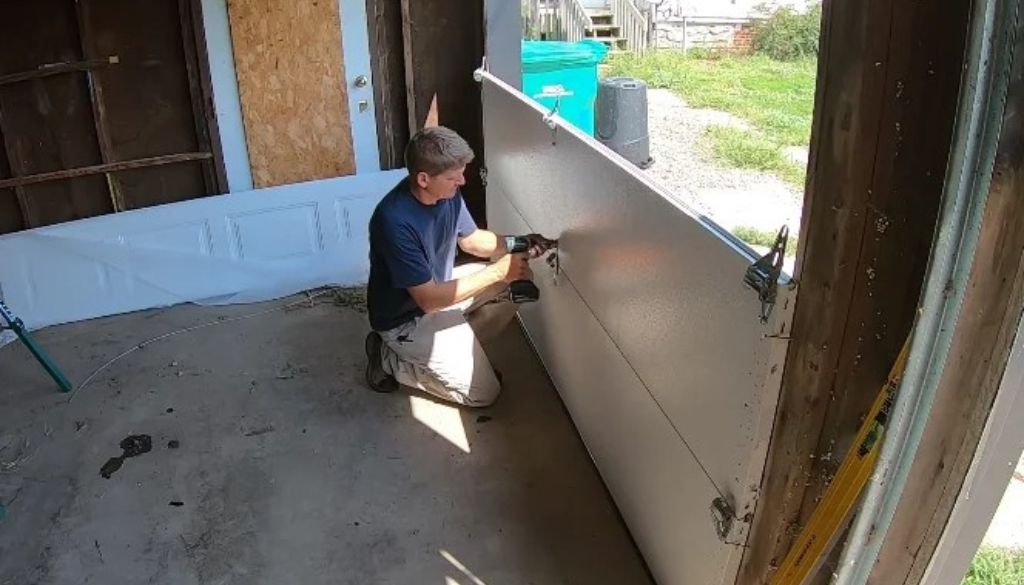
A garage door is one of those building elements that receives very little gratitude when it performs well. It just opens, closes, and disappears into the routine of the day. Before a cyclone, that is exactly why it deserves deliberate attention. If it is compliant, correctly rated or properly braced, maintained in sound condition, and supported by a clear safety plan for the garage around it, it becomes one less uncertainty in a season that already has enough of them.

Public Last updated: 2026-06-20 06:34:38 AM