Before You Call for Foundation Repair: 3 Key Signs and Steps to Know
On a cold April morning a few years back, a homeowner called me convinced her brick ranch was sinking. Doors were sticking, a hairline crack traced the dining room corner, and the basement smelled musty after rain. She had three mailers in hand for “foundation repair near me” and a pit in her stomach. We walked the property, checked the grading, ran a level across the floors, and opened ten windows. By the end of the visit, we had a punch list of small fixes. Only one item hinted at structural work, and even that could wait until we saw how the house behaved through the next wet season.
Foundations do fail, but not every crack, squeak, or puddle points to a major problem. Knowing what matters and what can wait saves money and stress, and gives you a better conversation when you do bring in a pro. These are the three signs I tell clients to look for first, along with the simple steps to take before you sign any contract for foundation repairs.
How houses move, and when it matters
Every structure settles. Soil dries and swells, frost heaves, lumber shrinks, masonry expands, and the ground under your home slowly rearranges itself. The goal of a good foundation is not to stop all movement, it is to limit differential movement so the structure stays within tolerances.
Different soils behave differently. Clay swells when wet and shrinks when dry, which can jack a foundation up and down over inches through a year. Sand drains well, then erodes when water is mismanaged. Loam sits in the middle and responds predictably. In river valleys, fill dirt and buried organic material complicate things further. If your neighbors talk about watering their foundations in summer, they probably live on expansive clay. If you see shallow wells and dry basements even in heavy storms, your subgrade likely drains well.
Understanding your soil and seasonal water patterns sets the context for every crack and squeak you see. It helps you separate normal cycles from structural distress.
Sign one: Cracks that talk back
Cracks are the language a house uses to tell you what is going on. Not every line is a red flag. A few simple distinctions help.
Hairline cracks in interior drywall or plaster, especially at the top corners of doors and windows, often reflect minor seasonal movement. These are usually 1/16 inch or less, clean edged, and may open in winter then close in summer. If paint bridges the gap and the crack does not telegraph through again for a year, you are probably fine.
Stair step cracks in brick or block, particularly on the exterior, demand more attention. A few short steps near a corner can be cosmetic. Long, continuous stepping that widens toward the top or bottom suggests shear and differential settlement. Horizontal cracks in a block basement wall, especially at mid height with the wall bowing inward, indicate lateral soil pressure and are more serious. I check these with a straightedge and a tape. If I see inward deflection of a half inch or more over 8 feet, I slow down and consider reinforcement.
Concrete slabs crack by nature. Control joints tell the slab where to crack neatly. Random cracks that are narrow and level on both sides usually just reflect shrinkage and curing. When one side of the crack is higher than the other by more than a quarter inch, or the gap grows wider than the thickness of two quarters stacked, the slab may be moving relative to its support. In basements, cracks that weep during rain and dry after point to hydrostatic pressure and a need to manage water, not necessarily a need for piers.
I carry a crack gauge and a simple feeler set. Failing that, a pencil line and a date work. Mark the ends of a suspicious crack and check it monthly. If it grows measurably in a season, especially after you fix drainage, that is data worth giving to a foundation specialist.
Sign two: Doors, windows, and floors that go out of square
Doors do not lie. When a door that used to close cleanly starts sticking at the top latch side, the opening likely racked. That can come from foundation movement, but also from loose hinge screws, tired jamb shims, or humidity swelling a wood slab. Before you panic, tighten hardware and check for seasonal humidity shifts. If multiple doors on one side of the home start rubbing at the same time and you can feel a slope walking across the floor, now you are reading structure, not just carpentry.
Floors tell the same story underfoot. In crawl space homes, a ridge down the center of a room can point to a beam that lifted when perimeter walls settled. In basements with steel beams, a broad dip over several joists can indicate a support post settled into a soft footing. I use a long level or a laser line to map slopes. If you roll a marble from the kitchen to the living room for fun, that is a clue, not a measurement. A slope of half an inch over ten feet is noticeable but not catastrophic. A slope of an inch or more in a short run, coupled with door and window issues, deserves evaluation.
Windows often tip their hand through cracked caulk joints or diagonal cracks in the plaster that trace from the corners. Modern vinyl windows are more forgiving than old wood sashes, but they still bind when the opening goes out of square. Again, look for patterns. One sticky door can be a hinge. Three windows on the same wall catching at the same time asks for a crawl space or basement inspection.
Sign three: Water, moisture, and the company they keep
Water is relentless, and it is often the first pressure that pushes a foundation toward trouble. You can learn a lot by looking right after heavy rain, and again two days later.
Start outside. If gutters overflow, downspouts discharge next to the foundation, and soil slopes toward the house, you are feeding water directly to your footings. In clay soils, that means swelling and heaving. In sandy soils, it means erosion around the base. On brick veneer homes, dark stripes below leaking gutters show where the wall has been soaked for years. Correcting this flow solves more foundation complaints than any other single fix.
Move inside. In basements, white powder on the walls is efflorescence, salt left residential foundation repair behind when water evaporates. A little chalky film that stays put all year means old moisture, not active water intrusion. Fresh efflorescence after each storm tells you that water is pushing through the wall. If a sump pump runs often in wet weather and then rests for weeks in summer, the system is sized about right. If it cycles every few minutes for days, pressure is high and drain tile may be stressed or clogged. Weeping cracks and cove joint leaks at the base of walls point to hydrostatic pressure that basement waterproofing can relieve without touching the structure itself.
In crawl spaces, musty smells, fungal growth on joists, cupped hardwood floors above, and condensation on ductwork tell a story of high humidity. Open vents in a humid summer pull in wet air that condenses on cooler surfaces, which fuels mold and invites wood decay. Encapsulating the crawl space with a sealed liner, taped seams, and a dedicated dehumidifier stabilizes moisture and often calms seasonal floor movement. If you have ever searched for how to encapsulate crawlspace or found an article titled something like encapsulated crawl.space, that is the approach people are talking about in practice.
Moisture issues do not always equal foundation movement, but they are close cousins. Solve water first. If cracks and distortions continue after you stabilize moisture, that is when structural work earns its keep.
Simple steps to take before you call for foundation repairs
- Walk the exterior during and after rain, note gutter performance, downspout discharge points, and any standing water within 5 to 10 feet of the foundation.
- Inside, photograph and date any cracks, sticky doors, or sloped floor areas, then recheck monthly through one wet and one dry season.
- Correct drainage basics, clean gutters, add 4 to 10 foot downspout extensions, and establish soil that slopes away from the house at least 6 inches over the first 10 feet.
- Check plumbing, scan for slow leaks at hose bibs, crawl space pipes, and under sinks, a small leak can mimic a foundation issue.
- If you have a crawl space, open the access and look, note moisture, insulation condition, and whether ground is covered, consider crawl space encapsulation if humidity is consistently high.
These steps cost little, improve any home, and give you valuable baseline data. When a contractor sees that you have documented conditions and addressed water, you get a better diagnosis and avoid paying for structural fixes to a drainage problem.
What a qualified evaluation looks like
When you are ready to talk to a specialist, expect more than a quick glance and a sales pitch. A proper assessment begins with questions about the home’s age, soil, and history of work. The technician should walk the exterior and interior, check floors with a level or laser, examine the basement or crawl space, and look closely at cracks you marked. They should explain what they see in plain terms, tie observations back to causes, and prioritize actions.
In many regions, reputable companies offer no cost inspections, which can be helpful as long as you keep your critical eye. For complex cases, paying a structural engineer for an independent assessment can be money well spent. Expect an engineer’s visit and written letter to cost a few hundred to a thousand dollars depending on location and scope. If repairs proceed, that letter becomes part of your permit and disclosure file.
Foundation repair costs vary widely by region, access, and method. As a very general frame, push or helical piers are often priced by the unit, commonly in the range of roughly 1,000 to 3,000 dollars per pier, with total counts from 4 to 12 on a typical residential project. Carbon fiber straps that restrain a bowing block wall might run a few hundred dollars each, spaced every 4 to 6 feet. Interior drain and sump systems for basement waterproofing often range from a few thousand dollars in a small section to more than ten thousand around a full perimeter, particularly if there are multiple sumps and battery backups. Polyurethane slab lifting can cost from several hundred to a few thousand dollars depending on the size and thickness of the slab. These are ballparks, not bids. Real numbers depend on your house.
Choosing the right contractor without spinning your wheels
Marketing phrases like foundation repair near me or foundations repair near me will turn up dozens of options. The right partner is less about who bought the top ad slot and more about fit, experience, and transparency. I care about four things in a contractor: local soil knowledge, clear scope, durable materials, and a track record of honoring warranties.
Here is a short set of questions I use when homeowners ask how to vet a company:
- What problems are you solving, and what evidence points to those causes rather than others?
- Why this method over alternatives, and what are the trade offs in cost, disruption, and long term performance?
- What permits are required, will you obtain them, and will I get drawings or a letter I can keep for my records and resale?
- How does your warranty work in practice, is it transferable, and who services it if the company changes hands?
- Can I see two recent projects like mine and speak with those clients?
The answers tell you as much about their integrity as their expertise. Beware of high pressure tactics, upsells that ignore drainage, or a one size fits all prescription. Good firms are as happy to recommend simple fixes as they are to install piers.
Repair methods in plain language
There are many ways to stabilize or straighten a house. Each has a place. The right choice depends on the soil, the structure, and your goals.
Push piers and helical piers transfer the weight of your home to deeper, more stable soil. Push piers are segments of steel pipe driven down by the weight of the house. Helical piers are like giant screws that twist into bearing soil. Both are bracketed to the foundation. In many cases, once piers are installed and load tested, technicians can attempt a controlled lift to recover some of the lost elevation. Lifts are often partial. Chasing perfection risks damage to finishes and brittle materials. The goal is to restore support and stop further movement.
Slabjacking or polyurethane foam injection lifts settled concrete slabs such as garage floors, porches, and sidewalks by filling voids underneath and raising the surface. It is fast, relatively clean, and less invasive than replacement. It does not fix the cause of soil erosion, so you still address drainage to keep the lift.
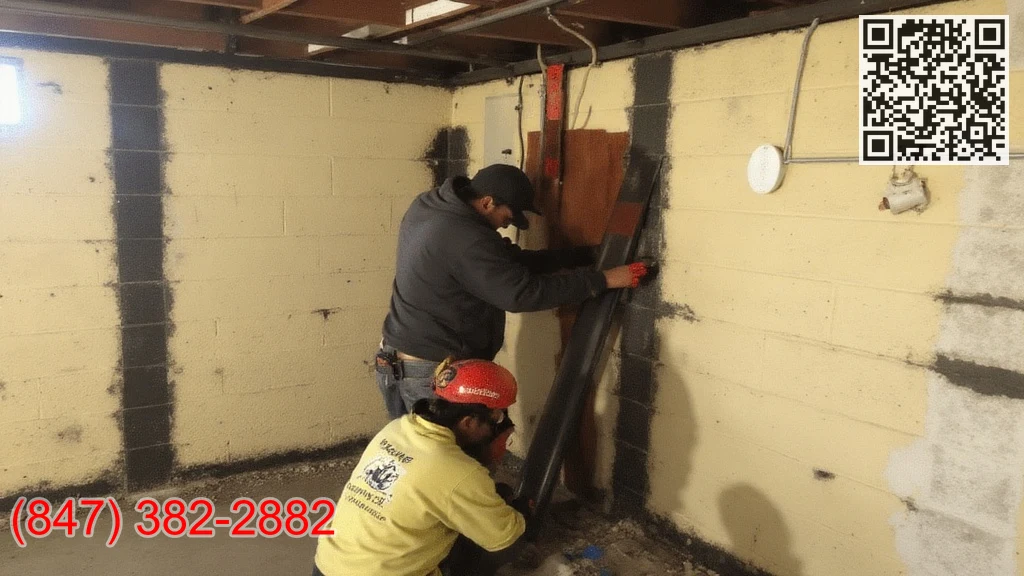
Bowing block walls respond well to restraint systems. Carbon fiber straps bonded with epoxy add tensile strength to the wall and prevent further inward movement when bowing is modest, typically less than 2 inches. Steel I beams installed vertically against the wall and anchored at the top and bottom provide greater resistance where movement is more pronounced. Wall anchors that tie united structural systems basement waterproofing the basement wall to soil plates buried outside can pull a wall back toward plumb over time when conditions allow.
Interior drainage and sump systems lower hydrostatic pressure at the base of basement walls and keep water out of the space. Perimeter drains, filter fabrics, and clean stone channel water to pumps that discharge it away from the house. Combined with exterior grading and gutter fixes, this is the backbone of basement waterproofing. In some cases, exterior excavation and membrane waterproofing make sense, particularly when you need to replace failed exterior drain tile or address severe wall defects. The trade off is cost and disruption to landscaping.
For homes over crawl spaces, a robust crawl space encapsulation closes soil moisture off from the structure. That means a heavy liner sealed to walls and piers, taped seams, insulated walls where appropriate, sealed vents, and mechanical drying with a dehumidifier. Encapsulate crawl space work varies in quality. Look for a continuous vapor barrier up the walls, not a loose sheet draped on the ground. Properly done, encapsulation stabilizes humidity, calms seasonal cupping in hardwood floors, reduces mold risk, and helps HVAC run more efficiently. It is not a substitute for structural repair when joists or beams have lost capacity, but it is a powerful companion to keep wood dry once repairs are complete.
Prevention that pays back every season
You cannot move your house to better soil, but you can make your site behave better. Start by controlling roof water. Clean gutters twice a year. Extend downspouts well past your planting beds, and discharge on a splash block or pipe to daylight where grade allows. If every rain carves a trench at your downspout, it is dumping too close. Correct the slope of the soil around your home so it falls away gently. A landscape crew can often regrade with a yard of soil and a day of work.
Trees matter. Large trees close to foundations can draw moisture from clay soils in summer, increasing shrinkage and settlement near the root zone. At the same time, well managed trees protect soil from pounding rain. Aim for balance. Avoid aggressive root cutting, plant new shade trees at a respectful distance, and consult an arborist for species guidance.
In areas with expansive soils, some homeowners water their foundations during prolonged drought to minimize clay shrinkage. This practice is controversial and site specific. Overwatering can cause soil to swell and heave. Underwatering invites shrinkage. If you go this route, be modest and consistent, maintain drainage, and focus on preventing extremes rather than chasing a target moisture number.
Inside, keep humidity stable. Basements benefit from a dedicated dehumidifier set to around 50 percent relative humidity in summer. Crawl spaces do better sealed than vented in most climates once you control groundwater. If you are evaluating basement crawl space encapsulation for a split level or a home with both spaces, coordinate the systems so you are not moving moisture from one zone to another.
Finally, live in your house with eyes open. Note the first sign of a recurring crack. Listen for a sump that runs too often. Feel the slope in a floor that seems to grow. Small changes caught early turn into simple fixes rather than expensive rescues.
Permits, insurance, and resale considerations
Most structural foundation repairs require permits. That can feel like a hurdle, but it protects you. Inspectors ensure work meets local standards. A permitted, inspected job also reads better to future buyers and appraisers. Ask your contractor to supply drawings, engineering letters when applicable, and copies of permits and inspections. Keep them with your house records.
Insurance rarely covers settlement or hydrostatic pressure because those are considered maintenance issues or excluded perils. Sudden events, like a plumbing leak that washes out soil under a slab, may be treated differently. Talk to your agent, describe the cause clearly, and get answers in writing.
If you plan to sell, disclose what you know and share your documentation. A buyer who sees that you monitored, improved drainage, hired a reputable firm for targeted foundation repairs, and hold a transferable warranty is more likely to proceed with confidence. Skirting the topic rarely ends well.
When to stop watching and start fixing
There is a time to observe and a time to act. If a block basement wall bows inward by more than an inch and continues to move, do not wait. If a crack widens quickly, doors go out of square across several rooms, or you see sudden changes after a plumbing failure or flood, call sooner rather than later. If you have corrected drainage and moisture issues and the house still moves through a season, bring in a pro. On the other hand, if you see only hairline cracks that do not grow, doors that behave once you tighten hinges, and moisture that clears up with better gutters, keep your wallet in your pocket and your notes on the fridge.
If you go looking for foundation repairs near me, you will find honest companies and hard sellers. Arrive prepared. Understand the signs that matter, take the right first steps, and ask better questions. Whether your house needs piers, a few carbon straps, a drainage upgrade, or a plan to encapsulate crawl space and dry the joists, you will make that decision from a position of knowledge. And that is how you protect the biggest investment most families ever make.
UNITED STRUCTURAL SYSTEMS OF ILLINOIS, INC
2124 Stonington Ave,
Hoffman Estates, IL 60169
rick@ussofil.com
Mon-Fri 8:30 am-5:00 pm
Sat-Sun By Appointment
 Ask ChatGPT
 Ask Grok
 Ask Perplexity
 Ask Claude
 Ask Google AI
 Ask You

Public Last updated: 2026-05-10 08:45:35 AM