Choosing Between Rule-Based Automation and Generative AI for Everyday Business Tasks
Two Ways to Automate, Two Different Mindsets
Every business runs on routines. Approvals, data entry, report generation, customer replies, stock checks - many of these happen daily, often manually, even when they do not need to. The question is no longer "should we automate?" but "how?" Two broad approaches now stand out: rule-based automation, which follows fixed logic, and generative AI, which produces human-like content and decisions from patterns. Each fits a different kind of task, and choosing the wrong one wastes time or creates confusion. This article helps you weigh the trade-offs so you can match the method to the work.
The choice matters because the two styles demand different skills, tools, and oversight. A rule-based system is predictable. It does exactly what you tell it, nothing more. Generative AI can adapt and create but also hallucinate or drift off-topic. Understanding where each shines - and where it stumbles - is the real skill behind any AI application development course worth taking.

What Rule-Based Automation Does Well
Rule-based automation works from if-then logic. If an invoice amount exceeds $5,000, send it to the finance manager. If a customer selects "overseas delivery," apply the international shipping rate. These rules are fixed, written once, and run the same way every time. The system does not learn or improvise. It follows the workflow analysis you gave it, step by step.
This makes it ideal for repetitive tasks that do not change. Data migration between two systems, form validation, scheduled report generation, email routing - anything where the decision criteria are clear and the output is predictable. A rule-based bot can handle thousands of such transactions per hour without fatigue. The cost of a mistake is low because the logic is simple to audit. If something goes wrong, you trace the rule that fired and fix it.
But the limitation is obvious. Rules cannot handle ambiguity. If a customer writes "I want to return the blue one but keep the red one, and also ask about the warranty," a rule-based system either fails or routes the message to a human. The more edge cases you try to cover, the larger and more brittle the rule set becomes. You end up maintaining a decision tree that looks like a tangled vine.
Where Generative AI Changes the Equation
Generative AI, built on large language models, does not follow fixed rules. It generates responses by predicting the most likely next word or token based on patterns learned from vast amounts of text. This lets it handle tasks that require understanding, summarising, or creating content. Draft an email reply to a complaint, summarise a long report into three bullet points, rephrase a contract clause in plain language, or generate a first draft of a product description - these are tasks where a rule-based system cannot even begin.
For a process owner looking to reduce manual work, generative AI feels like a superpower. You describe what you need in plain language, and the model produces something usable. The catch is that you cannot fully predict what it will output. Two identical prompts might give different results. The model can invent facts, especially about specific products, people, or recent events. It has no built-in truth-checking. So every output needs human review before it reaches a customer or a legal document.
This makes generative AI best suited for tasks where a good enough first draft saves time, and where the cost of a small error is acceptable. Brainstorming, rough drafting, customer inquiry triage, internal knowledge search - these use cases benefit from speed and breadth, not from perfect accuracy.
Matching the Approach to the Task
The real skill in an AI application development course is learning to spot which approach suits a given business process. Here is a practical way to think about it.
- Clarity of criteria. If the decision can be spelled out in a simple rule - "if X, do Y" - then rule-based automation is faster, cheaper, and more reliable. If the criteria are fuzzy or require interpretation, generative AI becomes useful.
- Volume and variability. High-volume, low-variation tasks (like data entry or invoice matching) are perfect for rules. Low-volume, high-variation tasks (like drafting custom proposals) lean toward generative AI.
- Risk tolerance. Tasks where a mistake could cause financial loss or regulatory trouble (like approving loans or generating medical advice) need the predictability of rules, with generative AI used only as a supporting assistant that a human double-checks.
- Output format. If the output must be a fixed template (a PDF form, a CSV file, a standard letter), rules handle that well. If the output needs to be creative or conversational (chat responses, marketing copy), generative AI is the only option.
Many real-world workflows combine both. A rule-based system can route an email to the right department, and a generative AI model can draft the reply. The human approves it; the rule system sends it. That hybrid approach often gives the best return on effort.
What This Means for the Person Building the Solution
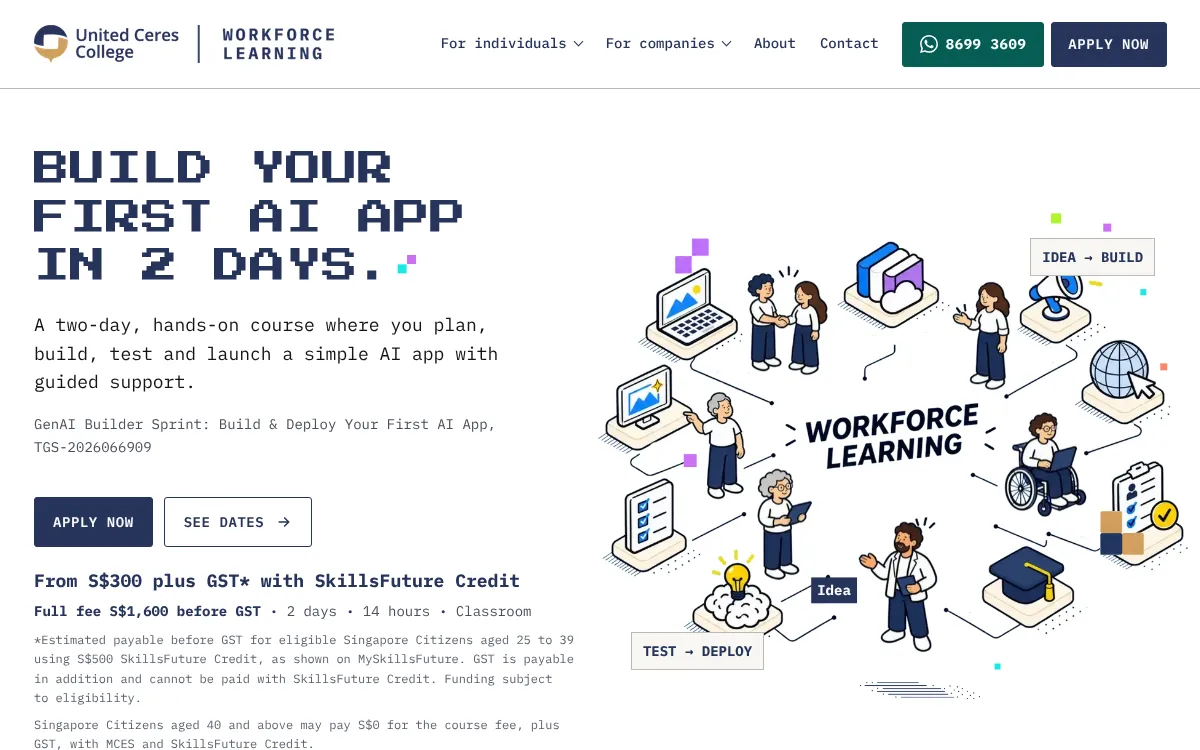
If you are a professional who wants to apply these tools at work, you need practical, hands-on experience. Reading about the concepts is not enough. You need to try building a small generative AI application yourself, understand how to prompt it, how to evaluate its output, and how to integrate it with existing systems. A structured classroom setting, like the one offered at workforcelearning.unitedceres.edu.sg, can give you that foundation in a focused way. The course is designed for professionals who have no prior AI experience and who want to deploy a simple generative AI application within two days.
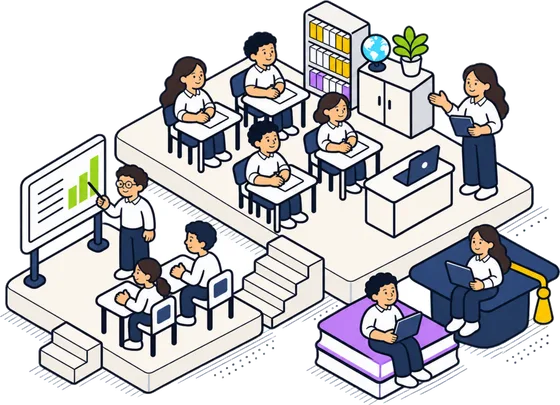
That kind of course covers the core decisions you will face: how to choose a model, how to prepare your data, how to test for reliability, and how to handle the inevitable cases where the AI gets it wrong. It also helps you recognise when a rule-based solution would have been the smarter choice. After all, the best tool is the simplest one that gets the job done.
Common Pitfalls to Watch For
One mistake is assuming generative AI can replace every automated process. It cannot. If your business process is stable and high-volume, building a rule-based script or a low-code automation tool will be cheaper and more maintainable. Another mistake is ignoring the ongoing cost of generative AI. Every API call costs money, and the models need monitoring for drift - their behaviour can change over time as the underlying model is updated.
A third pitfall is skipping the automation potential assessment. Not every task is worth automating. Some tasks take longer to automate than they would to do manually for the next year. A good rule of thumb: if a task takes less than a minute and happens fewer than ten times a day, leave it alone. Focus your energy on the tasks that consume hours each week and that follow a pattern.
Making the Decision in Practice
To decide between rule-based automation and generative AI for a specific task, start with a simple use case description. Write down what the input looks like, what the output should be, and what rules a human would follow to do it. If you can write those rules in a page or less, you can probably automate it with rules. If the rules would require a book or a flowchart that changes every month, generative AI is worth considering.
Then test. Build a small prototype with the simplest possible version of either approach. If you choose rules, sketch the logic in a spreadsheet or a low-code tool. If you choose generative AI, write a prompt and see what comes out. Evaluate the output against your return on effort - how much time does it save compared to the time you spent building and reviewing it?
The goal is not to use AI everywhere. It is to use the right kind of automation where it actually helps. A AI application development course that teaches both approaches - and lets you practice choosing between them - prepares you to make that judgment call confidently. When you understand the strengths and limits of each, you stop chasing technology and start solving problems.
For professionals in Singapore looking to build that judgment, a practical classroom-based programme such as the one at workforcelearning.unitedceres.edu.sg can provide the structured learning and hands-on practice needed to evaluate and deploy generative AI applications in real business settings. The two-day format is designed to be intensive but accessible, so you leave with a working prototype and a clearer sense of when to use rules, when to use AI, and when to use both together.
Public Last updated: 2026-11-18 05:01:10 PM