Water-Wise and Wonderful: Ridgeline’s Drought-Tolerant Plant Palette for LA
Los Angeles is a city of microclimates. Stand in Santa Monica at noon in July, cool mist and a light onshore breeze, then drive twenty minutes inland and step into a different season entirely. That spread, along with clay-heavy soils in the flats, rocky slopes in the hills, and an average of roughly 12 to 15 inches of rainfall a year, shapes how landscapes survive and thrive. A drought-tolerant garden here is not only a responsible choice, it is often the most beautiful one. When plants match place, colors stay clean, leaves hold their edge through August, and irrigation becomes an accent rather than a life support line.
Ridgeline Outdoor Living has designed and built water-wise landscapes across the basin and foothills for years. The plant palette below reflects what we have seen succeed in real backyards, on real slopes, through real heatwaves. It is not a catalog. It is a set of combinations, judgments, and details that help Los Angeles homeowners get a resilient, gracious garden, without constant fuss or waste.
How we read a site before choosing a single plant
Good plant choice starts long before a nursery visit. Most homes sit on at least three microclimates. A south or west facing wall bounces heat. A mature tree cools air and sips more water than you think. A raised planter at the top of a slope dries out twice as fast as the swale at the bottom. We map those realities first. Then we group planting areas into hydrozones, so each irrigation valve waters like needs together. That single step, done carefully, reduces water use by 25 to 40 percent compared to sprinkling an entire yard on one program.
Soils gate what roots can do. In the San Fernando Valley, we often find compacted clay below old lawn. A bit of pick work and a hose test reveals infiltration rates. If water puddles for more than a few minutes, we loosen with mechanical cultivation and topdress with a coarse, woody mulch after planting. We use compost sparingly around California natives, which prefer leaner soils. In coastal tracts south of LAX, sandy pockets drain so fast that we adjust planting depths, add slightly more organic matter, and run drip longer but less often.
The last pre-plant judgment is exposure. Summer sun here is not gentle. Full sun in Santa Monica is not the same as full sun in Woodland Hills. We treat inland west exposures like a stress test and reserve the toughest species for those faces, keeping more tender selections to morning sun or dappled light.
Business Name: Ridgeline Outdoor Living
Address:845 E Walnut St, Pasadena, CA91101, United States
Phone: (626) 469-5822
Ridgeline Outdoor Living
Ridgeline Outdoor Living is a Pasadena-based landscape design-build company serving Greater Los Angeles with custom outdoor living, hardscape, and drought-tolerant landscape solutions. The company specializes in patios, retaining walls, outdoor kitchens, drainage, hillside projects, and turnkey landscape construction, handling projects from design and permitting through final build and warranty.
845 E Walnut St, Pasadena, CA 91101, USA
Business Hours:
- Monday – Saturday: 8:00 AM – 6:00 PM
- Sunday: Closed
Follow Us:
The backbone: trees and large shrubs that make shade and shape
A drought-tolerant garden still benefits from a canopy. Shade softens summer peaks, extends the palette, and lowers evaporation. We return to a few reliable species that behave well in tight urban lots.
Arbutus ‘Marina’ gives year-round structure with pink bells and red bark that peels just enough to show depth. It takes reflected heat, looks elegant beside modern architecture, and drinks modestly once established. Parkinsonia x ‘Desert Museum’, a thornless palo verde, throws a filigree of green stems and bright yellow bloom in late spring, then casts a light shade that cools underplantings without starving them of light. Where a narrow profile matters, olives such as ‘Swan Hill’ or ‘Little Ollie’ for hedging play nicely with decomposed granite and permeable pavers. In native-forward gardens, Arctostaphylos ‘Dr. Hurd’ stands up as a small sculptural tree, though it needs air movement and restraint with irrigation.
For large shrubs or screening, we like Westringia fruticosa along the coast. It trims crisply if you prefer formality, or can be left to sway. In warmer inland gardens, Grevillea ‘Moonlight’ and ‘Superb’ deliver long seasons of nectar for hummingbirds and a feathery texture that reads lighter than the water they save.
Structure at human height: shrubs that carry scent, color, and wildlife
The shrub layer is where drought tolerance meets day-to-day enjoyment. People brush by, pick sprigs, and notice fragrance. California sages deserve their status. Salvia clevelandii offers blue flower spikes and a resinous perfume after a hot afternoon. Plant it where you will walk nearby and get that scent. Salvia apiana, white sage, wants space and a lean diet. It thrives in reflective heat if you resist the urge to water often.
Ceanothus adds the spring blues everyone loves, but it asks two things in return: good drainage and restraint with summer irrigation. Inland, we reserve it for slopes and lighter soils, or mound beds to keep crowns high. Baccharis pilularis ‘Pigeon Point’ does yeoman’s work as a tough, low native groundcover on banks. It knits soil and knocks down weeds.
Mediterranean options expand the palette where native-only plantings feel too spare. Lavender varieties like ‘Grosso’ and ‘Provence’ hold up in inland heat if planted on a small mound and pruned lightly after bloom. Rosemary has fallen out of fashion as a hedge, but as a cascading variety on walls it is still hard to beat. Leptospermum and Callistemon hold their form without constant clipping and shrug off aerosol salt near the beach.
Australian and South African shrubs, especially Leucadendron and Protea relatives, earn their keep in full sun with low summer water once established. We site them with caution around patios because their flowers draw bees in numbers, which is a plus for habitat but a consideration for dining and play areas.
Groundcovers and grasses that handle heat without flinching
Many Los Angeles lawns still run four to six watering days a week in August. Replace that lawn and you can cut water use by half or more, while getting movement, color, and biodiversity. For a soft texture that reads as a green carpet without the mowing, Lomandra longifolia ‘Breeze’ or ‘Nyalla’ threads the needle. It keeps its shape along curbs and around fire pits, takes inland heat and coastal wind, and tolerates the occasional dog traffic better than most grasses.
Muhlenbergia rigens, deer grass, is native and architectural. Line it along a path with a two foot setback to give room for its late summer flare. Festuca californica and Festuca ‘Beyond Blue’ suit the cooler coastal belt or morning sun inland. Dymondia margaretae can replace small lawn patches or knit between stepping stones, but it wants decent drainage and every so often a deep soak in late summer to look its best.
If you prefer a cleaner, clipped ground plane, consider Myoporum parvifolium on hot slopes. It is not native and it spreads, so we outline beds with steel edging and do not use it near wildland interfaces. In native shade, Ribes viburnifolium, evergreen currant, holds the ground under oaks. It stays low, tolerates dry shade after establishment, and shines where irrigation lines should not run near native oak trunks.
Succulents and accents that draw the eye
Succulents do more than drink little. They add sculpture and shadow play that is hard to achieve otherwise. Agave attenuata takes pride of place for good reason, especially in coastal zip codes. It presents a soft, spineless rosette that reads modern without menace around walkways. Inland, Yucca rostrata stands like living sculpture. Aloes, from Aloe ‘Blue Elf’ to Aloe arborescens, bring winter color and nectar when little else flowers.
Hesperaloe parviflora, red yucca, is not a yucca at all, but it throws coral or yellow bloom spikes through the heat of summer and takes reflected heat off walls and driveways. Pair it with the silver of Senecio mandraliscae along a curb for a clean, water-wise front yard that does not need weekly attention.
Plant palettes by place and purpose
The fastest way to get a drought-tolerant landscape that looks intentional is to choose a few strong combinations and repeat them. Here are concise palettes Ridgeline uses often, tuned to common LA conditions.
- Inland west exposure, poolside: Parkinsonia ‘Desert Museum’ for light shade, Lomandra ‘Breeze’ in drifts, Agave attenuata as focal points, Salvia ‘Allen Chickering’ for scent and pollinators, and Leucadendron ‘Safari Sunset’ near the far edge to pull the eye without littering the pool.
- Coastal courtyard with morning sun: Arbutus ‘Marina’ as a specimen, Westringia fruticosa as clipped cubes, Dymondia between large format pavers, Aloe ‘Blue Elf’ by the steps, and Grevillea ‘Peaches and Cream’ where you can watch hummingbirds work.
- Hillside native garden on decomposed granite: Arctostaphylos ‘Dr. Hurd’, Ceanothus ‘Ray Hartman’, Muhlenbergia rigens in bands, Eriogonum fasciculatum spilling down, and Penstemon spectabilis to light up spring.
- Dry shade under existing coast live oak: Ribes viburnifolium, Heuchera maxima, Iris douglasiana in morning light pockets, and a restrained line of Carex divulsa where filtered sun sneaks in.
- Front yard lawn replacement with crisp curb appeal: Multi-trunk olive ‘Swan Hill’ for canopy, Leptospermum laevigatum ‘Reevesii’ as a low hedge, Myoporum ‘Pink’ on the slope, Senecio mandraliscae as a silver ribbon, and Hesperaloe parviflora as vertical punctuation.
These are not fixed recipes. Soil, slope, and architecture steer the final mix. The key is cohesion. Repeat textures, shapes, and a restrained color story so the garden reads as one composition rather than a plant collection.
Water use, establishment, and the moment you can relax
The phrase drought tolerant does not mean no water. It means low water after roots run deep. Establishment typically takes one to two growing seasons. If you plant in fall, as we prefer, nature does part of the work. Cool nights and winter rains push roots without demanding leaf growth. A fall planting can cut establishment irrigation by a third.
During that first year, we water deeply and less often, even in summer. Shrubs receive two 2 gph emitters, spaced a foot from the crown, run together for 60 to 90 minutes every 10 to 14 days inland, or 14 to 21 days near the coast. Trees need a ring of three to four 4 gph emitters run for 90 to 120 minutes on a similar interval. In heat spikes above 100 degrees, we add a single extra cycle in the evening, then return to the baseline. By the second summer, many natives and Mediterranean shrubs get cut to every three weeks or even monthly, while succulents often thrive on an even leaner regime.
A smart controller simplifies this, but hardware only helps if the programming matches the site. We separate hydrozones by plant type and exposure. A line of Lomandra in afternoon shade should not share a valve with a row of Hesperaloe on a south facing wall. Slopes get cycle and soak programming to prevent runoff. Where soils vary, we split the valve rather than compromise.
A simple irrigation programming checklist for drought-tolerant gardens
- Group plants that share water needs and exposure on the same valve, and keep turf, if any, on its own.
- Use pressure-compensating drip with 0.6 gph to 2 gph emitters, and place multiple emitters around larger shrubs and trees to wet the full root zone.
- Run fewer, longer cycles to push water 8 to 12 inches deep, then allow soil to dry at the surface to discourage weeds.
- Adjust seasonally, increasing intervals rather than runtime when weather cools, and add only temporary cycles during heat spikes.
- Audit annually for clogged emitters, chewed lines, and plants that have outgrown their original placement, then rework where needed.
Soil, mulch, and the quiet work they do
You can plant the right species and still struggle if the soil and mulch are wrong. In heavy clay, patience and structure beat quick fixes. We break compaction to at least 12 inches where possible. Gypsum helps with sodic clays but does not work miracles. Compost improves tilth for many Mediterranean plants but can work against certain natives that evolved in lean, coarse soils. A blended approach often wins: spot-amend for Mediterranean and Australian species, keep the planting holes of Arctostaphylos and Ceanothus close to native grade, and then feed everyone with a top dressing of chunky, arborist wood chips.
Mulch is nonnegotiable. A two to three inch layer reduces evaporation, moderates soil temperature, and suppresses weeds. Keep it a hand’s width off the base of trunks and stems to avoid rot and rodent hiding spots. In high fire severity zones, we thin out fine fuels near structures and use gravel or decomposed granite bands along walls and decks.
Design that frames plants and saves water
Drought-tolerant planting becomes more compelling when the hardscape supports it. Permeable pavers set over a stabilized base let stormwater infiltrate rather than sheet to the street. In courtyards, large format pavers floated in Dymondia or Carex pansa give a usable surface without the water appetite of sod. A gravel garden, with widely spaced shrubs and perennials over a deep bed of angular stone, uses even less water and adds nighttime sparkle when lit well. When clients ask about Paver Patios vs Stamped Concrete, we often lean to pavers for permeability and ease of repair, though stamped concrete has lower upfront cost in some cases.
On slopes, retaining walls do more than create terraces. They slow water, reduce erosion, and allow safer maintenance. We often pair walls with French drains to move subsurface water away from footings and patios. A well-placed drain protects planting beds from saturation after winter storms, a quiet service that pays dividends for decades. Thoughtful grading paired with drought tolerant plants also solves common yard drainage problems, cutting the need for mechanical fixes later.
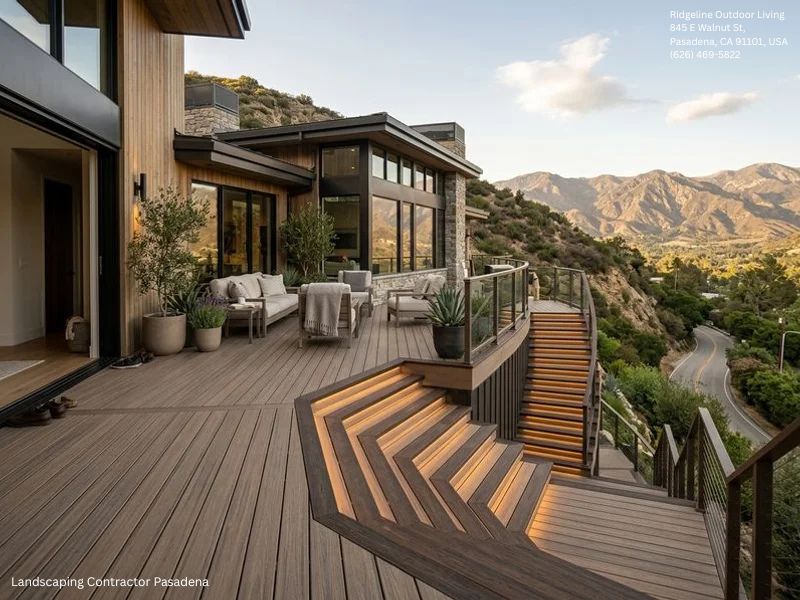
Lighting makes a lean, sculptural planting read lux in the evening. Small, shielded fixtures graze the trunks of Arbutus, set a soft halo on Hesperaloe bloom stalks, or trace a path through Lomandra. We avoid overlighting. A few warm accents preserve dark sky and make patios feel like rooms rather than stages.
Wildlife, kids, and fire risk
A water-wise garden can be generous with wildlife without becoming prickly for people. Planting Salvia, Penstemon, and Grevillea will draw hummingbirds and native bees. We keep thorned species like Bougainvillea or spiky Agave back from play zones and walkways. Around pools, we limit heavy litter plants and position nectar rich bloomers a few steps away to reduce bee traffic at the waterline.
In very high fire hazard zones, we design with spacing in mind. Resinous, oily, or laddering plants sit away from structures. We maintain limbed-up canopies, break up mass plantings with gravel or DG bands, and keep irrigation flexible enough to deep soak perimeter shrubs at the start of fire season. Drought tolerant does not mean fireproof, but good spacing and maintenance lower risk.
Costs, rebates, and long term value
Project budgets vary widely with scope. Lawn-to-garden conversions that include new drip irrigation, plants, mulch, and modest hardscape typically range from the mid teens to the high twenties per square foot in greater Los Angeles. Add custom steel edging, specimen trees, or extensive grading and walls, and the numbers climb. We have built water wise front yards as small as 500 square feet and estate gardens exceeding half an acre. Scale changes logistics, but the palette principles hold.
Water savings offer a quieter return. Replacing 1,000 square feet of spray-irrigated turf with drip-irrigated planting often cuts annual outdoor use by 20,000 to 35,000 gallons, depending on exposure and plant mix. During dry years, that margin cushions both the bill and the landscape. Turf replacement rebates come and go or shift terms, so we confirm current programs before design. For homeowners looking at resale within a few years, the combination of curb appeal, lower maintenance, and reduced water costs aligns with what buyers expect here. Put simply, Why Drought-Tolerant Landscaping Is a Smart Investment is a question we answer weekly with finished projects.
A hillside case: deep roots, not deep watering
A Silver Lake client came to us with a classic problem. A steep, south facing front slope, a thirsty patch of fescue holding on at the bottom, and constant runoff into the sidewalk. We replaced spray heads with drip, carved two gentle benches into the slope, and planted a native forward palette: Arctostaphylos ‘Howard McMinn’ for structure, Eriogonum fasciculatum to feed pollinators and bind soil, Muhlenbergia rigens to add movement, and a scatter of Hesperaloe for summer color. We mulched heavily and set the controller to run deep, infrequent cycles. The first summer, we watered every 12 to 14 days, with a single extra cycle during a 105 degree week. By the second summer, we stretched intervals to 21 days. The runoff stopped. Neighbors asked what we did. The garden looked better in August than it had in May.
Artificial turf, sod, or planted groundcovers
Homeowners often ask about Artificial Turf vs Sod when they are trying to lower water use quickly. Artificial turf eliminates irrigation, but it brings heat gain, glare, and eventual replacement costs. It can make sense in tiny courtyards or shaded strips where plants will not thrive and play is the goal. Sod gives instant green but locks in higher water and mowing. For many properties, a blend works best: planted beds in the broad areas, a modest rectangle of real grass if you need a cool play surface, and a gravel or DG court under a pergola for dining. The Best Drought-Tolerant Plants for Los Angeles Yards then carry the design visually, with groundcovers like Dymondia or Carex pansa filling gaps at a fraction of turf’s water footprint.
Care and pruning that respect plant character
Drought tolerant plants resent heavy handed care. We prune to shape and health, not to force hedges out of things that want to breathe. Ceanothus prefers light shaping right after bloom, then left alone. Lavenders respond to a third back after flowering, keeping green growth. Sages enjoy a light shear in late summer to prevent woody legs. Lomandra stays neat if you comb out old blades by hand or cut to six inches every few years in late winter. Avoid fertilizers high in nitrogen. Most water-wise species lean toward low nutrition. A once a year topdress of compost around non-native Mediterranean shrubs helps, but keep it off native manzanitas and buckwheats.
Irrigation lines deserve a spring check before heat arrives. landscaping guides Gophers and string trimmers are the usual suspects when coverage fails. We replace mulch where it thins, and keep an eye on trees as they settle. Deep watering a few times each summer for young trees pays off in stronger canopies that shade patios, protect hardscape, and make August afternoons feel like June.
Bringing it together with design intent
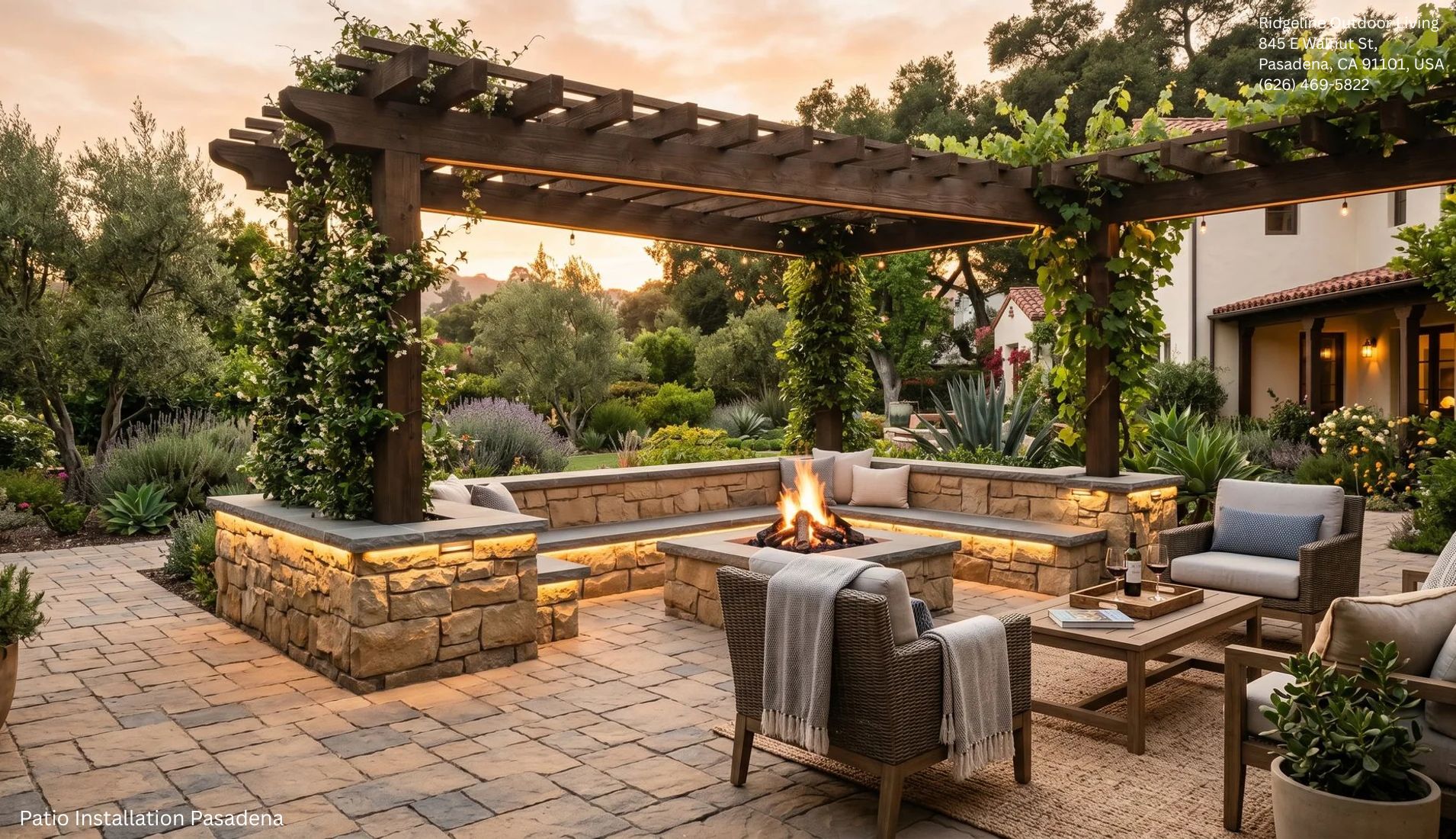
Plant palettes work hardest when they sit within a coherent outdoor living plan. A pergola where you actually want to sit, a paver patio sized for real meals, a simple outdoor kitchen that matches how you cook, and a path network that follows the way your family moves through the yard will make the plantings feel inevitable. Our design-build teams think about how to stage a fire pit so smoke lifts, how to keep French drains out of tree root zones, and how to light steps without glare. That attention turns a water-wise planting into a setting for life outside, not just a set of pretty beds.
Homeowners curious about 10 Outdoor Living Ideas Transforming Los Angeles Backyards, Paver Patios vs Stamped Concrete, or Outdoor Kitchen Trends Los Angeles Homeowners Are Choosing will find that drought tolerant planting complements each of those moves. Permeable patios lower runoff. Smart lighting reveals silver foliage and sculptural forms at night. A narrow herb bed near the grill can be hand watered and still fit within a low water plan.
When to plant, and what to plant first
If you can, plant in fall. The soil is still warm, the air is cooler, and roots expand fast while top growth rests. We start with trees and the largest shrubs, then lay out irrigation, then fill in with medium shrubs and accents, and finally groundcovers. That order protects the smaller plants during trenching, and lets you adjust spacing as you see the shape of the garden in real space. Spacing matters. Give manzanitas six to eight feet if they need it. Resist the urge to cram. A drought tolerant garden rewards patience. It often looks restrained in year one, poised in year two, and full by year three, without the overcrowding that forces constant edits.
The palette is a promise kept
Los Angeles rewards the gardener who respects limits and leans into them. The plants in this palette have earned their place by holding color through late summer, living gracefully on leaner rations, and pairing well with the textures and materials that make outdoor rooms feel finished. Whether you are converting a front yard local landscaping companies in Pasadena to a water wise showpiece or reshaping a the-slope-is-winning backyard into terraces with retaining walls, the same principles apply. Choose the right plant for the exact spot, water deeply and sparingly, mulch generously, and prune with a light hand. Do that, and the garden will repay you for years, not with a list of chores, but with shade, scent, and a calm that endures the hottest days.

Public Last updated: 2026-06-23 08:00:14 AM