Is a Daily Resistance Band Workout Worth It for Beginners?
If you are new to home fitness, the idea of working out every day sounds simple, even comforting. You put on a band, do a few moves, and feel like you are making progress. But there is a quiet question underneath all that motivation, “Is daily really worth it for beginners, or am I just flirting with sore muscles and poor form?”
From what I have seen with beginners, the answer is not a hard yes or no. Daily resistance band training can be worth it, but only if you set it up for what your body is actually doing, especially early on. That means choosing the right volume, paying attention to recovery, and using safe daily resistance band routines instead of “repeat the same session no matter what.”
What “daily” should mean when you are a beginner
The biggest mistake I see is treating “daily resistance band workout” like it is the same thing as “every muscle, every rep, every time.” Beginners often respond well to consistency, but consistency is not the same as constant intensity.
A safer way to think about daily training is this: most days, you do enough to challenge the body, but not so much that your joints and connective tissue get cranky. Resistance bands can be very joint friendly, but only when you control the tension and your body is ready for it.
In practice, a daily plan usually looks like one of these approaches:
Option A: Daily, but alternating effort
You rotate between a light day and a moderate day. Light days focus on smoother technique, full range of motion, and moderate tension. Moderate days challenge you a bit more, but you stop short of grinding.
Option B: Daily movement, not daily training
You move every day, but you only “train” on a few days. Other days become mobility work, light band activation, or easy sets that leave you feeling better than when you started.
Both approaches can support daily resistance band benefits, like habit-building and steady strength gains, without turning every session into a battle.
Here is a quick reality check I use with beginners: if you are consistently moving better week to week, sleeping okay, and your soreness stays in the normal “muscles feel worked” range, daily effort is probably fine. If you feel tendon-y discomfort, sharp joint pain, or soreness that lingers and escalates, you are doing too much, too often.
The trade-off: progress versus recovery
Beginners often underestimate how much recovery matters, even with bands. Bands are flexible, but your muscles still create stress. Your body still needs time to adapt. The difference is that you can often train bands more frequently than you might with heavier weights, as long as you stay in the right intensity zone.
Signs your daily routine is on track
- You feel pleasantly sore, not “injured sore,” and it eases within about a day or two.
- Your form holds steady as you get tired, you do not start compensating.
- Your energy stays reasonable, you are not dragging through every session.
- Your joints feel stable during the reps, especially at shoulders and hips.
Signs you should dial it back
- Pain that feels sharp, pinpoint, or “wrong” during a specific movement.
- Soreness that spreads beyond the target area, or keeps worsening across days.
- You need to use shorter ranges just to complete the movement.
- Your warm-up feels harder than it used to, like your body is fighting you.
If any of those show up, the solution is usually not to quit. It is to adjust. Reduce band tension, lower the Look at this website number of sets, or switch that day to a lighter, safer daily resistance band routine focused on control.
The key point is that daily workouts work best when you treat recovery as part of the program, not as an optional extra.
A beginner-friendly way to set up a “daily band” plan
You do not need a complicated system to start. What you do need is a repeatable structure so you can build skill before you chase intensity. When people ask me about beginner resistance band workout daily routines, I usually steer them toward fewer moves done well.
A simple starting point is to choose 3 movement patterns: - one for your upper body (think pushing or pulling), - one for your lower body (squats, hinges, or bridges), - one for your core (anti-rotation or controlled bracing).
Then you rotate them across the week with light and moderate days.
Here is an example framework for what “daily but beginner” can look like:
- Days 1, 3, 5 (moderate): about 2 to 3 sets per move, slower reps, stop with 1 to 2 reps left in reserve
- Days 2, 4, 6 (light): 1 to 2 sets per move, slightly easier band tension, focus on perfect control
- Day 7 (easy or mobility): light band activation or a short full-body flow
That approach helps you build the habit of showing up while still giving your body enough adaptation time. It also reduces the chance you will overload the same tissues repeatedly.
How to choose resistance bands for daily use safely
Daily training is only as good as your equipment setup. Bands vary a lot in thickness, resistance level, and how they behave under tension. For home fitness, comfort and stability matter. If a band pinches your skin, slips, or feels unpredictable, you will unintentionally change your form to compensate.
A few practical choices make a big difference:
- Pick a band you can control. If you have to jerk to get through the rep, it is too heavy or your form is ahead of your strength.
- Use consistent tension. When bands are too light, you will just “feel it” in your mind without actually doing the work. When they are too heavy, your joints take the blame.
- Anchor it securely. Door anchors and fixed points should feel solid. A setup that moves will turn a workout into a safety problem.
- Consider a set, not a single band. Many beginners do better buying a small set so they can vary intensity without changing exercises.
- Inspect bands regularly. Any cracking, fraying, or rough spots are a stop sign, not a reason to “make it work.”
You can absolutely use resistance bands for daily use, but it helps to treat the band like training equipment, not a disposable accessory. Your body learns movement patterns. If the band behaves inconsistently, your patterns will too.

Safety cues that prevent most beginner issues
With bands, the biggest risk is often form breakdown under tension, not the band itself. Keep tension smooth, avoid bouncing, and aim for controlled movement. If a shoulder exercise hurts at the joint, adjust the range before you adjust your toughness. In a beginner resistance band workout daily routine, learning to modify is part of the work.
If you are unsure, start with lower tension and slower tempo. It feels almost too easy at first, then you realize the band is teaching you control instead of forcing effort.
What a simple daily session can feel like
Let me describe what a “good” beginner session feels like in real life. You finish it with energy, not exhaustion. You feel like you could do a little more, but you chose not to. That is the sweet spot for daily consistency.
A safe daily resistance band routine might include: - 5 minutes of easy warm-up (marching, arm circles, hip hinges), - 3 to 4 exercises total using the movement patterns you picked, - 5 to 8 controlled reps to start, building to something challenging but clean, - a short cooldown where you breathe and let your muscles settle.
If you find yourself wanting to push harder each day, try this instead: keep the same exercises and make today’s version slightly slower, not heavier. Your joints and tendons usually tolerate tempo changes better than tension jumps.
Daily resistance band benefits show up when you are consistent with effort, not when you grind through fatigue every single day. For beginners, that difference is the line between “I feel stronger” and “I keep getting set back.”
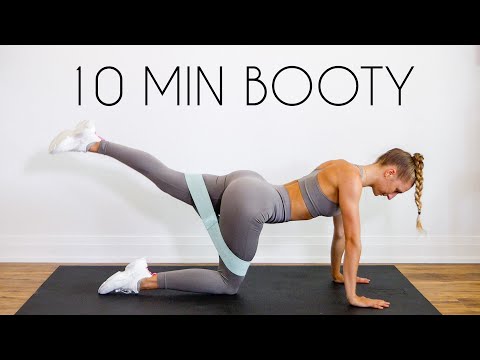
If you want to try daily, do it thoughtfully. Choose a band plan you can repeat, adjust intensity based on how your body responds, and treat safe form as the real measure of progress. That is how daily becomes home fitness worth it, even when you are just getting started in home fitness.

Public Last updated: 2026-07-23 05:37:54 PM