Hillside Mastery: Retaining Walls for Los Angeles Properties—Ridgeline’s Design Approach
Los Angeles is a city built on contours. Neighborhoods step across canyons, cling to ridgelines, and fill old stream beds. On many of these lots, outdoor space is as much a structural problem as it is a design opportunity. A retaining wall is the backbone that makes a steep yard safe, useful, and beautiful. Done right, it protects your home from soil movement and water damage while unlocking flat patios, gardens, play spaces, and driveways. Done poorly, it can crack, lean, drain badly, or, in a worst case, fail after a winter storm.
Ridgeline Outdoor Living has spent years building walls that stand up to Los Angeles soil and weather. Our approach blends engineering discipline with landscape design, because a wall is never just a wall. It is an anchor for outdoor rooms, a sound barrier, a planter edge, and the quiet workhorse that keeps everything in place.
The reality of building on Los Angeles hillsides
Hillside work here is defined by geology and water. Across the basin you will find expansive clay, decomposed granite, and pockets of undocumented fill from old grading. Many slopes are steeper than 2 to 1, and some are near property lines or utilities. Earthquakes add lateral demand. Winter brings bursts of heavy rain, especially during atmospheric river events, which load soil with water weight and drive hydrostatic pressure against any wall that does not drain well.
Municipal rules reflect those risks. In the city of Los Angeles, a retaining wall over 4 feet in height, measured from the bottom of footing to the top of wall, requires a building permit and engineered drawings. Surcharge from a driveway, structure, or slope above can trigger engineering even at lower heights. In hillside areas, LADBS and the California Building Code expect compaction testing, steel inspection, and in some cases a geotechnical report. Absent those controls, the margin for error on a steep lot is slim.
What a retaining wall really does
A wall does more than hold dirt. Soil wants to move laterally down a slope. During dry periods, expansive clays shrink and open seams behind a wall, then swell when wet and push harder. Water seeks the low point, adds weight, and exerts pressure on any surface that traps it. Basic wall design addresses both forces, through a mix of mass, cantilever strength, friction, and drainage.
A reliable wall transfers pressure down into stable ground and relieves water behind it. That means excavation to undisturbed soil, compaction in controlled lifts, geogrid or steel reinforcement where needed, a free draining backfill zone, and a perforated pipe with slope to daylight or an approved connection. Every detail plays a role. Ignore one, and the rest will tell on you after the first heavy storm.
The right wall for the right slope
Los Angeles offers every scenario, from a gentle bank behind a Mid City bungalow to a sheer cut in the Palisades. We build several wall types, each suited to specific conditions.
Segmental gravity or reinforced block walls solve many backyard problems, especially where aesthetics matter and access is limited. Interlocking concrete blocks stack without mortar. On low walls, the block weight and batter resist soil pressure. On taller walls, geogrid layers extend back into the slope and turn the soil mass into part of the system. This approach flexes slightly under load, which helps it ride out small soil movements without cracking. We use it often in Silver Lake and Mount Washington, where narrow streets make concrete trucks a challenge.
Reinforced concrete masonry unit walls on spread footings are the classic option along driveways or where a fence must mount on top. These CMU walls use rebar, grout, and a continuous footing to develop cantilever strength. Proper drainage is still critical. If the site brings surcharge from a car or a building above, CMU with a designed footing gives you predictable performance and a clean stucco or stone finish.
Caisson and grade beam systems come into play on steeper, taller cuts, or when we are close to a property line and cannot extend geogrid. Drilled concrete piers, often 12 to 30 inches in diameter and 10 to 25 feet deep, connect with a reinforced grade beam. Depending on soils and loads, we add tiebacks that anchor the wall into competent ground further upslope. This is the standard on difficult Palisades and Hollywood Hills sites where the ground falls away under your feet.
Soldier pile and lagging walls, a cousin of the caisson system, rely on steel H beams set in drilled shafts with wood or concrete lagging panels between them. They are common for temporary shoring but can be dressed and made permanent with a shotcrete face. We have used them where we needed to hold a cut during construction, then incorporated a finished veneer and lighting once the landscape went in.
Gabions and boulder gravity walls can fit in canyon lots with a natural aesthetic, though they demand careful sizing and base prep. Timber is rare here. The combination of termites, fire risk, and long term maintenance often puts wood at the bottom of the list.
Drainage is not optional
Most wall problems we are called to fix trace back to water. A wall that traps water behind it is a dam. The additional pressure will bow the face, pop caps, weep through joints, and stain You can find out more finishes with efflorescence. Our standard drainage assembly has several layers that work together even in heavy rain.
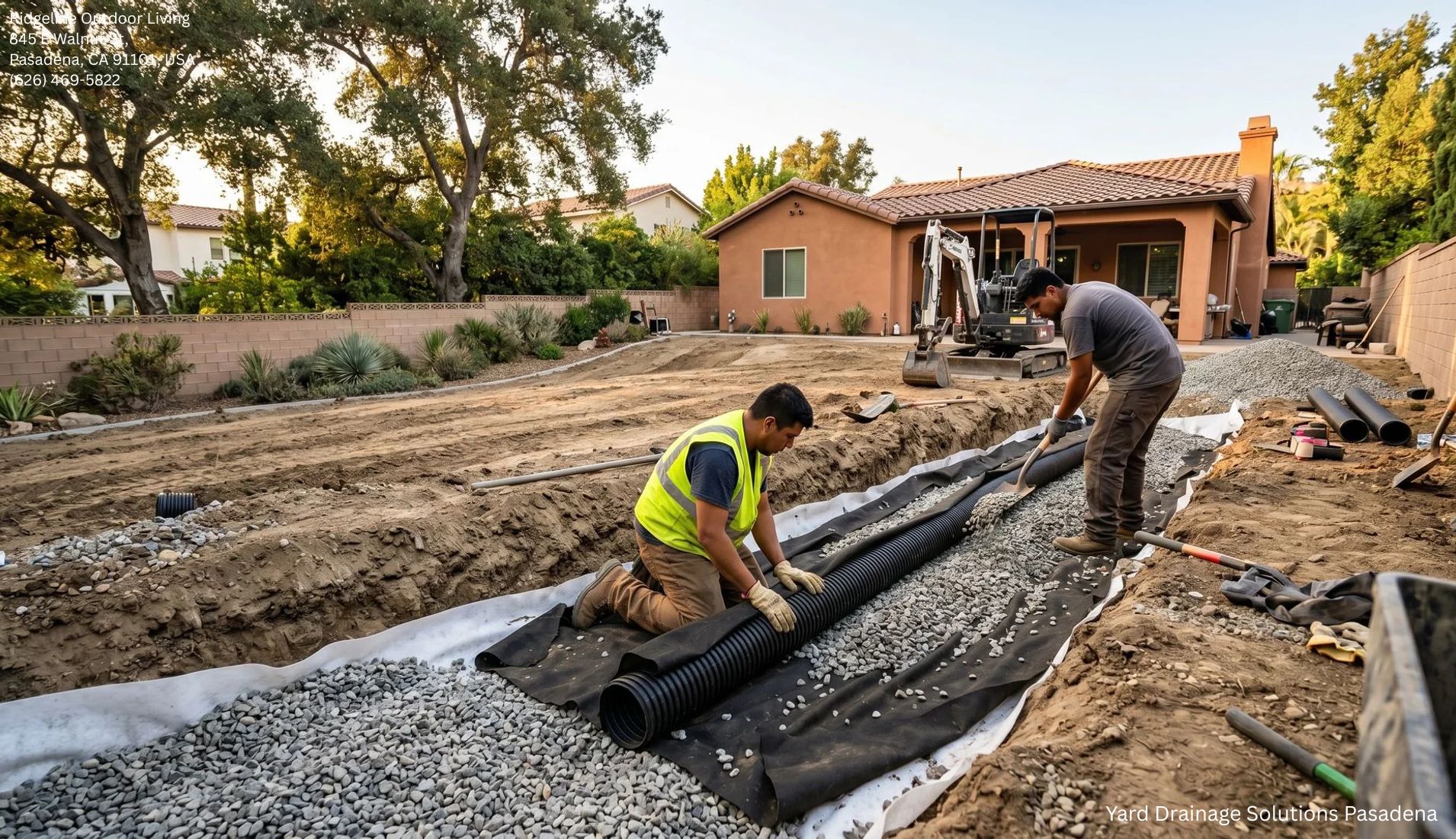
Right behind the wall face, we install a drainage mat or a vertical zone of clean, angular gravel wrapped in filter fabric. A perforated pipe sits at the base of this zone, with a continuous downhill slope of at least 1 percent toward an outlet, cleanout, or dispersion pit. The perforations face down and the pipe rests on gravel, not native soil. We include cleanouts because a pipe you cannot flush is a pipe you will replace. Weep holes in solid wall faces offer pressure relief and let you see that the system is working.
Surface water needs its own plan. On terraces, we use subtle cross slopes, area drains, and swales to move stormwater to a safe discharge. French drains, when designed correctly, intercept subsurface flow outside the wall zone and reduce what reaches the retained backfill. Many homeowners search for French Drains Explained: Protecting Your Property From Water Damage, and the short version is this. A French drain is a linear gravel trench with a perforated pipe that collects and redirects water. It is not a cure-all. It works when it has slope, a place to go, and filter fabric that keeps fines out.
If your yard shows 10 Signs Your Yard Needs Better Drainage, such as standing water after a storm, moss on hardscape, or muddy planters that never dry, address that before planting or paving. How to Solve Common Yard Drainage Problems often starts with grading and continues with smart pipe routing and, where needed, pumps. It always ends with maintenance. Twice a year, we clear debris from inlets and check cleanouts. A five minute flush can save a wall.
Design that makes space, not just structure
A hillside wall is a design tool. Terraces create room for patios, gardens, and play. Once you earn a flat zone, you can stage features thoughtfully.
On a small Echo Park lot, a two tier segmental wall added 500 square feet of usable space. The lower terrace now holds a compact paver patio with a built in bench. The upper ledge frames a drought tolerant garden with ceanothus, toyon, and lomandra. Low voltage lights wash the wall face and guide steps. The wall became a seat during parties and a warm backdrop for an evening fire bowl. On that job, we discussed Paver Patios vs Stamped Concrete: Pros and Cons. We chose pavers for their ability to flex with minor movement and for clean repairs if any section settled.
In a Santa Monica Canyon project, a reinforced CMU wall along the driveway solved a space pinch. The finished surface carries a limestone veneer that matches the entry. A steel railing mounts into the top bond beam. Behind it, we fit a slim outdoor kitchen for weekend grilling. Homeowners often ask How Much Does an Outdoor Kitchen Cost in Los Angeles. For straightforward islands with gas, cold water, and a 10 to 12 foot counter, the installed cost typically ranges from 18,000 to 40,000, before appliances. Hillside access, utility upgrades, and structural anchoring can push that higher. Our teams factor that into the wall design so the kitchen loads are known, not guessed.
We tune planting to the reality of water and wind. The Best Drought-Tolerant Plants for Los Angeles Yards perform well on sunny terraces, where reflected heat can be real. As the city leans into water-wise landscapes, many clients explore The Ultimate Guide to Drought-Tolerant Landscaping in Los Angeles and 15 Water-Wise Landscaping Ideas for California Homes. On walls that double as planters, efficient drip irrigation, mulch, and gravel skirts around emitters keep water off the wall face and reduce staining.
Permits, neighbors, and logistics
The hardest part of a hillside wall is often everything that happens before the first block is set. We start with a survey, so property lines and easements are not a guess. In narrow streets, haul routes and staging need a plan. A typical wall can generate 20 to 80 cubic yards of export. That is 2 to 8 dump trucks in and out, and the city may restrict times and routes. Export fees run 60 to 120 per cubic yard depending on site distance and dump fees. Where access is tight, we use conveyors or small skid steers to move soil, but labor hours increase.
Hillside grading often requires erosion control measures during construction. We install silt fences and fiber rolls, cover stockpiles before a storm, and keep the street clean. Inspectors watch this closely during rain season. Close neighbors deserve early notice. If a fence must come down or a temporary shoring wall needs work on both sides of the line, coordination up front pays off.
For engineered walls, plan on a soils report in the 4,000 to 9,000 range and structural design from 3,000 to 12,000 depending on complexity. Permits can run 1,500 to 8,000 with plan check and inspection fees. In hillside zones, expect more back and forth with plan check. None of this is wasted money. A stamped set of drawings, coupled with competent field inspection, is how you avoid expensive surprises.
Cost clarity in the Los Angeles market
Wall costs in Los Angeles vary by type, height, length, access, and finish. Use these as planning ranges, not quotes.
Segmental block walls under 4 feet without geogrid, in accessible sites, often fall between 65 and 120 per square foot of face, including base prep, drainage pipe, and cap. Add geogrid and more height, and the number typically lands between 120 and 220 per square foot depending on soil, tiering, and batter. Heavier block units and complex curves increase labor and crane time.
Reinforced CMU walls in the 4 to 8 foot range, with footing, vertical and horizontal rebar, grout, waterproofing, drainage, and a smooth stucco or stone veneer, commonly price between 180 and 350 per square foot of face. Taller walls or those with heavy surcharge can exceed that, especially with premium finishes.
Caisson and grade beam systems with tiebacks land higher. Drilling, rebar cages, concrete, structural steel, shotcrete, and inspections add up. Budgets of 450 to 900 per square foot of face are not unusual, with premium sites and difficult access pushing above that. Soldier pile and lagging systems with a finished face are similar. When clients ask What Does Hardscape Construction Cost in Los Angeles, we remind them that hillside work is a different category from flat yard patios. The unseen structure is often the majority of the cost, and for good reason.

These figures exclude export and import of soil, which can be a major line item. They also exclude related features like stairs, railings, lighting, and plantings, which we integrate into one coordinated plan. When we price 10 Hardscaping Features That Increase Property Value, retaining walls near the top of the list often deliver the strongest functional return, because they convert unusable slope into durable square footage.
The Ridgeline approach from first walk to final cap
Our process is careful because hillside work leaves little room for improvisation. We look, measure, probe, and listen before we draw or dig. A yard tells a story if you know where to look. Cracks on a neighbor’s wall, bulges in old mortar joints, soil types in cut banks, buried debris, or a leaning tree all carry clues.
Here is how a typical project moves from concept to completion with our team.
- Site study and goals: We survey, shoot grades, locate utilities, document drainage paths, and ask how you want to use the space. A patio for dining, a play lawn, or a quiet garden suggest different terrace sizes and access paths.
- Geotechnical and structural alignment: We pair a soils engineer with a structural designer early, so wall type, footing depth, and surcharge assumptions match real site conditions.
- Concept and budget iteration: We develop two to three layout options, estimate costs within ranges, and adjust scopes so goals and budgets align before engineering proceeds.
- Permits and logistics plan: We handle submittals, plan check responses, and pre-plan access, staging, and erosion control so crews can work efficiently and neighbors stay happy.
- Build with inspection and documentation: We excavate, install drainage and reinforcement to spec, call for required inspections, and photo-document critical steps for your records.
A design-build team keeps all these parts on one track. You do not want a beautiful rendering that dies in plan check, or a stamped set that produces a bulky wall you do not like to look at. We model in 3D where it helps, especially on tight sites where stairs, railings, and outdoor kitchens must coexist comfortably. For clients exploring How Ridgeline Outdoor Living Designs Stunning Outdoor Spaces, this integrated path is the through line.
Choosing a wall type with confidence
Homeowners often ask for a quick rule of thumb. While every site is unique, this guide helps frame early decisions.
- For walls up to 6 to 8 feet with room to extend geogrid, segmental block with geogrid is efficient, attractive, and forgiving to minor movement.
- Along driveways or where you need a straight, finished face with mounted fencing, reinforced CMU on footing provides strength and finish options.
- Near property lines or on steep cuts without room for geogrid, caisson and grade beam systems with or without tiebacks handle taller loads safely.
- For temporary shoring during construction, soldier pile and lagging stabilize the cut. If desired, we convert to a permanent faced wall.
- Where a natural look fits and the soil allows, gabion baskets or engineered boulder walls can blend a canyon aesthetic with mass and drainage.
We validate any selection against soils data, surcharge, groundwater, site access, and your long term maintenance preferences. How to Choose the Best Retaining Wall Design for Your Property is not a style question. It is a safety and use question first, and a finish decision second.
Stories from the field
A Mount Washington homeowner called two winters ago after a section of old railroad-tie wall tilted during a week of storms. The slope above served a neighbor’s driveway, so surcharge complicated the picture. We installed a soldier pile and lagging shoring line to secure the cut, then worked with both neighbors to convert the system to a permanent shotcrete faced wall with a steel rail. The finished surface received a sand finish and a vine trellis, softening the mass. That wall has since handled multiple heavy rain events without movement.
In Sherman Oaks, a young family wanted a play lawn and space for a future plunge pool. The lot dropped 10 feet over 40 feet depth. We split the grade into two terraces. The lower wall is a reinforced CMU with a 2 foot seat ledge, finished in plaster to match the house. Above it, a segmental wall with geogrid created a level lawn. We routed all downspouts to a collector line tied into the wall drain system and out to the street. The simple act of separating roof runoff from slope soils avoided the soggy mess that sinks many lawns.
Integrating walls with the rest of the landscape
A wall is a spine that everything else plugs into. Lighting embedded in caps and stair risers makes evenings useful and safe. If you are looking for 10 Outdoor Lighting Ideas for Los Angeles Landscapes, wall washing, step lights, and under cap glow deliver a lot of effect for modest wattage. On terraces, we often specify porcelain pavers on pedestals to keep added weight low and allow easy access to drains.
Planting softens structure. On hot south and west faces, we lean on sages, manzanita, and native grasses. Trees sit beyond the geogrid zone so root growth does not disrupt reinforcement layers. Drip irrigation with pressure regulation and check valves keeps water in the soil rather than on the wall. That discipline, paired with smart controllers and rain sensors, is a quiet way to save water. Why Drought-Tolerant Landscaping Is a Smart Investment becomes obvious the first time you compare your bill in August to your neighbor’s.
Entertainment features fit neatly on terraces. A small outdoor kitchen, a fire feature, or a water rill can turn a flat pad into a destination. For clients browsing 12 Backyard Fire Pit Ideas for Entertaining Year-Round or 12 Water Feature Ideas for Luxury Los Angeles Backyards, we pair flame and water with code clearances, gas and electrical runs, and wind patterns on site. Walls block wind on a terrace and make a fire more comfortable on cool evenings, especially near the coast.
Driveways sometimes need retaining to reach modern parking standards. In those cases, 15 Driveway Paving Ideas to Improve Curb Appeal come alive when a wall frames the approach and a planted slope softens the entry. Infill neighborhoods can gain two car parking where only one fit before, which is an everyday lifestyle upgrade and a real property value lift.
Maintenance that protects your investment
Good walls ask for little, though nothing is truly hands free. After the first full rainy season, we walk the wall with you. We look for settlement at caps, any minor cracks in stucco or mortar joints, staining from weep holes, and proper function at cleanouts. If a small crack appears, we note whether it is static or growing. Hairline shrinkage in plaster coats is cosmetic. A step crack that opens season after season needs attention.
We trim plantings to keep roots and branches from prying at joints. Irrigation gets an annual tune. Controllers reset for seasonal runtime, emitters checked for clogging, and filters cleaned. If efflorescence appears on a new wall, we let it run its course for a few months, then clean with a mild solution approved for the finish. Slopes above the wall stay mulched and covered with groundcover to control erosion.
We advise clients exploring The Complete Guide to Hillside Landscaping in Los Angeles to think in five and ten year horizons. Trees grow, kids age, cars change, and tastes shift. A well designed wall anticipates those changes with conduits for future power, mount points for future rails, and terraces sized for flexible use.
When to call a professional
If your wall will exceed 4 feet in height, support a driveway, hold back a neighbor’s property, or sit on a steep slope, do not treat it as a weekend project. Even small walls next to a fence or patio can need engineering because of surcharge. Retaining Walls for Hillside Properties: What Homeowners Need to Know starts with humility. Soil is heavy. Water is stubborn. Gravity always wins without a plan.
For very small gardens, a 2 to 3 foot planter wall built on level ground with proper base prep and drainage can be a homeowner project. Keep it away from structures, use clean gravel and a perforated pipe with a place to discharge, and compact backfill in thin lifts. If you feel the ground pump under your feet while you compact, or if the base trench weeps water, stop and call for advice. Those are warning signs.
Business Name: Ridgeline Outdoor Living
Address:845 E Walnut St, Pasadena, CA91101, United States
Phone: (626) 469-5822
Ridgeline Outdoor Living
Ridgeline Outdoor Living is a Pasadena-based landscape design-build company serving Greater Los Angeles with custom outdoor living, hardscape, and drought-tolerant landscape solutions. The company specializes in patios, retaining walls, outdoor kitchens, drainage, hillside projects, and turnkey landscape construction, handling projects from design and permitting through final build and warranty.
845 E Walnut St, Pasadena, CA 91101, USA
Business Hours:
- Monday – Saturday: 8:00 AM – 6:00 PM
- Sunday: Closed
Follow Us:
The payoff
How Retaining Walls Prevent Erosion on Hillside Properties is not an abstract claim. After a winter of hard rain, a well built wall and a clean drainage system keep the slope in place and the patio dry. Your doors still open, your stucco stays uncracked, and your outdoor rooms remain ready for use. The right wall unlocks more than soil. It unlocks weekends with friends, dinners outside, safe play for kids, and quiet mornings with coffee in a garden that now exists where only a slope stood before.
Ridgeline Outdoor Living builds with that goal in mind. We pair structure with style, so the backbone of your landscape is also a part of its beauty. If you are weighing The Complete Guide to Retaining Walls in Los Angeles or simply wondering how to make a difficult lot livable, a site walk and a frank conversation are the best first steps. We will bring a level, a probe rod, and years of hillside judgment. You bring your vision for the space. Between those two, the right wall takes shape.

Public Last updated: 2026-06-23 02:51:34 AM